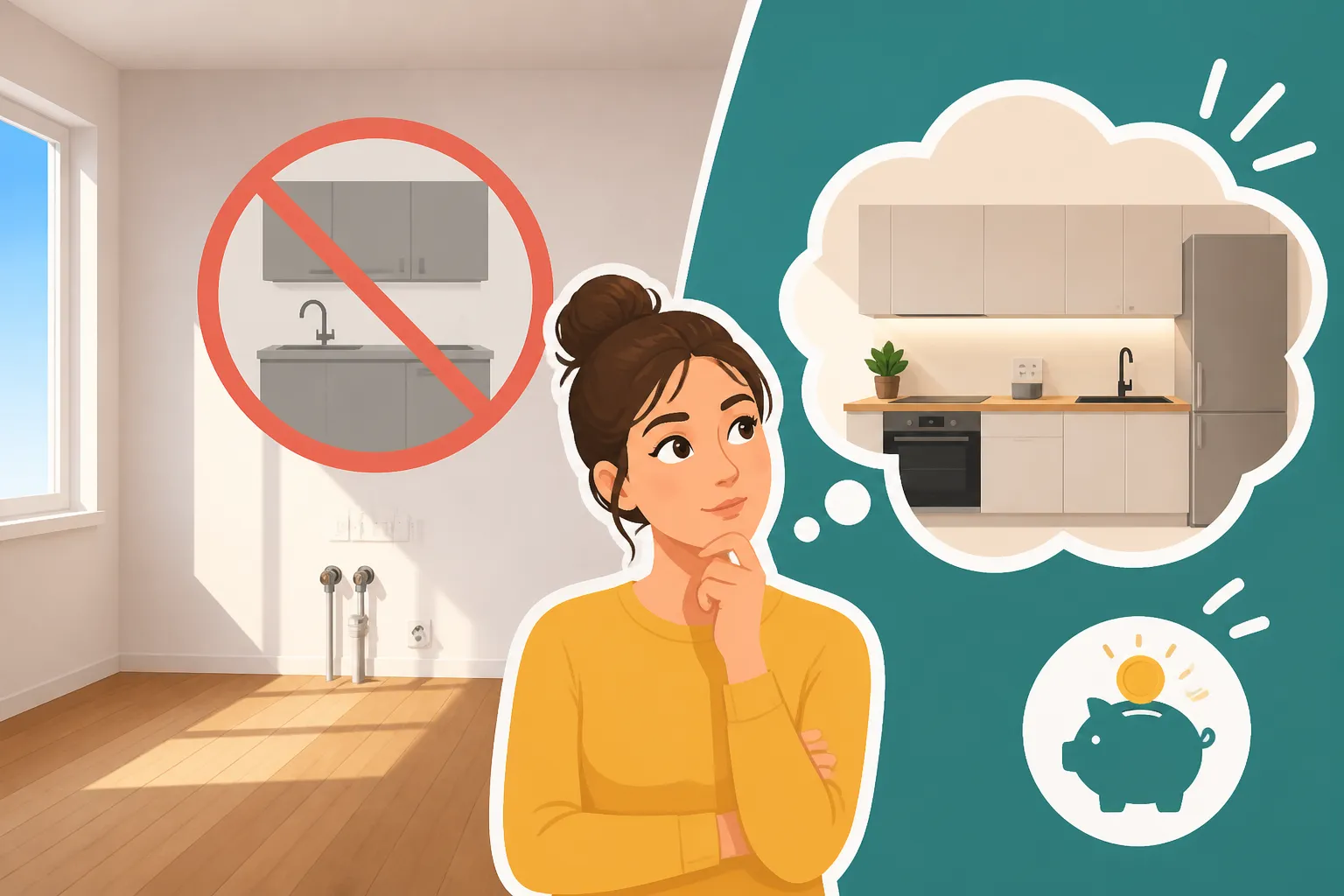
Why Many Austrian Rentals Come Without a Kitchen Installed
Standing in a beautiful, high-ceilinged Viennese apartment only to realize the "kitchen" is just a room with bare pipes and a drain is a shocking rite of passage for many foreigners. I vividly remember my first viewing in Leopoldstadt where I spent ten minutes looking for the stove before the agent casually mentioned I'd need to bring my own. This guide solves the mystery of why Austrian rentals often come without a kitchen and provides a roadmap for navigating this logistical hurdle.
The Cultural and Legal Logic Behind the Empty Kitchen
When you first dive into Living in Austria 2027: The Expat Starter Guide, the missing kitchen is perhaps the most glaring cultural difference in the housing market. In many countries, a kitchen is considered a fundamental part of the structure, like the walls or the windows. In Austria, however, there is a long-standing tradition where the kitchen is viewed as furniture—personal property that the tenant brings with them and takes when they leave. This stems from a historical mindset of long-term stability; when people rent an apartment here, they often plan to stay for decades, not just a couple of years.
The legal framework also plays a significant role. The Austrian Tenancy Act (Mietrechtsgesetz) distinguishes between "Kategorie A" apartments, which must include a kitchen or at least the connections for one, and other arrangements where the landlord is under no obligation to provide appliances. If you are Renting in Austria: MRG Laws, Leases, and Bestellerprinzip, you will find that many landlords prefer to rent out a "naked" flat to avoid the maintenance costs of appliances. If a dishwasher breaks in a flat where the kitchen is "mitgemietet" (rented with the unit), the landlord is often responsible for the repair. By leaving the room empty, they shift that burden entirely to you.
Furthermore, there is an aesthetic component to this. Austrians take great pride in their homes, and since a kitchen is a high-use area, many locals prefer to design a space that fits their specific culinary needs and style preferences. While it seems like a nightmare to an expat who might only be here for three years, for a local family, spending 10,000 EUR on a custom-fitted DanKüchen or EWE kitchen is an investment in twenty years of daily comfort. This distinction is most common when comparing Altbau vs Neubau: Differences in Rent, Charm, and Heating, as older buildings are much more likely to have these "empty" rooms than modern developments.
Navigating the Financial Reality: Ablöse and DIY Kitchens
Once you accept that the kitchen is missing, you face two primary paths: paying an "Ablöse" to the departing tenant or building one from scratch. The Ablöse is a transfer fee you pay to the person moving out to keep the kitchen they installed. This can be a point of high stress. When Using Willhaben and ImmobilienScout24 to Find Apartments, you will often see listings that look affordable, only to find a note in the description stating a 5,000 EUR Ablöse is required for the "highly modern" kitchen and a few wardrobes.
Be very careful here. Legally, an Ablöse must represent the actual current value of the items. You are not obligated to pay a "key money" fee just to get the lease; that is illegal in Austria. However, if the kitchen is genuinely worth the price, it is often the most convenient path. Expats often get into heated arguments over whether a five-year-old IKEA stove is worth 3,000 EUR. My advice? Ask for the original receipts. If the outgoing tenant can't provide them, use that as leverage to negotiate the price down. It is much easier to pay a few thousand Euro for an existing setup than to coordinate a three-week installation while living off takeout.
If there is no kitchen to buy, you’ll be Sourcing Cheap Used Furniture on Willhaben Safely or heading to major retailers. IKEA is the standard for many expats because of their online planning tools, but Austrian giants like XXXLutz, Mömax, and Möbelix offer "Küchenblöcke"—pre-configured kitchen blocks that include a stove, oven, sink, and fridge for a fixed price, often starting around 1,500 EUR. These are basic but functional. If you go this route, factor in the "Montage" (installation) cost, which can easily add 500 to 1,000 EUR to your budget but is essential for ensuring your plumbing doesn't leak into the neighbor's flat.
Practical Steps for Expats Facing a Kitchenless Flat
If you decide to take a flat without a kitchen, your first step after signing the contract is adding "Kitchen Planning" to your Move-in Checklist: Utilities, Meldezettel, and Internet Setup. You cannot simply walk into a store and expect a kitchen to be delivered the next day. In Austria, lead times for kitchen cabinets can range from two weeks for IKEA to three months for custom brands. You need to measure every millimeter of the room, paying close attention to the location of the water inlet, the drain, and the "Starkstrom" (high-voltage) outlet for the stove.
Technically, you are not allowed to connect a stove or a sink yourself in most rental agreements. You need a certified professional. If you do it yourself and a pipe bursts, your "Haushaltsversicherung" (household insurance) might refuse to cover the damage. When you are setting up your Electricity Providers in Austria (Wien Energie, Verbund), ensure your provider knows you have an electric stove, as this impacts your estimated usage. Also, keep in mind that "Starkstrom" is a specialized three-phase power outlet; if your apartment is very old, you might need an electrician to upgrade the wiring before a modern induction hob can even be installed.
Finally, consider the social impact of your kitchen installation. Building a kitchen involves significant drilling and hammering. To avoid Filing a Formal Complaint About Noisy Apartment Neighbors or, worse, being the subject of one, always post a "Zettel" (note) in the building's hallway a few days before the work starts. Mention the date and time of the installation and apologize for the noise. Respecting the Quiet Hours (Ruhezeit) and Apartment Neighbor Etiquette is the fastest way to earn the respect of your new Austrian neighbors. If you are Moving to Austria with Family: Schools and Logistics, having a working kitchen on day one is vital, so try to negotiate with the landlord to get access to the flat for measurements or installation a week before your official move-in date.
Comparison of Kitchen Acquisition Options
| Feature | Buying via Ablöse | Buying a New Küchenblock | Custom Designer Kitchen |
|---|---|---|---|
| Initial Cost | Moderate (1,000 – 5,000 EUR) | Low to Moderate (1,500 – 3,500 EUR) | High (7,000+ EUR) |
| Installation Time | Instant (already there) | 2 – 4 weeks | 8 – 12 weeks |
| Effort Level | Low (just cleaning) | Moderate (selection & delivery) | High (planning & design) |
| Warranty | Usually none (private sale) | 2 – 5 years (retailer) | 5 – 10 years (manufacturer) |
| Resale Value | Depends on wear and tear | Low | Moderate |
| Suitability | Short-term expats | Mid-term residents | Long-term families |
Disclaimer
This guide is provided for informational purposes only and does not constitute legal or professional real estate advice. Rental laws in Austria are complex and subject to change. Always review your specific lease agreement and consult with the Mietervereinigung (Tenants' Association) or a qualified legal professional before paying an Ablöse or installing permanent fixtures in a rental property. Costs and timelines mentioned are estimates based on 2026 market conditions and may vary by region and provider.