Weekend Domestic Travel via ÖBB Train Networks
Navigating the ÖBB ticket app for the first time feels like trying to solve a Rubik’s Cube while your train is literally pulling away from the platform. I remember my first month in Vienna, sweating at a ticket machine because I couldn’t find the "cheap" fare I’d seen online. This guide breaks down the ÖBB system so you can travel like a seasoned local.
Navigating the ÖBB Ecosystem More Than Just Red Trains
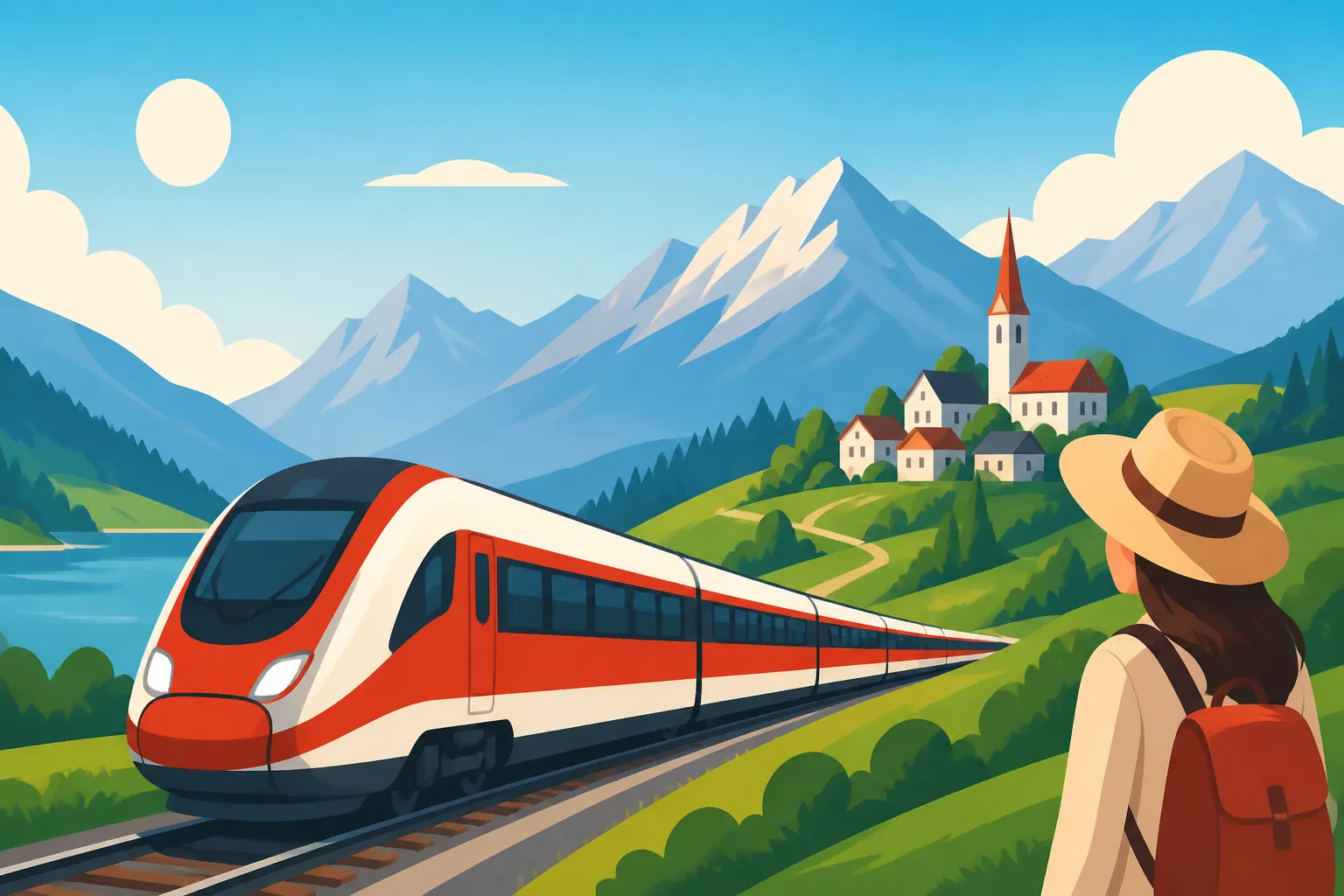
The Austrian Federal Railways, or ÖBB (Österreichische Bundesbahnen), is the backbone of the country’s infrastructure. For a newcomer, the sheer variety of train types can be dizzying. You have the Railjet (RJ) and the even faster Railjet Xpress (RJX), which are the crown jewels of the fleet. These connect major cities like Vienna, Salzburg, Linz, Innsbruck, and Graz with high-speed efficiency, often reaching 230 km/h. Inside, you’ll find ergonomic seats, power outlets, and reliable Wi-Fi, making them perfect for both working and staring out at the breathtaking alpine scenery.
Beyond the high-speed lines, you’ll frequently encounter InterCity (IC) and EuroCity (EC) trains. These are slightly slower and may use older rolling stock, but they often stop at significant regional hubs that the Railjet skips. For shorter distances or rural escapes, the Regional-Express (REX) and Regionalzug (R) are your best friends. These are the workhorses of the countryside, stopping at smaller villages. If you are living in a major metropolitan area, the S-Bahn (Schnellbahn) provides the inner-city and suburban connections that integrate perfectly with the main rail lines.
Understanding the hierarchy of these trains is essential for planning. For instance, a Railjet from Vienna to Salzburg might take roughly 2 hours and 22 minutes, while a regional combination could take over four hours. When you’re looking at the departure boards, always check the "stops" list. If you are living in a specific area, such as a student hub or a quiet suburb, you should check out the Graz Neighborhood Guide: Family Areas vs Student Hubs to see how the local S-Bahn connections might influence your weekend escape plans.
Ticket Strategies for the Budget Conscious Expat
One of the biggest mistakes foreigners make is buying a "Standard-Ticket" five minutes before departure. In Austria, that is the most expensive way to travel. The secret to affordable weekend travel lies in the "Sparschiene" tickets. These are discounted, non-refundable tickets tied to a specific train and time. They are released up to 180 days in advance, and prices start as low as 9 Euros for short hops or 19 Euros for cross-country trips. If you know you want to visit a Christmas market three months from now, book your Sparschiene ticket immediately.
If you plan on traveling even once a month, the ÖBB Vorteilscard is a mandatory investment. For an annual fee (usually around 66 Euros for adults, though often cheaper for seniors or those under 26), you get 50% off all standard tickets purchased online or via the app. The card pays for itself remarkably quickly—usually after just two or three round trips between Vienna and Salzburg. Just remember that the Vorteilscard discount cannot be stacked on top of an already discounted Sparschiene fare; the app will automatically calculate which option is cheaper for you.
For groups of two to five people traveling on regional trains, the "Einfach-Raus-Ticket" is a hidden gem. It offers a flat rate for a whole day of travel, but there is a catch: it is only valid on R, REX, and S-Bahn trains. You cannot use it on the fast Railjets. This makes it perfect for a slow-paced day trip to the Wachau Valley or the Neusiedler See, where the journey itself is part of the sightseeing experience. Just be mindful of the timing, as these tickets usually become valid at 9:00 AM on weekdays to avoid the morning rush.
| Ticket Type | Best For | Refundability | Speed |
|---|---|---|---|
| Sparschiene | Solo travelers booking 2+ weeks in advance | Non-refundable | High-speed (RJ/RJX) |
| Standard with Vorteilscard | Flexible travelers who travel frequently | Refundable (usually) | Any train type |
| Einfach-Raus-Ticket | Groups of 2-5 on a budget day trip | Non-refundable | Regional only (No RJ) |
| Klimaticket | Residents who travel multiple times a week | Subscription based | Any train type |
The Digital Experience Mastering the ÖBB App and Website
The ÖBB app is surprisingly robust, but it requires a bit of setup to be useful. My first tip: create an account and save your "Vorteilscard" details and your payment method. This allows for "One-Click" buying, which is a lifesaver when you are running toward the platform. The app also serves as your digital ticket; conductors simply scan the QR code on your phone. You don't need to print anything, but do make sure your phone is charged, as a dead battery is not an acceptable excuse for not having a ticket.
A separate but equally essential app is "ÖBB Scotty." While the main app is for buying tickets, Scotty is for pure navigation. It provides door-to-door directions, including bus and tram connections to the train station. If there is a delay or a platform change—which happens even in organized Austria—Scotty will ping you with a notification. It is significantly more accurate than Google Maps for Austrian transit. When planning a trip, check if your departure involves any physical tickets, and read up on How to Validate Physical ÖBB Train Tickets Before Boarding to avoid any awkward fines.
One often overlooked feature in the app is the seat reservation system. On high-speed Railjets, a reservation is optional but highly recommended on weekends or during "Feiertage" (public holidays). For 3 Euros, you guarantee a seat. Without it, you might find yourself sitting on your suitcase in the hallway for three hours if the train is "ausgebucht" (fully booked). The app shows you a seating map, allowing you to choose "Quiet Zones" (Ruhezone) where talking and phone calls are prohibited, or "Family Zones" where kids can be a bit more boisterous.
Top Weekend Destinations from Major Cities
From Vienna, the options are nearly endless. A classic weekend involves taking the train to Melk, touring the famous abbey, and then cycling or taking a regional train through the Wachau Valley. If you are a mountain lover, the Semmering Railway—a UNESCO World Heritage site—is just over an hour away. The views from the train as it snakes through mountain passes are incredible. Before you head out for a mountain hike, make sure you are aware of Skiing Etiquette and Lift Line Rules in the Austrian Alps if your weekend escape involves winter sports.
If you are starting from Salzburg, you are at the gateway to the Salzkammergut region. A short train ride takes you to Attnang-Puchheim, where you can transfer to a local line toward Gmunden or Hallstatt. While Hallstatt is famous, it can be crowded. Local expats often prefer the quieter shores of Lake Traunsee or a trip to Bad Ischl for some traditional pastries at Café Zauner. For those living in the city, check out the Salzburg Neighborhood Guide: Altstadt vs Affordable Suburbs to see which station is most convenient for your departure.
From Innsbruck, the "Karwendelbahn" is one of the most scenic routes in Europe, taking you up into the high mountains toward Seefeld or across the border to Mittenwald in Germany. It’s a favorite for hikers and skiers alike. Weekend travel in these regions requires a bit of foresight regarding local closures. Shops in small towns will be closed on Sundays, so always consult Public Holiday Closing Times: Navigating Feiertage Errands to ensure you have enough snacks and supplies for your hike.
Practical Etiquette and Essential Travel Tips
Austrian train etiquette is governed by a few unwritten rules that, if ignored, will earn you the "Austrian Stare." First, keep your voice down, especially in the "Ruhezone." Second, do not put your feet on the seats—unless you put a newspaper or a dedicated "feet mat" down first. When the conductor arrives, have your ticket and your ID (or your Vorteilscard) ready. They are generally efficient and polite, but they have little patience for people fumbling through their emails to find a confirmation.
Traveling with a bicycle is a popular weekend activity, but it requires a special "Fahrradticket" (bike ticket) and, on long-distance trains, a mandatory reservation for the bike. There are limited bike spots per train, and they sell out days in advance during the summer. If you’re bringing a dog, it generally needs a ticket (usually half the price of a standard fare) and must wear a muzzle and be on a leash. Small dogs in carriers often travel for free.
If the hunger hits while you’re crossing the Alps, the "BordRestaurant" (run by DoN) is actually quite good. Unlike many countries where train food is a soggy sandwich, Austrian Railjets serve decent Schnitzel, Gulaschsuppe, and even seasonal specials like Asparagus in the spring. It is a bit pricey, but sitting in the dining car with a glass of Austrian Zweigelt as the mountains roll by is a peak expat experience. Just remember that if you are returning home to a cold apartment, you might want to look into Winterizing Your Austrian Apartment Against Drafts before the winter weekend trips begin.
Integration with Local Transport Networks
The brilliance of the ÖBB system is how it connects with local transport. In most Austrian cities, your ÖBB ticket to that city often includes a "City Ticket" option or allows for a seamless transfer to the local Vor (Verkehrsverbund Ost-Region). However, for most residents, the "Klimaticket" has changed the game. For a fixed annual price, you get unlimited travel on every single piece of public transport in the country—trains, buses, trams, and even some mountain lifts.
If you are a frequent weekend traveler, you must do a cost-benefit analysis on the Klimaticket. If you travel between Vienna and Salzburg twice a month, it practically pays for itself. For a deep dive into the numbers, check out Is the Klimaticket Worth It? Cost and Benefit Analysis. It removes the stress of booking Sparschiene tickets and allows you to just hop on any train whenever you feel like an adventure.
Finally, keep an eye on the "Last Mile." While the train gets you to the station, you might need a local bus or a "Postbus" to get to your final trailhead or hotel. These are timed to meet the trains, but on Sundays, the frequency drops significantly. Always check the return times for the last bus of the day on Scotty. Being stranded at a rural station because you missed the 4:00 PM bus is a rite of passage for expats, but it’s one you’d probably prefer to avoid. While away, make sure you've handled your home responsibilities, like Managing Household Waste: Strict Recycling Rules Explained, so you don't return to a messy situation.
Disclaimer
This guide is for informational purposes only. While I strive to keep everything as up-to-date as possible, ÖBB prices, schedules, and terms of service can change. Always verify your specific travel details on the official ÖBB website or app before booking or traveling. Rail travel involves inherent risks, and it is the traveler's responsibility to ensure they have the correct documentation and follow local safety regulations.