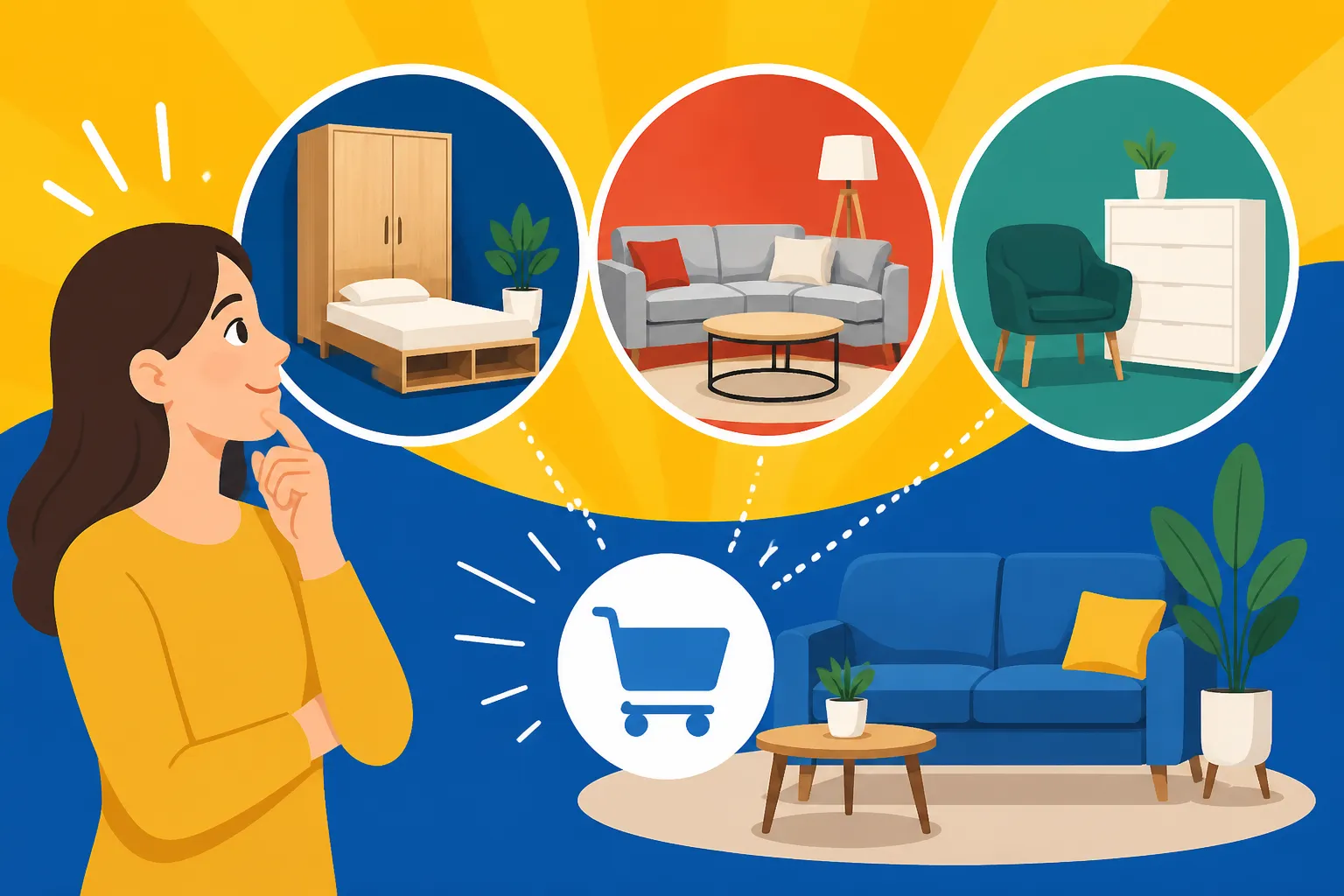
Affordable Furniture Shopping: IKEA, XXXLutz, and Willhaben
Staring at the echoey, bare-walled rooms of a high-ceilinged Altbau is a rite of passage every newcomer to Austria faces, and it is rarely as romantic as the movies suggest. I still remember the cold sweat I broke into when I realized my first "ready-to-move-in" apartment didn't just lack a bed—it lacked a kitchen sink, a stove, and every single light fixture. This guide will navigate you through the local landscape of affordable furniture so you can turn those empty rooms into a home without draining your savings.
The Reality of Furnishing an Empty Austrian Apartment
When you first arrive, you might be surprised by the concept of "nackte Wohnungen" or naked apartments. In many parts of the world, a rental includes at least a basic kitchen. In Austria, however, it is remarkably common to find apartments that are a literal concrete shell. This is one of the most significant shocks for those following a Living in Austria 2027: The Expat Starter Guide because the upfront costs of furnishing can easily rival your initial deposit.
The choice between an Altbau vs Neubau: Differences in Rent, Charm, and Heating also dictates your furniture shopping strategy. Altbaus, with their 3-meter-high ceilings and double doors, require massive wardrobes and clever lighting, whereas modern Neubaus are more standardized for IKEA-sized flatpacks. You must measure every corner twice before you even think about hitting the shops, as those beautiful winding staircases in older buildings are notoriously unforgiving to oversized sofas.
The Missing Kitchen Phenomenon
The most expensive hurdle you will face is often the kitchen. If you see an ad that says "unmöbliert," verify if it includes the "Küche." It is a bizarre but standard practice for tenants to take their entire kitchen—cabinets, appliances, and all—when they move out. This leads many expats to search for Why Many Austrian Rentals Come Without a Kitchen Installed and how to solve it cheaply. Buying a brand-new kitchen from a high-end studio can cost upwards of €10,000, but there are much more affordable ways to tackle this if you know where to look.
The Ablöse System
In many cases, the outgoing tenant will offer to sell you their furniture, including the kitchen, for a lump sum known as an "Ablöse." This can be a lifesaver or a trap. While it saves you the logistical nightmare of installation, you must ensure the price is fair and reflects the age and wear of the items. Always ask for original receipts. If you are Renting in Austria: MRG Laws, Leases, and Bestellerprinzip, be aware that there are legal limits on how much an outgoing tenant can charge for their old furniture to prevent price gouging.
Budgeting for the First Month
Beyond the big items, the "Kleinigkeiten" (small things) add up. Lightbulbs, curtain rods, shower curtains, and trash bins are rarely included. When you are looking at Budgeting in Austria: Accurate Cost of Living Benchmarks, you should set aside at least €2,000 to €3,000 for a basic 1-bedroom setup if you are buying a mix of new and used items. If you have to install a kitchen, double that number immediately.
Willhaben: The Holy Grail of Second-Hand Treasures
If you live in Austria for more than a week, you will hear the word "Willhaben." It is the local equivalent of Craigslist or eBay Kleinanzeigen, but it is much more deeply integrated into the culture. For an expat, it is the absolute best way to find high-quality furniture for a fraction of the retail price. I have furnished entire guest rooms for under €100 using this platform, but it requires a bit of strategy and a lot of German vocabulary.
The beauty of Willhaben is the "Zu verschenken" (for free) section. People in Austria often prefer to give things away for free if the recipient handles the heavy lifting and transport. This is particularly common at the end of the month when people are desperate to clear out their old flats. However, you must be fast. The best items are gone within minutes of being posted.
Navigating the Search Filters
To find the best deals, you need to master the search filters. Use keywords like "Selbstabholung" (self-pickup) and "Abzugeben." If you are in a major city, filter by your specific district to keep transport costs low. I highly recommend looking for Sourcing cheap used furniture on Willhaben safely tips because, while the community is generally very honest, you should always inspect items in person before handing over any cash.
Negotiating and Transport Logistics
Austrians are generally open to a bit of "Handeln" (haggling), especially if you are buying multiple items from the same seller. Keep your messages polite and in German if possible—Google Translate is your friend here. The biggest challenge with Willhaben is getting the furniture to your flat. Most sellers will not deliver. You will likely need to look into Renting a moving van (Transporter) with a standard B license to pick up that solid oak dining table from the 22nd district.
Spotting Quality vs. Junk
Because Austria has a high standard of living, the second-hand market is filled with "Massivholz" (solid wood) furniture that will last a lifetime. Don't just look for cheap IKEA resales; look for older, traditional Austrian pieces that might just need a fresh coat of paint. These items are often heavy, so check if the building has a "Lift" (elevator) before you show up with a small car and big dreams.
IKEA: The Reliable Expat Rite of Passage
IKEA is the universal language of the international resident. In Austria, IKEA serves as the primary source for everything from basic bed frames to complete kitchen systems. It is the most predictable option, providing a one-stop-shop experience that includes food, furniture, and a nursery for your kids while you shop. However, shopping at IKEA in Austria has its own set of quirks, especially regarding the different locations.
In Vienna, you have two main options: the traditional, massive warehouses like IKEA Vösendorf (south) or IKEA Haid (near Linz), and the innovative IKEA Westbahnhof. The Westbahnhof location is "car-free," designed specifically for urban dwellers who arrive by public transport. You can walk through the showroom and buy smaller items, but anything large must be ordered for delivery.
Delivery and Assembly Services
If you don't have a car, IKEA's delivery service is a double-edged sword. It is incredibly convenient, but the costs can be steep depending on the value of your order. For those Moving to Austria with Family: Schools and Logistics, time is often more valuable than money, and paying for the professional "Montageservice" (assembly service) can prevent a lot of household arguments. Be warned: delivery slots in peak moving months (September and February) fill up weeks in advance.
The Second-Hand Circle at IKEA
A little-known tip for the budget-conscious is the "Fundgrube" (As-Is section) near the checkout. This is where returned items or floor models are sold at a 30% to 70% discount. Additionally, IKEA Austria has a "Second Life" program where they buy back old IKEA furniture and resell it. This is a fantastic way to find pre-assembled items for much less than their flatpack counterparts.
Planning Your Kitchen at IKEA
If your rental is "naked," IKEA is often the fastest way to get a kitchen. They offer free planning tools and in-store consultants who speak English. If you are living in a Vienna Neighborhood Guide: Best Districts for Expats, you might find that the local IKEA is the easiest place to coordinate the complicated logistics of plumbing and electrical installation, as they work with certified local contractors.
The XXXLutz Group: Understanding the Furniture Hierarchy
You cannot miss the giant red chairs dotting the Austrian landscape. These are the logos for XXXLutz, the massive furniture conglomerate that dominates the Central European market. Understanding XXXLutz is actually about understanding three different brands that cater to three different budgets. It is a hierarchy that every expat should learn before they start browsing.
At the top is XXXLutz itself, which ranges from mid-market to high-end designer pieces. Below that is Mömax, which is Austria’s answer to IKEA—trendy, colorful, and focused on younger urbanites. At the bottom is Möbelix, the "cost-cutter" brand where you find the absolute lowest prices on basic essentials.
Deciphering the Sale Culture
XXXLutz is famous (or infamous) for its "Dauerrabatte" (permanent sales). You will almost never pay the "original" price for a sofa there. There is always a voucher, a "Prozent-Aktion," or a seasonal clearance happening. If you are looking at the Cost of Living in Vienna: Singles vs Families, shopping at Möbelix for your heavy-duty items like wardrobes can save you hundreds of Euros compared to the flagship stores.
Quality vs. Price Trade-offs
While Möbelix is great for the wallet, be realistic about the quality. Their furniture is often made of thinner particle board and may not survive a second move. If you are planning on Financial Comparison: Renting vs Buying Property in Austria and staying for the long term, it might be worth stepping up to the main XXXLutz brand for items you use every day, like your mattress or your sofa.
Long Delivery Lead Times
One major frustration for expats is the "Lieferzeit." Unlike IKEA, where most things are in stock, XXXLutz and Mömax often have lead times of 8 to 12 weeks for sofas or custom cabinets. If you need a bed tonight, these might not be your best options. Always check the "Sofort verfügbar" (available immediately) tag on their websites before you get your heart set on a specific fabric color.
Local Comparison: Where to Buy What?
To help you strategize your shopping trip, I’ve put together a comparison of the main players in the Austrian furniture market.
| Feature | IKEA | Willhaben | XXXLutz Group | Möbelix / Mömax |
|---|---|---|---|---|
| Price Point | Low to Mid | Very Low to Free | Mid to High | Low |
| Availability | Immediate (mostly) | Immediate | Often 8-12 weeks | 1-4 weeks |
| Assembly | DIY (Difficult) | Pre-assembled | Professional or DIY | DIY (Simple) |
| Delivery | Fast but costly | You must organize | Reliable but slow | Budget options |
| Vibe | Scandi/Modern | Varies (Unique) | Traditional/Modern | Trendy/Basic |
Logistics and Moving: Getting Your Stuff Home
Buying the furniture is only half the battle. Getting it into a 4th-floor apartment without an elevator is where the real "Austrian experience" begins. If you are buying a lot of items at once, I highly recommend looking into Renting a moving van (Transporter) with a standard B license. Companies like Sixt, Buchbinder, or even the local "Share Me" vans found in IKEA parking lots are essential.
Navigating the Streets and Parking
Parking a large van in Vienna or Graz can be a nightmare. You often need a "Halteverbot" (temporary no-parking zone) permit from the city if you are doing a major move. If you ignore this and just double-park, you will likely face a hefty fine. This is a common point of discussion in Everyday Etiquette: Garbage Sorting, Noise, and Ruhezeit because your neighbors will not be happy if you block the street for three hours on a Tuesday morning.
Professional Help vs. DIY
If you have a large family and are Moving to Austria with Family: Schools and Logistics, hiring a "Möbeltaxi" can be a great middle ground. These are small, independent moving companies (often found on Willhaben or via Google) that charge by the hour to help you pick up and carry heavy items. They are much cheaper than full-scale moving companies but more reliable than trying to convince a friend to help you for a crate of Ottakringer beer.
The "Sperrmüll" Day
What do you do with the furniture you don't want? Or the piles of cardboard boxes from your IKEA haul? Do not just leave them on the sidewalk. Austria has very strict rules about "Sperrmüll" (bulky waste). You must take these items to a "Mistplatz" (recycling center). If you are caught dumping furniture illegally, the fines are astronomical. Most residents use their Renting a moving van (Transporter) with a standard B license one last time to do a "Mistplatz" run at the end of the move.
Final Advice for the Smart Shopper
Don't try to furnish your entire home in the first weekend. Start with the essentials: a bed, a light for each room, and a way to cook. Live in the space for a month to see how the light hits the rooms and where you naturally want to sit. In a country where the Cost of Living in Vienna: Singles vs Families is manageable but requires planning, patience is your greatest financial asset.
Mix and match. Buy your sturdy, boring items (like wardrobe interiors) at IKEA, your "statement" pieces (like a vintage sideboard) on Willhaben, and your textiles at Mömax. This creates a home that feels curated and local, rather than a carbon copy of a showroom floor. Most importantly, embrace the process. Building your first Austrian home is the moment you stop being a tourist and start being a resident.
Disclaimer
The information provided in this guide is for informational purposes only and reflects the personal experiences of the author and current market conditions in 2026. Prices, store locations, and legal regulations regarding rentals and furniture transport are subject to change. Always verify specific terms with retailers and consult your rental agreement before making permanent modifications to your apartment.