Living in Austria 2027: The Expat Starter Guide
Landing in Vienna or Salzburg for the first time feels like walking into a postcard, but the reality of setting up a life here often involves a dizzying array of paperwork and unwritten social rules. I remember standing in line at the district office, clutching my documents and praying my limited German would suffice, feeling completely lost. This guide simplifies that journey, covering everything from the elusive Meldezettel to the nuances of Sunday closures, ensuring your transition to Austrian life is as smooth as a Sachertorte.
The Administrative Maze: Meldezettel and Initial Registration
The first thing you must understand about Austria is that the government likes to know exactly where you are at all times. This is not meant to be intrusive in a dystopian sense; rather, it is the foundation of every other service you will access, from getting a library card to opening a bank account. The most critical document in your arsenal is the Meldezettel, which is your proof of residence. Without this piece of paper, you effectively do not exist in the eyes of the Austrian state.
The Three-Day Rule
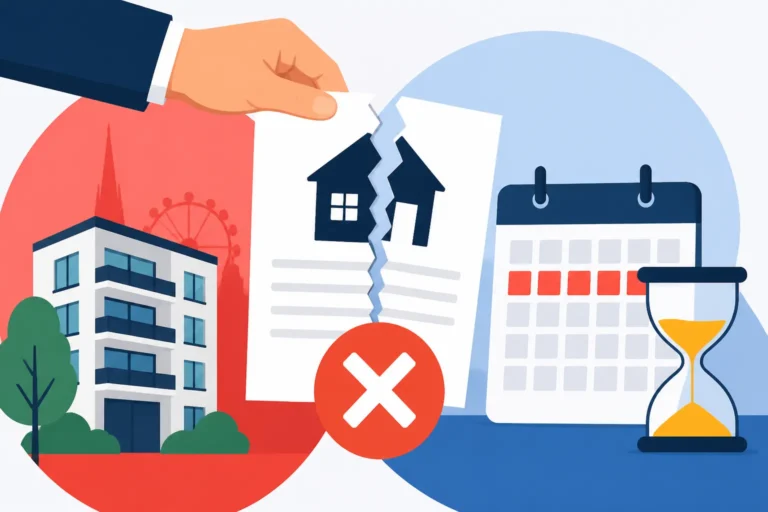
In Austria, you are legally required to register your address within three business days of moving into a new apartment. This rule is often a shock to expats who are used to more relaxed timelines. If you are staying in a hotel or a serviced apartment initially, the establishment usually handles this for you, but the moment you sign a private lease, the clock starts ticking. Some people have received fines for missing this window by just a few days, so do not treat this as a suggestion.
To register, you need a form called the Meldezettel, which must be signed by your landlord. Many landlords provide a digital signature, but the physical form is still the gold standard in many district offices. You take this form, along with your passport and any visa documents, to the Meldeservice at your local Magistrate (in Vienna) or the Gemeindeamt (in smaller towns). You do not always need an appointment, but showing up early is highly recommended to avoid the mid-morning rush.
Digital Registration via ID Austria
For those who have already established themselves and are simply moving from one district to another, 2026 has brought a much-needed digital upgrade. If you have a valid residence permit and have activated your ID Austria—the country’s digital identity system—you can often complete your address change online. This is a massive relief for those of us who remember waiting in drafty hallways for hours.
Using The Meldezettel Process: Registering Your Address Legally guide can help you navigate the specific fields on the digital form. Once submitted, your new residence confirmation is stored in the Central Residence Register (ZMR), and you can download a PDF version immediately. This digital confirmation is legally identical to the stamped paper version, though it is always wise to keep a printed copy in a dedicated folder for your first year in the country.
Navigating the Magistrat and MA 35
If you are a non-EU citizen, your interactions with the administration will likely center around the dreaded MA 35 in Vienna or the relevant Bezirkshauptmannschaft in other provinces. These offices handle residence permits and visa extensions. It is no secret among the expat community that these offices can be overwhelmed, leading to long processing times and occasional communication lapses.
When dealing with these authorities, preparation is your best defense. Always bring original documents plus at least two photocopies of everything. If your documents are not in German, they must be translated by a court-certified translator in Austria. You can find more details on these requirements in our Austria Visas & Residence Titles 2027: Complete Guide to ensure you don't miss a single stamp or signature that could delay your residency.
Finding Your Home: The Realities of Austrian Housing
Finding an apartment in Austria’s major cities has become increasingly competitive. Whether you are looking for a historic flat with high ceilings or a modern energy-efficient studio, the market moves fast. You will spend a lot of time on platforms like Willhaben or ImmobilienScout24, hitting refresh and hoping to be the first to email a landlord.
Altbau vs Neubau
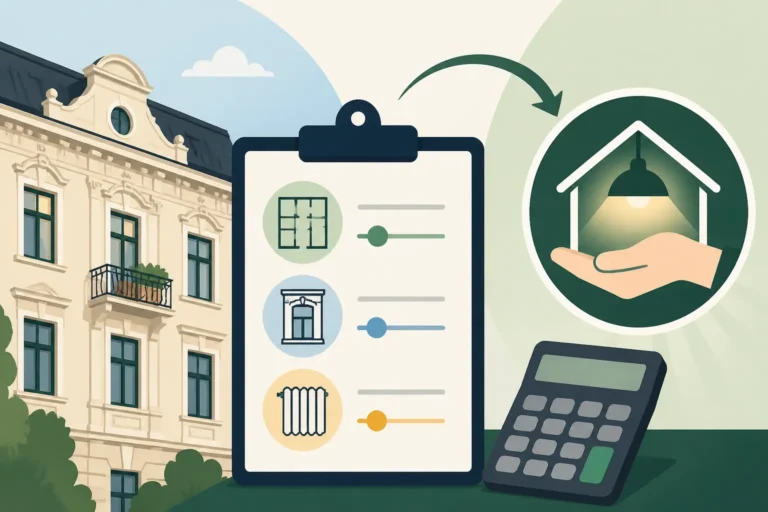
In Austria, apartments are generally categorized into Altbau (old construction, usually before 1945) and Neubau (new construction). Altbau apartments are beautiful, featuring parquet floors, massive double doors (Flügeltüren), and high ceilings that give you plenty of breathing room. However, they are also notorious for being difficult to heat in the winter and often lack elevators unless they have been recently renovated.
Neubau apartments, on the other hand, are built with modern energy standards in mind. They are typically better insulated and often come with floor heating and modern kitchens. The trade-off is often a lack of "soul" or historic charm. It is also important to note that rent control laws often apply differently to Altbau units, which can sometimes make them more affordable than modern builds of a similar size. Check out the Vienna Neighborhood Guide: Best Districts for Expats to see which districts favor which style of architecture.
The Bestellerprinzip and Rental Fees
One of the most significant wins for tenants in recent years is the full implementation of the Bestellerprinzip. Previously, it was common for an expat to find an apartment and be forced to pay a "Provision" (agent commission) equivalent to two months' rent, even if the agent was working for the landlord. As of 2026, the party who hires the agent pays the fee. For most renters, this means you no longer have to cough up thousands of euros just to get the keys.
However, you still need to budget for the Kaution (security deposit). This is typically between three and six months of "BMM" (Bruttomonatsmiete, or gross monthly rent). This money is held in a side account and should be returned to you with interest when you move out, provided you haven't damaged the property. For a deeper look at the financial side of moving, our guide on Cost of Living in Vienna: Singles vs Families breaks down exactly what you should expect to pay upfront.
Utilities and Energy Providers
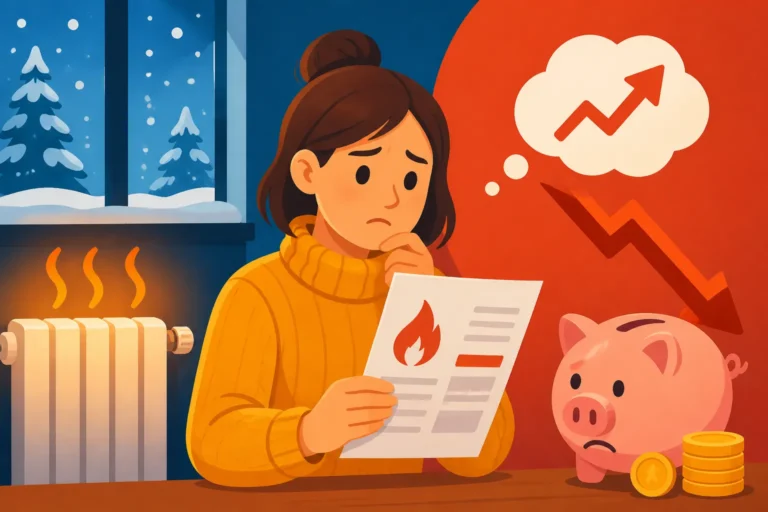
When you move in, you are usually responsible for setting up your own electricity and gas contracts. In Vienna, Wien Energie is the default provider, but you are free to choose from several private competitors. Since the energy fluctuations of the early 2020s, many expats now prefer fixed-rate contracts to avoid winter price spikes.
Water is usually included in your "Betriebskosten" (building operating costs), which is part of your monthly rent payment. Heating, however, can be tricky. Some buildings use "Fernwärme" (district heating), which is very convenient but leaves you with no choice of provider. Others still use gas boilers (Kombitherme). If you have a gas boiler, you are legally required to have it serviced once a year. If you fail to do this and the boiler breaks, you—not the landlord—will be responsible for the very expensive repair bill.
Healthcare and the E-Card System
Austria’s healthcare system is consistently ranked among the best in the world. As a resident, you are generally covered by mandatory social insurance, which is deducted directly from your salary if you are employed. If you are self-employed, you will deal with the SVS. Once you are registered, you will receive your e-card in the mail, which is your golden ticket to medical care.
Public vs Private Coverage
The public system is comprehensive, covering everything from routine checkups to major surgeries and hospital stays. You will choose a "Hausarzt" (General Practitioner) who accepts your specific insurance (e.g., ÖGK). However, you might find that wait times for specialists can be several weeks or even months. This is why many expats choose to supplement their public insurance with private "Zusatzversicherung."
Private insurance allows you to see "Wahlarzt" (doctors who do not take public insurance directly) and often ensures you get a private or semi-private room in the hospital. If you choose a private doctor, you pay upfront and then submit the invoice to your public insurer for a partial refund. You can find more about how this works in our article on Public vs Private Health Insurance in Austria Explained.
Registering Your E-Card Photo
Since 2020, Austria has required a photo on almost all e-cards to prevent fraud. If you are an expat and do not have an Austrian driver's license or passport, the system will not have a photo of you on file. You must proactively go to a registration office to have your photo linked to your social security number. If you don't do this, your card will eventually be blocked, which is a massive headache if you suddenly fall ill.
The process is straightforward but requires an appointment. You’ll need a passport-sized photo that meets biometric standards. We have a detailed walkthrough on this in The Austrian e-card: Registration, Photo Rules, and Usage Guide. Once the photo is registered, your new card usually arrives within a few weeks. In the meantime, your doctor can look you up using your social security number, but it is always better to have the physical card ready.
Pharmacies and Night Services
Pharmacies, or "Apotheken," are the only place you can buy medication in Austria—you won't find aspirin or cough syrup in a supermarket. They are highly regulated, and the pharmacists are incredibly well-trained; they can often give better medical advice for minor ailments than a busy GP.
If you need medication outside of normal business hours, every city has a rotating "Bereitschaftsdienst" (on-call service). One pharmacy in a given area will remain open all night and through the weekend. You can find the nearest one by looking at the sign in any pharmacy window or checking online. Be aware that there is a small "Nachtdienstgebühr" (night service fee) for purchases made during these hours. For more on accessing care, refer to Finding Medical Care in Austria: Clinics, Hospitals, and Referrals.
Daily Life and Cultural Nuances
Living in Austria requires adapting to a rhythm of life that might feel slower than what you are used to. There is a deep respect for personal time and tradition that governs how society functions. While it can be frustrating when you just want to buy milk on a Sunday, it also contributes to the high quality of life that keeps people here for decades.
The Art of Sunday Closures
In Austria, Sunday is truly a day of rest. Almost all supermarkets, shops, and malls are closed. The only exceptions are pharmacies, restaurants, and small shops located inside major train stations or airports. This is a shock for many newcomers. My first Sunday here, I had an empty fridge and ended up eating crackers for dinner because I hadn't planned ahead.
Over time, you will learn to love the quiet of an Austrian Sunday. It is the day for "Wandern" (hiking), visiting a museum, or spending hours in a "Kaffeehaus" with a newspaper. If you find yourself in a bind, look for the Billa am Praterstern or similar station shops in Vienna, but be prepared for massive crowds. It’s better to embrace the local habit of doing a big "Wocheneinkauf" (weekly shop) on Friday or Saturday.
Trash Sorting and Sustainability
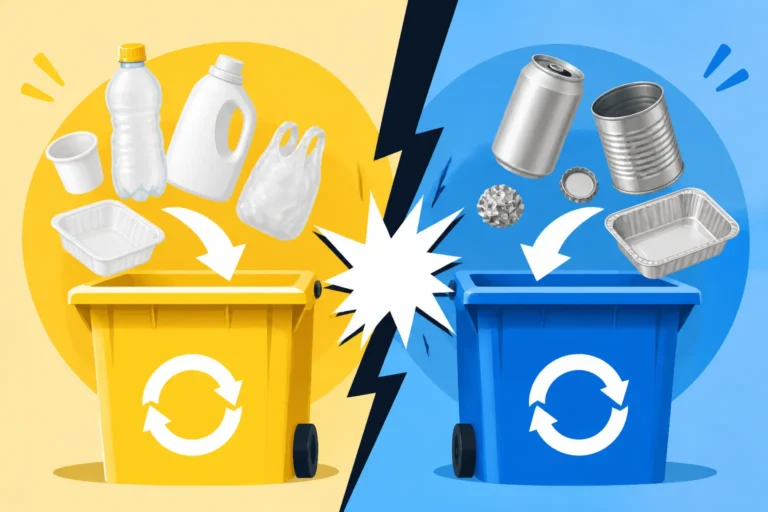
Austrians take recycling very seriously. In most apartment buildings, you will find a battery of colored bins: red for paper, yellow for plastic and metal (though this varies by province), blue for glass, brown for organic waste, and orange or black for "Restmüll" (remaining waste). Sorting your trash incorrectly isn't just bad for the environment; it can actually lead to nasty notes from your neighbors or fines for the entire building.
If you have large items like an old sofa or a broken microwave, you cannot simply leave them on the sidewalk. You must take them to a "Mistplatz" (recycling center) or book a "Sperrmüll" collection. The system is incredibly efficient once you understand the codes. For example, in Vienna, the MA 48 app is a lifesaver for finding the nearest disposal point and checking which bin your specific piece of trash belongs in.
Quiet Hours and Apartment Etiquette
The concept of "Ruhezeit" (quiet time) is legally and socially enforced. Generally, this means no loud noises between 10:00 PM and 6:00 AM, and often during the "Mittagsruhe" (lunchtime quiet) between 12:00 PM and 2:00 PM. On Sundays and public holidays, the expectation for quiet is even higher. This means no drilling, no vacuuming, and no loud parties.
While it might seem restrictive, it means that even in a bustling city like Graz or Linz, your home remains a sanctuary. If you are planning a housewarming party, it is customary to put a friendly note in the building's hallway a few days in advance, though this doesn't give you a free pass to blast music until 4:00 AM.
| Expense Category | Vienna (Estimated) | Graz/Linz (Estimated) | Notes |
|---|---|---|---|
| 1-Bedroom Apartment | €850 – €1,200 | €650 – €900 | Higher in districts 1-9 in Vienna |
| Monthly Utilities | €150 – €250 | €120 – €200 | Depends on heating type |
| Monthly Public Transport | €33 (Annual Pass) | €40 – €50 | Klimaticket is cheapest for long-term |
| Standard Grocery Bill | €300 – €450 | €280 – €400 | Shopping at Hofer saves ~20% |
| Meal at Mid-Range Resto | €18 – €25 | €15 – €22 | Excluding drinks and 10% tip |
Transportation and Getting Around
You really do not need a car in most Austrian cities. The public transport network is frequent, clean, and remarkably punctual. Between the local "Bim" (streetcar), the U-Bahn (subway), and the extensive ÖBB train network, you can reach almost any corner of the country without ever touching a steering wheel.
The Klimaticket Revolution
The best thing to happen to Austrian transport in decades is the Klimaticket. For a fixed annual fee (around €1,095 in 2026, with significant discounts for seniors, youth, and people with disabilities), you get unlimited travel on all public transport across the entire country. This includes every local bus, every city tram, and all national trains.
If you plan on taking even one or two weekend trips to the mountains or the lakes each month, the ticket pays for itself very quickly. It removes the stress of navigating different regional ticketing apps and allows you to just hop on any train and go. You can find a detailed breakdown of whether this makes sense for your lifestyle in Is the Klimaticket Worth It? Cost and Benefit Analysis.
Public Transport in Major Cities
Within cities like Vienna, the "Jahreskarte" (annual card) is legendary. For just €365 a year—one euro a day—you get unlimited travel within the city limits. The system operates on an honor system; there are no turnstiles at the stations. However, do not be tempted to "schwarzfahren" (ride without a ticket). Plainclothes inspectors frequently board trains and trams, and the fine is currently over €100 plus the price of a ticket.
If you are a student or under 26, the "Top-Jugendticket" offers even more aggressive discounts. For those who prefer two wheels, Austria’s cities are becoming increasingly bike-friendly, with dedicated lanes and bike-sharing programs. Just remember that biking on the sidewalk is strictly forbidden and can result in a fine if a "Polizist" catches you.
Driving and License Conversion
If you do decide to drive, perhaps because you live in a more rural area or enjoy Alpine road trips, you need to be aware of the rules for converting your license. If your license is from an EU/EEA country, you can drive indefinitely. If you are from a third country (like the US, Canada, or Australia), you can usually drive for six months on your foreign license before you must convert it to an Austrian "Führerschein."
Depending on where your license was issued, this might involve a simple administrative swap or a full practical driving test. The Austrian driving test is notoriously difficult and expensive, so check the requirements early. Also, remember the "Vignette"—the toll sticker required for all motorways. Digital vignettes are the standard, linked to your license plate, so you no longer have to scrape stickers off your windshield.
Managing Your Finances in Euros
Financial setup in Austria is a mix of high-tech digital banking and a surprising, lingering love for physical cash. While you can pay with a card in most places now, you will still find "Nur Barzahlung" (cash only) signs at smaller cafes, mountain huts, and some traditional Heuriger.
Opening an Austrian Bank Account
You will need a local IBAN for almost everything, especially for your salary and for setting up "Lastschrift" (direct debit) for your rent and utilities. While neobanks are popular, many landlords and insurance companies still prefer traditional Austrian banks like Erste Bank, Raiffeisen, or Bank Austria because they integrate seamlessly with the local EPS online payment system.
To open an account, you will need your passport and your Meldezettel. Some banks may also ask for your employment contract. Most banks now offer English-language apps, but the fine print on your contract will almost certainly be in German. For a comparison of the best options for expats, see our guide on Money in Austria 2027: Banking, Payments, and Financial Setup.
The ORF-Beitrag Broadcasting Levy
Since 2024, Austria has moved to a household-based broadcasting fee called the ORF-Beitrag. Unlike the old system, which only applied if you had a TV or radio, this is now a mandatory fee for every household, regardless of whether you own a device. The logic is that everyone benefits from the public service media infrastructure.
The fee is around €15 per month (billed annually or semi-annually) and is collected by OBS. You are legally required to register your household. If you ignore the letters, the fines can escalate quickly. There are exemptions for people with very low incomes or certain disabilities, which we explain in ORF-Beitrag 2026: The New Broadcasting Household Levy Guide.
Cash Culture vs Digital Payments
While the COVID-19 pandemic accelerated the adoption of contactless payments, Austria remains a country where "Cash is King." It is not uncommon for a high-end restaurant to tell you their card machine is "broken" just as the bill arrives. I always carry at least €50 in cash just in case.
When you do pay with a card, your "Bankomatkarte" (Debit Card) is much more widely accepted than a Credit Card (Visa/Mastercard). This is because merchant fees for debit cards are lower. If you are using a foreign credit card, always ask "Zahlen mit Kreditkarte möglich?" before you order. Also, when splitting a bill, the phrase "Getrennt zahlen, bitte" (Pay separately, please) is standard and perfectly acceptable even for large groups.
Social Integration and Language
The "Austrian soul" is often described as "gemütlich"—a word that means cozy, comfortable, and unhurried. However, gaining access to that inner circle can take time. Austrians can be reserved at first, and "small talk" as known in the US or UK isn't really a thing here. Conversations tend to be direct and purposeful.
Learning German for Success
While you can survive in Vienna with English, especially in the tech and international sectors, your quality of life will improve exponentially once you speak German. Even a shaky "A2" level shows that you are making an effort to integrate. Austrians are generally patient with learners, but they will switch to English the moment they see you struggling. If you want to practice, you have to be firm: "Ich möchte bitte Deutsch üben."
Enrolling in an "Integrationskurs" is often a requirement for your residence permit anyway. Beyond the grammar, these courses teach you about the political system and history of the country. For tips on finding the best schools and balancing work with study, read Learning German for Life and Career Success in Austria.
Making Friends and Stammtisch
The easiest way to meet locals is through shared interests. Austria is a country of "Vereine" (clubs). Whether it is a hiking club, a choir, a volunteer fire department, or a football team, joining a club provides you with an instant social structure. Once you are part of a group, you might be invited to a "Stammtisch"—a regular, informal gathering at a local gasthaus.
Be prepared for the "Du" vs "Sie" distinction. In professional and formal settings, "Sie" is mandatory until you are explicitly invited to use "Du." Using "Du" too early can be seen as disrespectful, especially with older neighbors or superiors at work. It might feel stiff at first, but it’s a key part of the Austrian Work Culture: 14 Salaries, Meetings, and Etiquette that you'll need to master.
Understanding Austrian Directness
One of the biggest culture shocks for expats is the directness of communication. If you are doing something wrong—like walking in the bike lane or sorting your trash incorrectly—a stranger will likely tell you. This isn't intended to be rude; it’s simply a communal sense of order.
Similarly, in the workplace, feedback is often blunt. "That is not good" means exactly that; it is not a "sandwich" of praise and criticism. Don't take it personally. Once you get past the initial shell, you will find that Austrians are incredibly loyal and dependable friends. They value honesty over superficial politeness, which, once you get used to it, is actually quite refreshing.
Practical Checklist for Your First 30 Days
- Days 1-3: Visit the Meldeservice to register your address (Meldezettel).
- Day 5: Open a local bank account and get your IBAN.
- Day 7: Apply for your annual transport pass (Wiener Linien or Klimaticket).
- Day 10: If employed, ensure your employer has registered you with the ÖGK.
- Day 14: Set up your electricity and internet contracts for your apartment.
- Day 20: Register your e-card photo if you don't have an Austrian ID.
- Day 25: Register for the ORF-Beitrag (household levy).
- Day 30: Find a local Hausarzt and do a "Gesundenuntersuchung" (free annual checkup).
For a more granular look at the tax implications of your new life, especially regarding the 13th and 14th salaries, see our guide on Taxes in Austria: Finanzamt, Returns, and Brackets 2026.
Disclaimer
This guide is provided for informational purposes only and does not constitute legal, financial, or professional medical advice. While every effort has been made to ensure the accuracy of the information for the 2026 calendar year, laws and regulations in Austria are subject to change. Always consult with official government sources (such as oesterreich.gv.at), a certified tax advisor, or legal counsel regarding your specific residency or financial situation. Use of the information in this article is at the reader's own risk.