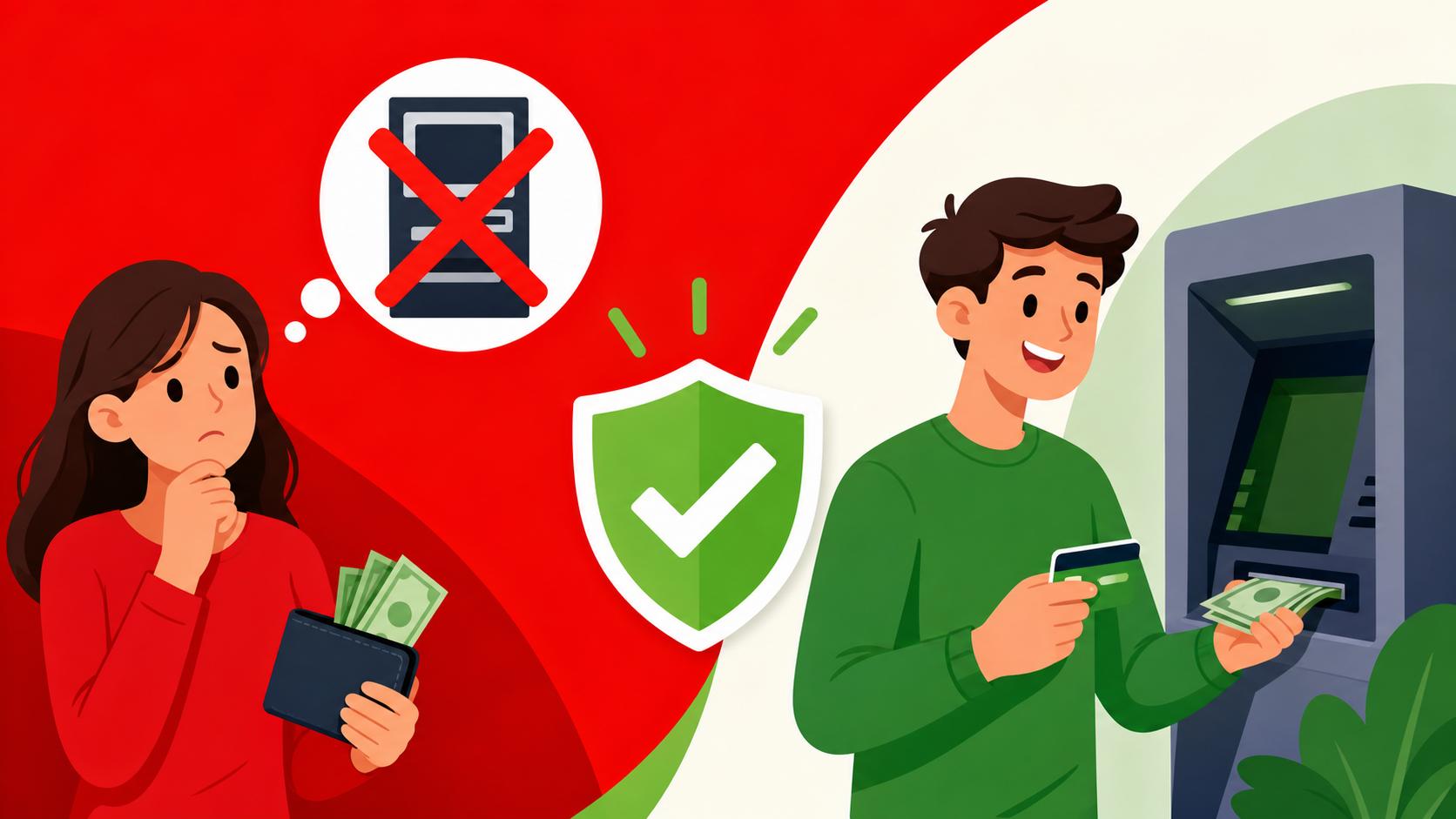
How to Avoid ATM Withdrawal Fees with Sparkasse
There is nothing quite like the sting of paying nearly five euros in fees just to withdraw twenty euros for a schnitzel dinner. I remember standing at a bright yellow and blue ATM in Vienna’s first district during my first week here, staring in disbelief as the machine demanded a massive "convenience fee" that I simply couldn't justify. This guide solves the riddle of Austrian ATM fees specifically for Sparkasse users, showing you exactly where to go and what to avoid to keep your cash in your pocket.
Navigating the Two Worlds of Austrian ATMs
When you arrive in Austria, you will quickly realize that despite the rise of digital payments, we are still very much in a society where "Bargeld lacht" (cash smiles). Whether it is a small mountain hut in the Alps or a traditional coffee house in the city, having physical Euros is non-negotiable. However, not all machines that dispense cash are created equal. In Austria, you generally deal with two distinct categories: bank-affiliated ATMs and independent service providers.
Bank-affiliated ATMs are typically embedded in the walls of actual bank branches like Erste Bank or Sparkasse. These are the gold standard for safety and fee avoidance. On the other hand, you have independent ATMs—most notoriously those operated by Euronet. These are strategically placed in high-traffic tourist areas, near souvenir shops, and inside convenience stores. If you are a Sparkasse customer, or even if you are just using a foreign card, these independent machines are your primary "fee enemy." They often charge a flat fee per transaction and use aggressive tactics to get you to accept their internal currency conversion rates.
To truly master Money in Austria 2027: Banking, Payments, and Financial Setup, you need to recognize the "Bankomat" logo. In Austria, the word "Bankomat" is the protected term for the official ATM system. Look for a green and blue sign with a stylized card being inserted into a machine. If a machine has this logo, it is part of the national interbank system. If it only says "ATM" in bold, generic letters, proceed with extreme caution. My rule of thumb after years of living here: if the machine looks like it was "dropped" into a hallway or a corner store rather than being built into a bank wall, it’s probably going to cost you.
Why Sparkasse is a Strong Choice for Fee Avoidance
One of the biggest hurdles for expats is Opening an Austrian Bank Account: Requirements and Top Banks, and once you have one, you want to make sure it works for you, not against you. Sparkasse (which is part of the Erste Group) has one of the most extensive physical networks in the country. This is vital because, in the Austrian banking culture, banks generally do not charge their own customers for using their own machines.
When you use a Sparkasse-branded ATM with your Sparkasse debit card, the transaction is almost always free. This is a massive relief compared to some international banks that charge a percentage for every out-of-network withdrawal. Furthermore, Sparkasse and Erste Bank are effectively the same network. If you see an Erste Bank branch, your Sparkasse card will treat those ATMs as "home" machines. This combined network gives you thousands of touchpoints across every province, from the bustling streets of Graz to the smallest villages in Vorarlberg.
If you are currently Comparing Erste Bank, Raiffeisen, and Bank Austria, the sheer density of Sparkasse and Erste Bank locations is a major factor to consider. You aren't just looking for a bank; you are looking for an ATM that won't punish you for living five blocks away from the main branch. I have found that even in remote hiking areas, there is usually a Sparkasse "Selbstbedienung" (self-service) foyer nearby. These foyers are great because they are indoors, heated, and offer more privacy than a street-side machine, all while remaining free for Sparkasse account holders.
Avoiding the Dynamic Currency Conversion Trap
If you are using a Sparkasse account but still have a card from your home country—perhaps while you are waiting on the paperwork for your Austrian residence—you will face the "Dynamic Currency Conversion" (DCC) trap. This is a sophisticated way for ATM operators to make money by offering to do the math for you. The machine will ask: "Would you like to be charged in your home currency (USD/GBP/CAD) or the local currency (EUR)?"
It sounds helpful, right? It isn't. When you choose your home currency, the ATM provider applies an exchange rate that is significantly worse than the mid-market rate. They might also add a "service margin" on top of that.
Always choose "Continue without conversion" or "Charge in local currency (EUR)." By doing this, you are telling the ATM to just send the Euro amount to your bank. Your bank (Sparkasse, or your home bank) will then perform the conversion using the standard Visa or Mastercard rates, which are almost always more favorable. This is a core part of Bank Fees: Understanding Account Maintenance and ATM Charges that every newcomer should memorize. Don't let the scary warning screens about "not knowing the final exchange rate" intimidate you; they are designed to nudge you into the more expensive option.
Using the Right Card for the Right Machine
In Austria, the distinction between a "Bankomatkarte" (debit card) and a credit card is crucial. When you open a Sparkasse account, you receive a Debit Mastercard or Visa Debit. This is your primary tool for daily life. When you use this at a Sparkasse ATM, it is free. However, if you try to use a traditional credit card (like an Austrian-issued Mastercard Gold or Visa) to withdraw cash, you will almost certainly be hit with a "cash advance fee."
These fees are often a percentage of the withdrawal (e.g., 3% or a minimum of €4.00) plus interest from the day of the withdrawal. Many expats make the mistake of using their credit card at an ATM because it was the first one they pulled out of their wallet, only to see a €10 charge on their monthly statement. For almost all cash needs, stick to your debit card.
The evolution of Bankomatkarte (Debit) vs Credit Card Usage in Austria has made it easier to use debit cards for everything, but the ATM rules remain strict. Even if the ATM itself doesn't charge a fee, your credit card issuer will. If you are traveling and absolutely must use a credit card for cash, check if your Sparkasse "George" app has settings to lower these fees or if you have a specific premium account that waives them—though this is rare for standard credit cards.
Comparative Table: ATM Options in Austria
| ATM Provider | Fee for Sparkasse Cards | Fee for Foreign/Neobank Cards | Best Used For |
|---|---|---|---|
| Sparkasse / Erste Bank | €0 (Free) | Usually €0 (unless card issuer charges) | Standard withdrawals, deposits, and printing statements. |
| Raiffeisen / Bank Austria | €0 (Interbank agreement) | Sometimes €0 – €2.50 | Use if no Sparkasse is nearby. |
| Euronet (Independent) | €1.95 – €4.95 | €3.95+ & high conversion margins | Emergencies only! |
| Shopping Center ATMs | €0 – €3.00 | Variable | Check for the "Bankomat" logo before inserting card. |
Digital Alternatives: Can You Skip the ATM Entirely?
As we move through 2026, the necessity of carrying a thick wad of cash is slowly diminishing, though it hasn't vanished. One of the best ways to avoid ATM fees is simply not to use them. While Cashless Payments vs Cash Culture in Austria Today still leans toward cash in some traditional sectors, most supermarkets (Billa, Spar, Hofer), pharmacies, and retail chains accept contactless payments.
Sparkasse offers excellent integration with Apple Pay and Google Pay. You can even use "Contactless Withdrawal" at many modern Sparkasse ATMs by tapping your phone instead of inserting a card. This is not only faster but also safer, as it eliminates the risk of card skimming. If you find yourself frequently needing cash for small purchases, consider if those businesses have finally upgraded their terminals. Even the famous Würstelstands in Vienna are starting to accept cards.
Additionally, some supermarkets in Austria offer a "Cashback" service. If you are buying groceries at a place like Billa or Merkur, you can often ask the cashier to add a cash withdrawal to your bill. For example, if your groceries cost €25, you can ask for "€50 extra in cash." They will charge your card €75 and hand you €50 in bills. This is usually free of charge and saves you a trip to a separate machine. It is a fantastic "life hack" for those weeks when you are too busy to find a specific Sparkasse branch.
Managing Neobank Cards at Sparkasse Machines
Many expats arrive in Austria using Neobanks in Austria: Using N26 or Revolut for Salaries before they set up their local Sparkasse account. If you are using an N26 or Revolut card at a Sparkasse ATM, you need to be aware of your "free withdrawal" limits. Most neobanks offer 3 to 5 free withdrawals per month, after which they charge a flat fee (usually around €2.00).
The Sparkasse machine itself typically won't charge you a fee for using a neobank card, provided it is a standard EU-issued debit card. However, the machine might detect it as a "foreign" card and offer the currency conversion trap mentioned earlier. Always decline the conversion. If you find yourself constantly hitting the limit on your neobank account, it is a sign that it’s time to fully transition your daily spending to your local Sparkasse account.
I personally keep my Revolut card for travel outside the Eurozone but use my Sparkasse account for everything within Austria. This ensures I never have to worry about how many times I've visited an ATM in a given month. It also helps with English-Language Banking Apps Available in Austria because Sparkasse's "George" app is incredibly robust and easy to use in English, allowing you to track every cent and see exactly where any (rare) fees might be coming from.
Common Pitfalls for New Residents
The most common reason for unexpected fees is simply a lack of preparation. If you are in a rush and use the first machine you see at an airport or a train station, you are likely using a "tourist" machine. These machines are designed to exploit the urgency of travelers. For example, at Vienna International Airport, the ATMs in the arrivals hall are often independent ones with high fees. If you walk just five minutes toward the train platforms, you can find bank-affiliated machines that are much fairer.
Another pitfall is the Most Common Reasons Austrian Banks Reject Expat Applications. If your application is pending or you are using a non-EU account, you might find that some Austrian ATMs have lower withdrawal limits for "unrecognized" cards, forcing you to make multiple withdrawals and thus incurring multiple fees from your home bank. Getting your local Sparkasse account active as soon as possible is the single best way to stabilize your Cost of Living in Vienna: Singles vs Families and avoid these micro-drains on your budget.
Lastly, be aware of the "Service Fee" for your account itself. While the ATM withdrawals might be free, Sparkasse accounts usually have a quarterly maintenance fee. Ensure you understand which "account model" you have chosen. Some models offer unlimited free withdrawals but have a higher monthly base fee, while others are cheaper per month but charge a small fee after a certain number of manual transactions. Flat-rate models are often recommended for expats because they provide the most predictable monthly costs.
Disclaimer
This guide is based on personal experience and the banking landscape in Austria as of 2026. Banking terms, ATM fee structures, and interbank agreements can change. Always check the specific terms and conditions of your Sparkasse account agreement and monitor the ATM screen for fee disclosures before confirming a transaction. The author is not a financial advisor.