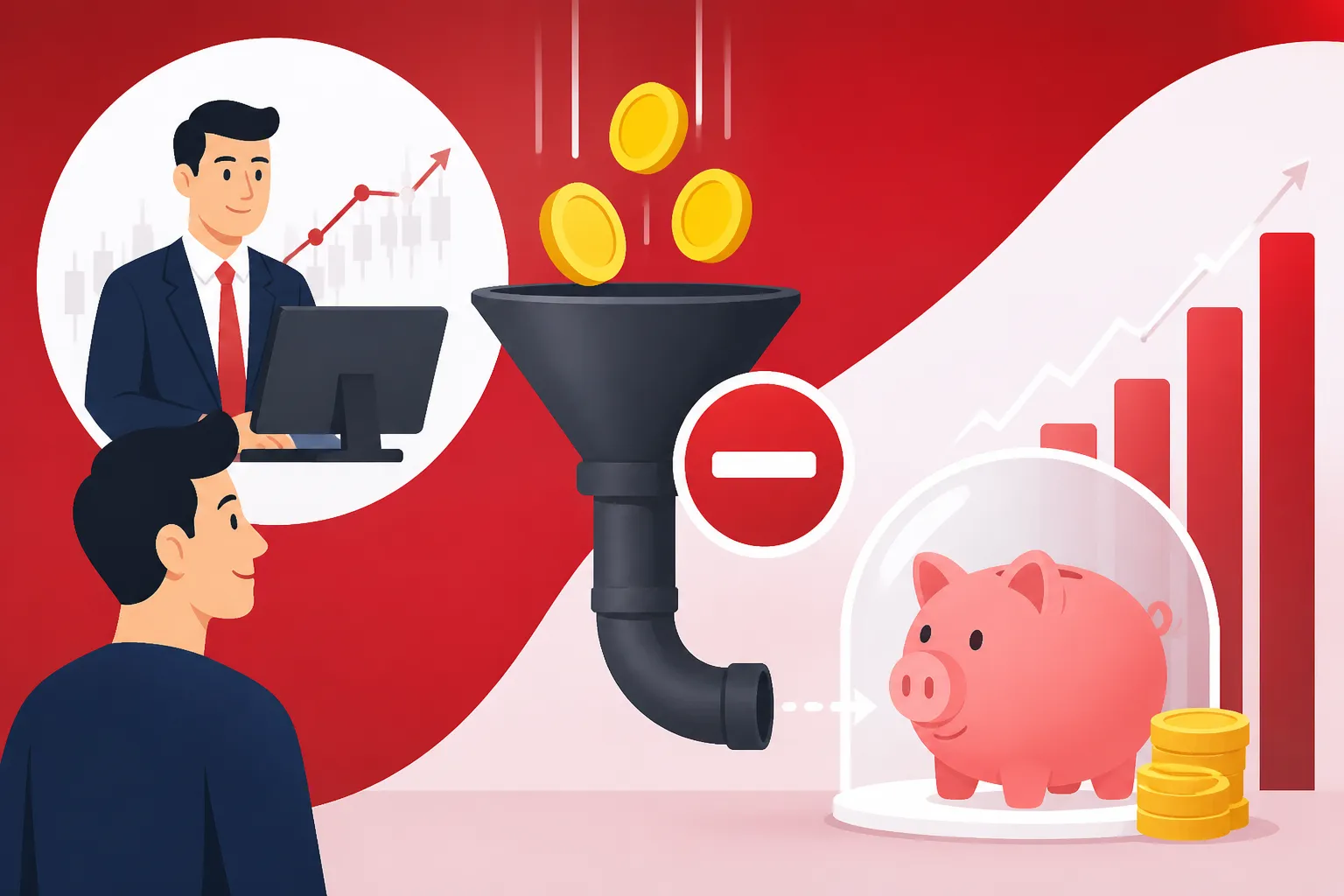
How KESt is Automatically Deducted by Austrian Brokers
Navigating the Austrian tax system is often the steepest mountain to climb for any expat, and seeing a chunk of your investment profits vanish before they even reach your wallet can be genuinely jarring. I remember the first time I sold a few shares on my Austrian brokerage app; I’d calculated my profit down to the cent, only to find the final payout significantly lower than expected. This guide is here to demystify the Kapitalertragsteuer (KESt) and explain exactly how domestic brokers in Austria handle the heavy lifting for you, so you can stop stressing about the Finanzamt and focus on growing your wealth.
Understanding the KESt and the Concept of Tax Simple Investing
In Austria, capital gains tax is known as Kapitalertragsteuer, or simply KESt. For the vast majority of financial instruments—stocks, ETFs, bonds, and dividends—the rate is fixed at 27.5%. There is a lower rate of 25% that applies specifically to interest from simple savings accounts and bank deposits, but for anyone looking at Wealth Building: Investing in ETFs, Stocks, and Real Estate, the 27.5% figure is the one that will dominate your financial landscape.
The term you will hear most often in expat circles and local finance forums is "steuereinfach." This translates literally to "tax-simple." When a broker is described as steuereinfach, it means they are legally registered in Austria and have a direct interface with the Austrian tax authorities. Because they operate under local regulations, they are mandated to calculate, withhold, and pay your KESt directly to the Finanzamt on your behalf.
This is a massive administrative relief. If you use a non-Austrian broker, such as one based in Germany or the US, you are responsible for calculating your own gains, dividends, and even complex "deemed distributed income" for ETFs, and then reporting them via your annual tax return. When you use a local provider, How KESt is Automatically Deducted by Austrian Brokers becomes the standard operating procedure, meaning your tax obligations for those specific investments are usually "settled" (endbesteuert) the moment the transaction occurs.
The Mechanics of Automatic Deduction for Dividends and Sales
The beauty of the automatic system lies in its immediacy, though it does require a mental shift in how you view your "profits." When you hold a dividend-paying stock in an account with an Austrian bank or broker, the process is invisible but precise. Suppose a company pays out a gross dividend of €100. If your broker is Austrian, you will never actually see that €100 in your cash account. Instead, the broker calculates 27.5% (€27.50), sends it to the tax office, and deposits the remaining €72.50 into your account.
When it comes to selling assets for a profit, the logic remains the same but the calculation is slightly more involved. The broker looks at your "acquisition cost" (the price you paid plus any purchase fees) and compares it to the sale price. The 27.5% KESt is applied only to the net profit.
| Feature | Steuereinfach Broker (Austrian) | Non-Steuereinfach Broker (Foreign) |
|---|---|---|
| KESt Deduction | Automatic at the time of payout/sale | Manual via annual tax return |
| ETF Tax Complexity | Managed by the broker | Requires complex manual calculation |
| Loss Offsetting | Automatic within the same calendar year | Manual entry in FinanzOnline |
| Finanzamt Reporting | Not required for these gains | Mandatory annual reporting |
| Cost | Often higher transaction fees | Lower fees but higher tax risk |
For those of us used to Lohnzettel Breakdown: Gross vs Net Salary Explained, this "source deduction" feels very similar to how income tax is taken from your paycheck. It ensures you never accidentally spend money that actually belongs to the government, which is a common pitfall for expats using foreign platforms like Robinhood or DeGiro. By staying local, you ensure that your Taxes in Austria: Finanzamt, Returns, and Brackets 2026 remain manageable and that you aren't hit with a massive, unexpected tax bill in April.
Loss Offsetting and the Virtual Loss Pot
One of the most sophisticated features of the automatic deduction system is the "Verlustverrechnungstopf," or the loss compensation pot. In Austria, you are only taxed on your net capital gains across the entire calendar year. If you make a profit of €1,000 on one stock but lose €400 on another, you should only be paying tax on the remaining €600.
If you were doing this manually, you would have to wait until the end of the year to claim back the overpaid tax. However, Local Brokers vs International: Flatex, DADAT, and Degiro handle this automatically. If you sell a stock at a loss, the broker records this "negative tax" in your virtual pot. When you later sell another stock at a profit, the broker first looks at your loss pot. They will use that loss to offset the new gain, meaning they will either deduct less tax or no tax at all until the loss is "used up."
If the sequence is reversed—meaning you pay tax on a gain in January and then realize a loss in March—the broker will actually deposit a "tax refund" back into your cash account shortly after the loss-making sale. This real-time balancing is a lifesaver for your liquidity. It’s important to note, however, that this automatic offsetting only works within a single brokerage account or between accounts held at the same bank. If you have two different Austrian brokers, they cannot "see" each other's losses, and you would then need to use Logging into FinanzOnline with the ID Austria App to consolidate those figures in your year-end tax assessment.
The ETF Trap: Deemed Distributed Income
For many expats, ETFs are the preferred vehicle for long-term savings. However, ETFs in Austria carry a specific tax quirk known as "ausschüttungsgleiche Erträge," or deemed distributed income. Essentially, the Austrian government wants to tax the internal gains made by the fund (like interest or dividends earned by the fund's underlying assets) even if the ETF is "accumulating" and doesn't actually pay a dividend out to you.
Calculating this manually is an absolute nightmare. It involves checking the "Oesterreichische Kontrollbank" (OeKB) database for every single fund you own. This is where the value of Flatex vs DADAT: Which is Better for ETF Investing? really shines. A local broker will automatically pull the data from the OeKB, calculate the deemed distribution, and deduct the 27.5% KESt from your cash account once a year.
Many newcomers get confused when they see a small cash deduction from their brokerage account labeled "KESt-Meldung" or "Thesaurierung" even though they didn't sell anything. This is simply the broker staying compliant with the law. While it can be annoying to see your cash balance dip, it's significantly better than the alternative: failing to report these "hidden" gains on your tax return and facing a fine from the Finanzamt years later. To ensure everything is running smoothly, you can always check your status by Tax Reporting Requirements for Flatex Users or your specific bank’s tax documents.
Limitations and When You Still Need a Tax Advisor
While the automatic system is incredibly robust, it is not omnipotent. There are a few scenarios where How KESt is Automatically Deducted by Austrian Brokers might not cover your entire tax liability or where you might be leaving money on the table.
First, there is the issue of foreign withholding tax (Quellensteuer). If you own US stocks, the US government takes 15% (assuming you’ve filled out a W-8BEN form) before the money even reaches Austria. An Austrian broker will usually "credit" this 15% against your 27.5% Austrian KESt, meaning they only take the remaining 12.5%. However, for countries with higher tax rates or no tax treaty with Austria, this calculation can get messy.
Secondly, if your total global income is very low, you might actually be eligible for a lower tax rate on your investments than the flat 27.5%. This is called the "Regelbesteuerungsoption." In this case, the broker will still deduct the 27.5% automatically, but you can claim the difference back by filing a voluntary tax return and showing that your personal income tax bracket is lower than the KESt rate. This is particularly relevant for students or those currently on Income Tax Brackets 2026: Navigating the 0% to 55% Rates who might be in the 0% or 20% tiers.
Lastly, remember that brokers only track financial assets. If you are Reporting Foreign Dividends on Your Austrian Tax Return from a private business or dealing with crypto-assets held in "cold storage" (private wallets), the broker has no way of helping you. In those cases, you are back in the world of manual reporting.
Summary Checklist for Expat Investors
To make sure you are getting the most out of the automatic deduction system without any nasty surprises, follow this checklist:
- Verify "Steuereinfach" Status: Before opening an account, explicitly confirm the broker is tax-simple in Austria.
- Keep Cash Reserves: If you hold accumulating ETFs, always keep a small amount of cash in your brokerage account (0.5% to 1% of the portfolio value) to cover the annual "deemed distribution" tax deductions.
- Use One Primary Broker: To maximize the benefits of the automatic loss-offsetting pot, try to keep your main trading activity within one institution.
- Download Your "Erträgnisaufstellung": Every spring, your Austrian broker will provide a tax summary. Even if the tax was deducted automatically, keep this document for your records in case the Finanzamt ever asks questions.
- Watch the Calendar: Loss offsetting resets on January 1st. You cannot carry investment losses forward to the next year in the automatic system.
By understanding that the system is designed to be "set and forget," you can navigate your financial life in Austria with far more confidence. It may feel like a bit of a shock to see those deductions happen in real-time, but it is a small price to pay for the peace of mind that comes with knowing you are fully compliant with the local tax authorities.
Important Disclaimer
The information provided in this article is for educational and informational purposes only and does not constitute professional tax, legal, or financial advice. Tax laws in Austria are subject to change, and individual circumstances can significantly impact your tax liability. We strongly recommend consulting with a certified Austrian tax advisor (Steuerberater) before making significant investment decisions or filing tax returns. Under no circumstances shall the author or this website be held liable for any financial loss or legal issues arising from the use of this information.