Finding an Emergency Dentist on a Weekend in Vienna
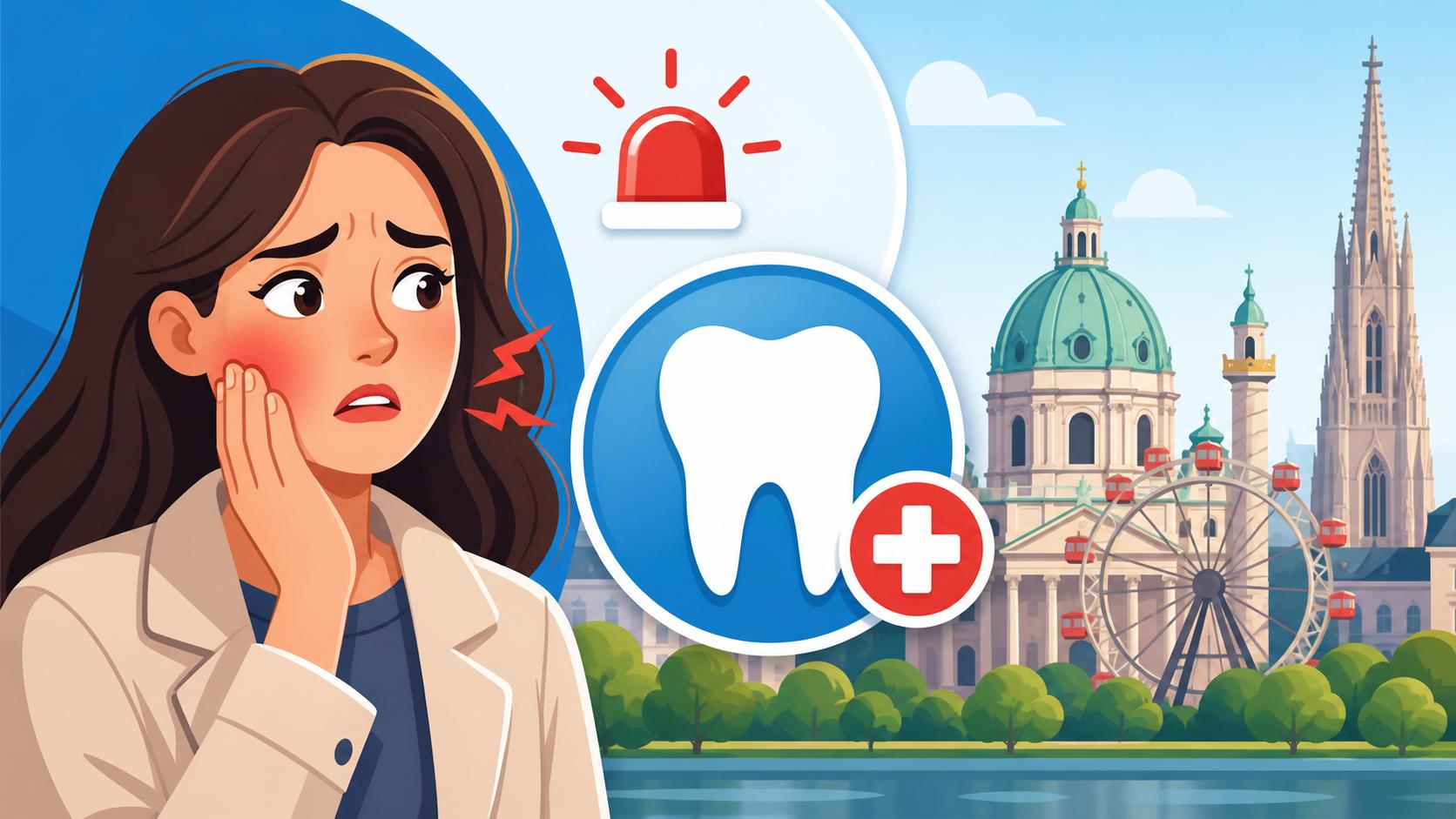
It happens to the best of us: you are enjoying a quiet Saturday evening in a cozy Viennese café when a sudden, sharp pain shoots through your jaw, or worse, a filling decides to vacate its premises right in the middle of a Mozart-themed dinner. I remember my first dental crisis in the 7th district; the panic of not knowing where to turn on a Sunday was almost as bad as the toothache. This guide provides the exact steps and locations you need to find reliable emergency dental care in Vienna when the rest of the city is seemingly at a standstill.
Understanding the Weekend Dental System in Vienna
The first thing you need to realize is that the Austrian healthcare system is highly organized, even when it comes to unexpected tooth disasters. Unlike some countries where you might have to call every dentist in the phone book hoping for an answer, Vienna operates on a strictly regulated "Bereitschaftsdienst" or on-call system. During the week, your local dentist is your go-to, but from Friday afternoon through Sunday night, the responsibility shifts to a rotating group of specialists and dedicated public clinics.
The Difference Between a Regular Dentist and the Emergency Service
In Vienna, a standard dental practice is typically open Monday through Friday, with many closing early on Friday afternoons. If your pain starts at 6 PM on a Friday, you are officially in "Notdienst" (emergency service) territory. The emergency service is designed specifically for pain relief and acute interventions—think extractions, temporary fillings, or treating severe infections—rather than complex cosmetic work. When you are Finding a Dentist (Zahnarzt): What ÖGK Covers and What You Pay, it is important to distinguish between your regular check-up provider and these emergency responders who are there to stabilize you until Monday morning.
The "Zahnärztekammer" (Dental Association) dictates which private practitioners must keep their doors open during the weekend. These rotating clinics are usually open for two specific blocks of time: one in the morning (typically 9:00 AM to 12:00 PM) and one in the late afternoon (typically 4:00 PM to 6:00 PM). Outside of these hours, you will need to look toward the major public dental hospitals that offer more extensive coverage.
Public vs Private Emergency Options
You essentially have two paths to take when a tooth crisis hits on a Sunday. The public path involves going to a state-funded clinic or the university dental hospital. These facilities are generally very efficient but can involve significant wait times, especially on Sunday mornings when everyone who had a minor ache on Saturday finally decides they can’t take it anymore. You will definitely need your social security card for these visits, so check our The Austrian e-card: Registration, Photo Rules, and Usage Guide to ensure your card is ready and valid.
The private path involves seeking out a "Wahlarzt" (private dentist) who may offer weekend hours outside of the official rotating schedule. These clinics often provide a more comfortable environment and potentially shorter wait times, but you will likely have to pay the full fee upfront. It is vital to understand the Healthcare Costs: Kassenarzt vs Wahlarzt Differences Explained before you commit to a private emergency appointment, as the reimbursement from your public insurance might only cover a small fraction of the weekend premium.
The Role of the e-card in Emergency Situations
Your e-card is your golden ticket to the public emergency dental system. Without it, you may be asked to pay a deposit or the full estimated cost of the treatment in cash or by card before being seen. In an emergency, the clinic will use the chip on your card to verify that you have active insurance with the ÖGK or another provider. Many expats wonder, Is ÖGK Health Insurance Free for Expats in Austria?, and while the coverage is comprehensive for emergency pain relief, it is deducted from your gross salary.
If you have just arrived in Vienna and don't have your physical card yet, you must bring a "Versicherungsdatenauszug" (proof of insurance) which you can download from the Sozialversicherung website. In a pinch, if you have no insurance at all, the public clinics will still treat you to prevent a life-threatening infection, but expect a substantial bill to follow. Always keep a digital copy of your insurance details on your phone just in case your wallet is at home when the pain strikes.
Top Locations for Emergency Dental Care in Vienna
When the pain is unbearable and you need a location immediately, there are a few landmarks every expat should know. Vienna is home to one of the most advanced dental training facilities in Europe, which doubles as the primary hub for weekend emergencies. Knowing where to go can save you hours of wandering the streets or scrolling through outdated Google Maps listings.
The Universitätszahnklinik (University Dental Clinic)
Located at Sensengasse 2 in the 9th district (Alsergrund), the Universitätszahnklinik is the gold standard for dental emergencies. This is where I ended up when a rogue popcorn kernel did its worst on a Saturday night. The facility is massive and staffed by highly skilled dentists and students under supervision. For more general medical needs in the city, you can also consult our Vienna Healthcare Guide: Top Expat Clinics and Hospitals, but for teeth specifically, Sensengasse is the place to be.
The emergency clinic here usually operates from 8:00 AM to 1:00 PM on Saturdays, Sundays, and public holidays. However, triage is the name of the game. If you arrive at 8:00 AM, you will be sorted based on the severity of your case. A "swollen face" or "knocked-out tooth" will always be seen before a "lost filling." Be prepared to sit in the waiting room for a few hours; bring a book, a charger, and plenty of patience. The clinicians here are used to international patients, so finding someone who speaks English is usually quite easy.
The Regional Health Insurance Dental Clinics (ÖGK)
The ÖGK (Österreichische Gesundheitskasse) operates several "Zahngesundheitszentren" throughout the city. While these are mostly for weekday appointments, some locations participate in an extended weekend rotation. The main center in the 10th district (Wienerbergstraße) is often involved in the city's emergency network. These clinics are efficient and purely "Kassen"-based, meaning if you have your e-card, you won't have to pay anything out of pocket for basic emergency treatments like draining an abscess or a temporary nerve sedative.
Before heading to an ÖGK center, you must check if that specific branch is on duty. Unlike the University Clinic, which is a constant, the ÖGK centers rotate their emergency availability. If you find yourself in a situation where the dental pain is accompanied by a high fever or difficulty breathing, do not wait for a dental center to open. Instead, contact Emergency Services in Austria: 144, Hospitals, and Crisis Steps immediately, as this could indicate a serious systemic infection.
Rotating Emergency Practices (Notdienstpraxen)
Every weekend, several private dental practices across Vienna are assigned "Notdienst." These are scattered across different districts, from the 1st to the 23rd. The beauty of this system is that there might be a dentist on duty just a few blocks from your apartment. The challenge is finding out which one it is. The city maintains a dedicated phone recording and a website that updates every Friday afternoon with the weekend's list.
These practices are generally small and may only have one dentist and one assistant on site. Because they are private offices doing their public duty, the waiting room can get cramped. If you have a preferred neighborhood, try Finding English-Speaking Doctors in Austria's Major Cities to see if any of the listed emergency dentists have an international background. Keep in mind that these doctors are required to treat you if you have an e-card, but they will only perform the most necessary "pain-killing" procedures.
Step-by-Step Guide to Getting Care on a Saturday or Sunday
Navigating a foreign medical system while your mouth is throbbing is a special kind of stress. To make it easier, I have broken down the exact workflow you should follow to get from your couch to a dentist’s chair as quickly as possible.
Step 1: Checking the Current Notdienst Schedule
Do not just show up at your regular dentist's office. You will be greeted by a locked door and a sign in German. Instead, your first move should be to call the official emergency dental recording at 01/512 20 78. This is a 24-hour recorded message (usually in German) that lists the names, addresses, and phone numbers of the dentists on duty for that specific day.
Alternatively, visit the website of the "Zahnärztekammer Wien." They have a searchable "Notdienst" calendar where you can see who is open. If you aren't comfortable navigating the German website, you can call 1450, Austria's health advice line. While they are more for general medical queries, the operators are incredibly helpful and can often give you the address of the nearest open dentist in English.
Step 2: What to Bring and What to Expect
Once you have an address, pack your "emergency dental kit." This must include your e-card, a photo ID (like your passport or residence permit), and any medications you are currently taking. If you are a smoker or have specific allergies to local anesthetics, write these down or look up the German translations beforehand. You might also want to bring some cash, as some smaller practices may charge a small administrative fee or for specific high-end temporary materials not covered by the base insurance.
When you arrive, you will fill out a "Patientenanamnese" (medical history form). Even in an emergency, the administrative rigor of Vienna persists. You will then wait. In my experience, the wait can range from twenty minutes at a quiet private practice in the 19th district to three hours at the University Clinic. If your German is shaky, don't worry—most Viennese dentists under the age of 50 are quite proficient in English, especially when it comes to medical terminology.
Step 3: Managing Costs and Payments
The Austrian public health insurance (ÖGK) is generous, but it has limits. In an emergency setting, "necessary treatment" is covered. This includes things like:
- Pain-relieving injections
- Opening an infected tooth to relieve pressure
- Simple extractions if the tooth cannot be saved
- Temporary fillings (these are usually white or grey and are meant to last only a few weeks)
If you request a permanent, high-quality composite filling or a specific aesthetic repair, the dentist might classify this as a private service, and you will be charged accordingly. Afterwards, you may need Booking a Kassenarzt (Public Doctor): Wait Times and Tips to schedule a permanent fix with your regular dentist. Always ask, "Is this covered by the e-card?" (Wird das von der Gebietskrankenkasse übernommen?) before the dentist starts drilling if you are on a tight budget.
| Service Type | Public (e-card) Coverage | Typical Private Cost |
|---|---|---|
| Emergency Pain Relief | 100% Covered | €80 – €150 |
| Temporary Filling | 100% Covered | €50 – €100 |
| Tooth Extraction | 100% Covered | €120 – €250 |
| Abscess Treatment | 100% Covered | €100 – €200 |
| Root Canal (Start) | Covered (Stabilization) | €300+ (Full procedure) |
Practical Tips for Navigating Dental Emergencies as an Expat
Beyond the logistics of addresses and insurance, there is the cultural side of medical care in Austria. Knowing a few local "hacks" can make the experience significantly smoother and help you avoid unnecessary pain or expense.
Handling Language Barriers During Acute Pain
When you are in pain, your brain often forgets every German word you’ve ever learned. I’ve found that the best way to communicate is to use simple, direct terms. "Schmerz" (pain), "Zahn" (tooth), and "Hier" (here—while pointing) go a long way. If the dentist speaks too fast, simply say, "Können Sie das bitte auf Englisch erklären?" Most are happy to switch.
If you are particularly nervous about the language barrier, it might be worth the extra cost to visit a private clinic that specifically markets to the expat community. These clinics often have staff from all over the world. However, if the situation is dire, don’t let language stop you from going to the nearest public option. Pain is a universal language, and Viennese dentists are experts at reading it.
After-Care and Following Up with Your Regular Dentist
The most important thing to remember about weekend dental care is that it is almost never a "one and done" situation. The emergency dentist's job is to stop the pain and prevent the situation from getting worse. They will usually provide you with a "Befund" (a medical report) and perhaps a digital X-ray on a CD or via email. Keep these! You will need to take them to your regular dentist on Monday or Tuesday.
You will also likely need to visit a "Apotheke" (pharmacy) for painkillers or antibiotics. In Vienna, pharmacies also have a rotating weekend schedule. Check our guide on Pharmacies (Apotheken) and Medication Rules in Austria to find out how to locate the nearest "Nachtapotheke" (night pharmacy) after your dental appointment. Remember that in Austria, you cannot buy strong painkillers or any antibiotics over the counter; you must have the prescription the emergency dentist gave you.
Avoiding Emergency Situations via Preventive Care
The best way to deal with a weekend dental emergency is to never have one in the first place. I learned this the hard way after three weekend trips to the 9th district in one year. Austria has a fantastic culture of preventive medicine, and this extends to your teeth. Regular check-ups are free with your e-card and are highly recommended. You should also look into Preventive Care: Gesundenuntersuchung and Routine Checkups to keep your overall health in check.
One thing that isn't fully covered by the e-card but is worth every cent is a "Mundhygiene" (professional dental cleaning). This deep cleaning can prevent the hidden decay that usually leads to those 2 AM Saturday night toothaches. You can find more details on the Cost of Professional Dental Cleaning (Mundhygiene) in Austria and how to book one. A little bit of maintenance today can save you a very expensive and painful Sunday morning in the future.
Disclaimer
The information provided in this guide is for informational purposes only and does not constitute professional medical or legal advice. While every effort has been made to ensure the accuracy of the details regarding dental services in Vienna as of 2026, healthcare regulations and clinic locations can change. Always consult with a qualified healthcare professional or contact the official Austrian health services directly in the event of a medical emergency. The author and publisher are not responsible for any actions taken based on the content of this article.