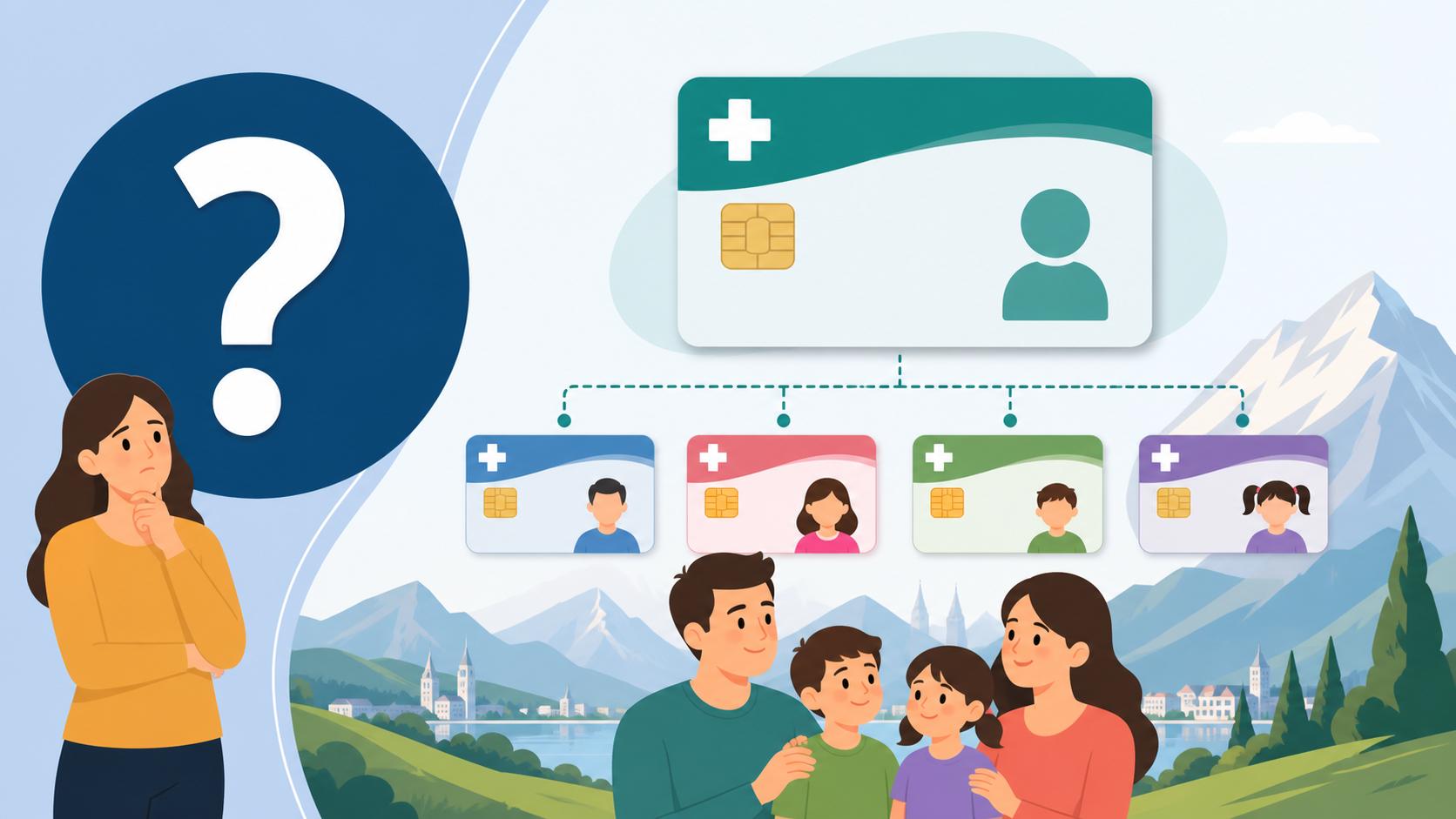
Do Co-insured Family Members Get Their Own e-card?
Moving to Austria with your family often feels like you are drowning in a sea of German forms and administrative "Amtswege" while trying to figure out if your spouse or child can even see a doctor. When I first arrived in Vienna with my own family, I spent many sleepless nights panicking because I had my own social security number, but I hadn't seen a single physical card for my husband or kids. This guide breaks down the reality of co-insurance and clarifies exactly how and when your family members receive their own e-card.
The Reality of Mitversicherung for Expats
Navigating the Austrian social security system, or Sozialversicherung, is one of the most significant hurdles you will face during your first few months. The concept of co-insurance, known locally as Mitversicherung, is designed to ensure that family members who do not have their own mandatory insurance—perhaps because they are not working or are still in school—remain fully covered under your policy. It sounds simple on paper, but the actual execution involves specific paperwork that can be frustratingly slow.
I remember standing in a long queue at the ÖGK office, clutching a folder of translated marriage certificates, wondering if my family was "invisible" to the system. Validation is important here: the system is slow, the letters are often in dense legalese, and the wait for the physical plastic to arrive in your mailbox can feel like an eternity. However, the short answer to the core question is a definitive yes: every co-insured family member will eventually receive their own individual e-card.
It is a common misconception that family members just "use" the primary holder's card or that their information is somehow digitally tied to your physical card in a way that doesn't require their own. In Austria, the e-card is your "key" to the healthcare system. Without a physical card for each person, visiting a Kassenarzt (Public Doctor): Wait Times and Tips becomes significantly more complicated, requiring you to fetch temporary replacement vouchers or insurance confirmations for every single appointment.
How the Co-insurance Application Process Works
Before a family member can get their card, they must be officially added to your insurance record. This does not happen automatically just because you listed them on a visa application or a Meldezettel. You generally have to take an active step to register them with your specific provider, whether that is the ÖGK (for most employees), the SVS (for freelancers), or the BVAEB (for public sector workers).
If you are an employee, your first point of contact is usually your HR department, but often you will need to communicate directly with the insurance carrier. For those of us who have lived through this, we know that the ÖGK Enrollment Step-by-Step for Employed Residents in Austria is usually the smoothest path, but even then, you must provide proof of the relationship. This usually involves a marriage certificate or a birth certificate. If these documents are not in German or English, you will likely need to find a certified translator.
In cases where you are a freelancer, you will be dealing with the SVS Health Insurance: Rules for Freelancers and Self-Employed. The SVS has its own set of rules regarding income thresholds for co-insured spouses. If your spouse starts earning above a certain limit, they can no longer be co-insured for free and might have to look into Student Self-Insurance Requirements and Monthly Costs 2026 or their own mandatory professional insurance.
Documentation Needed for Co-insurance
To ensure your family members get their e-cards without a six-month delay, you should prepare a "dossier" of the following:
- The completed "Prüfung der Mitversicherung" form from your provider.
- A copy of the marriage certificate (for spouses) or birth certificate (for children).
- A copy of the Meldezettel (address registration) for each family member, showing they live at the same address as you.
- Valid photo ID or passport copies for each person.
The Timeline from Application to Mailbox
Once the insurance provider processes your application, they will trigger the production of the e-card. Do not expect this to happen overnight. In my experience, and based on current administrative speeds, it can take anywhere from two to six weeks for the cards to arrive at your registered address.
What happens if someone gets sick during this waiting period? This is a primary source of expat anxiety. Fortunately, you can request a "Versicherungsbestätigung" (insurance confirmation) which acts as a temporary paper version of the e-card. It is wise to act Getting Health Insurance Confirmation Before the e-card Arrives as soon as you submit your paperwork. You can often download this PDF directly from the "Meine SV" portal using your ID Austria. If you haven't set that up yet, you can visit a local service center and they will print one for you on the spot.
Doctors in Austria are used to this. If you show up with a valid paper confirmation, they can manually enter the insurance details into their system. However, once the physical card arrives, you should bring it to the next appointment so they can "swipe" it and link the digital records properly via The Austrian e-card: Registration, Photo Rules, and Usage Guide system.
The Mandatory e-card Photo Rule for Family Members
A major change that caught many expats off guard a few years ago—and continues to be a headache—is the photo requirement. Not every e-card is issued automatically anymore. If the Austrian government does not already have a digital photo of your family member on file (from an Austrian driver's license or a passport), they will not print the card. Instead, you will receive a letter—often in German—stating that the card production is "on hold."
For children under the age of 14, a photo is generally not required. Their cards will be issued with a blank space or a generic graphic. However, for spouses and older children, this is a non-negotiable step. You must proactively visit a registration office to have a passport-standard photo linked to their Social Security number. Knowing The e-card Photo Requirement: How and Where to Register is vital. If you are in the capital, you should look up Where to Register Your e-card Photo in Vienna to find the specific police stations or service centers that handle this for non-citizens.
| Family Member Category | Physical Card Issued? | Photo Required? | Cost / Service Fee |
|---|---|---|---|
| Children (Under 14) | Yes | No | None (Exempt) |
| Children (14 to 18) | Yes | Yes (usually) | None (Exempt) |
| Spouse (No Income) | Yes | Yes | Annual e-card fee |
| Spouse (With Income) | Yes | Yes | Own insurance required |
| Adult Students | Yes | Yes | Student rates apply |
Co-insuring Children and Newborns
If you are growing your family in Austria, the process for newborns is surprisingly efficient compared to the usual bureaucracy. In most cases, Registering a Newborn Baby for an e-card Automatically happens via the hospital and the registry office (Standesamt). The system recognizes the birth and links the child to the mother’s insurance record. Within a few weeks, a tiny e-card with the baby's name on it will just show up in your mail.
For those of us moving here with older children, you will need to manually add them. This is particularly important for accessing the Family Health: Eltern-Kind-Pass 2026 and Maternity Care System benefits. Even if your child is healthy, they need that e-card for the mandatory school health checks and vaccinations. If you are ever unsure if the card is on its way, you can use the official portals to Check if Your e-card is Active Online.
Students and Adult Children
Once a child turns 18, the rules for co-insurance change. They can usually remain co-insured for free as long as they are in full-time education (university or vocational training) until the age of 26 or 27, depending on the specific insurance carrier. However, you must provide a "Studienbestätigung" (enrollment confirmation) to the insurance office every single semester. If you forget this, the insurance will be deactivated, and the e-card will stop working at the doctor's office.
Costs and the Annual Service Fee
While co-insuring your children is free, co-insuring a spouse may or may not involve a contribution (Zusatzbeitrag) depending on your employment status and the spouse's past insurance history. Furthermore, everyone who holds an e-card is subject to the annual service fee.
Many expats are surprised when they see a small deduction from their January or February paycheck. This is What the Yearly e-card Service Fee for 2026? covers. For co-insured family members, this fee is usually deducted from the primary holder's salary. Children and pensioners are typically exempt from this specific fee, but for a non-working spouse, you should expect to pay it.
| Feature | Co-insured Children | Co-insured Spouse |
|---|---|---|
| Monthly Premium | Generally €0 | Possible 3.4% contribution |
| Annual e-card Fee | Usually Exempt | Payable (approx. €13-15) |
| Prescription Coverage | Full (via primary) | Full (via primary) |
| Dental Coverage | ÖGK Covered Procedures | Standard Public Coverage |
Using Family e-cards at Clinics and Hospitals
Once everyone has their card, the "Austrian way" of healthcare opens up. Whether you are Finding Medical Care in Austria: Clinics, Hospitals, and Referrals or heading to a specialist, each family member must bring their own card. When you walk into a "Gruppenpraxis" or a local "Hausarzt," the receptionist will ask for the e-card immediately. They swipe it, and this authorizes the doctor to bill the insurance company directly.
If you happen to lose a card—which, let's be honest, happens frequently with kids—you need to act fast. You can report it stolen or lost online or via phone. The Lost e-card: Reporting and Replacement Process Explained guide is a lifesaver here, as it walks you through how to get a replacement without losing coverage in the interim.
It is also worth noting that the back of the e-card serves as the European Health Insurance Card (EHIC). If you are taking a family holiday to Italy or Germany, each family member needs their own card to prove they are covered for emergency care abroad. If the back of the card is covered in asterisks (which often happens if your residency status is still being processed), you will need to request a paper "Ersatzbescheinigung" from your insurer before you travel.
Handling Frustrations and Delays
I have been in the position where my child had a fever and I still hadn't received their physical e-card. The "I've been there" reality is that the Austrian system, while high-quality, relies heavily on these physical tokens. If you find yourself stuck in a loop of "the card is in the mail," do not be afraid to visit the ÖGK or SVS service center in person.
In major cities like Graz or Linz, the service centers are usually quite efficient if you go early in the morning. Simply telling them "Ich brauche eine Bestätigung für den Arzt" (I need a confirmation for the doctor) will get you the paperwork you need to bridge the gap. Austria's healthcare system is one of the best in the world, and once you get past the initial hurdle of Mandatory Coverage: Who Must Register for Public Health Insurance, the peace of mind knowing your entire family is covered is worth the paperwork headache.
Healthcare Checklist for Family Co-insurance
To summarize the steps you should take today:
- Check if your family members are listed on your insurance portal (Meine SV).
- If not, submit the "Mitversicherung" form with marriage/birth certificates immediately.
- Check the photo status for all adults. If a photo is missing, the card will never be printed.
- Download a temporary insurance confirmation for each person to keep on your phone.
- Watch your mailbox for the physical e-cards.
Healthcare Costs: Kassenarzt vs Wahlarzt Differences Explained
Even with an e-card, you need to understand that not every doctor is "free." When you take your family to a Healthcare Costs: Kassenarzt vs Wahlarzt Differences Explained consultation, the e-card only covers the full cost if the doctor has a direct contract with your insurance provider. If you choose a private doctor (Wahlarzt) because they speak better English or have shorter wait times, you will have to pay upfront and then Submit a Wahlarzt Invoice to ÖGK for Refund later. Usually, you only get back about 80% of what a public doctor would have cost, which is often a small fraction of the private fee.
Disclaimer
This guide is intended for informational purposes only and does not constitute legal or professional medical advice. While every effort has been made to ensure the accuracy of the information regarding the Austrian healthcare system as of 2026, regulations and fees are subject to change. Always consult with your official insurance provider (ÖGK, SVS, BVAEB) or a qualified legal professional for your specific situation.