Registering a Newborn Baby for an e-card Automatically
You have just brought a tiny human into the world, and now the daunting Austrian bureaucracy looms over your sleep-deprived head. When I had my first child in Vienna, I was paralyzed by the thought of missing a crucial registration deadline while barely remembering my own name. This guide solves the mystery of how the Austrian health system registers your newborn for an e-card automatically.
How the Automatic Registration Process Works
The Austrian administrative system is famously rigorous, but it has one beautiful, shining exception: the birth of a child. In most cases, the system is designed to trigger a cascade of digital notifications from the moment your baby takes their first breath in a public hospital. This integration is part of a broader push to make life easier for families, ensuring that your little one is covered by health insurance from day one without you having to fill out twenty different forms while still in the recovery ward.
From the Delivery Room to the Standesamt
When a baby is born in an Austrian hospital (Landeskrankenhaus or Privatklinik), the hospital administration is legally required to notify the local registry office, known as the Standesamt, of the birth. This notification is called the "Anzeige der Geburt." This process is almost entirely digital. The hospital enters the baby's details—including the time of birth, weight, and the parents' names—into a central register. This information is then used to create the baby’s first official record in the Geburtenbuch (the book of births).
For most expats, this is the first hurdle where things feel "automatic" yet slightly confusing. You will be asked to provide your own documents, such as your marriage certificate and passports, to the hospital's administrative office (the "Babypoint" in many large Vienna hospitals). Once the Standesamt receives these, they officially register the birth and generate a Social Security Number (Sozialversicherungsnummer or SVNR) for the infant. This ten-digit number is the golden key to the Austrian healthcare system. You don't need to apply for this number separately; it is born alongside your child in the digital ether of the Austrian state.
Syncing with the Social Insurance Institution
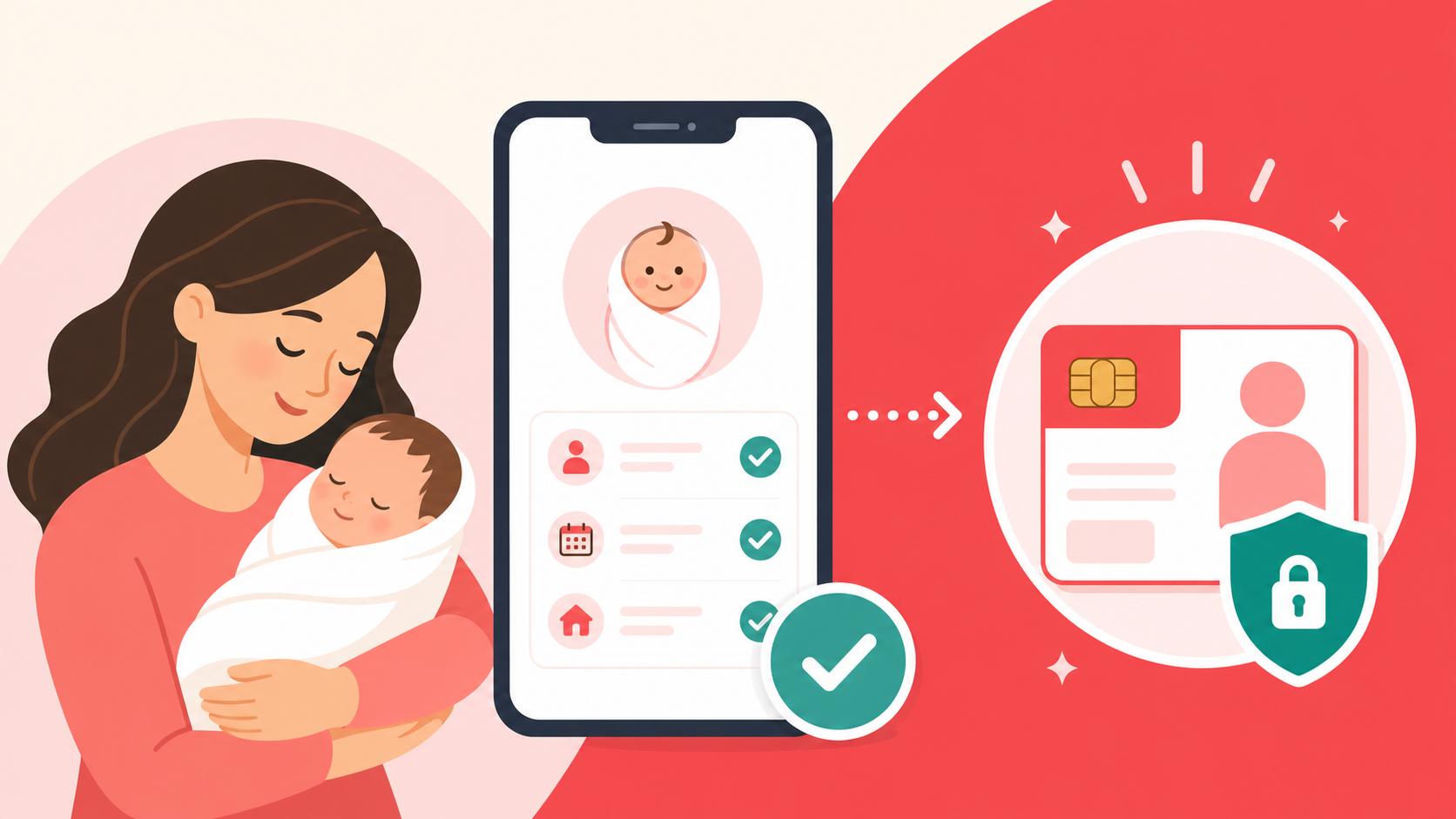
Once the SVNR is generated, the registry office automatically notifies the main Austrian social insurance database. If you are employed and covered by the ÖGK, the system identifies you as the primary insured person. It then triggers the creation of an e-card for your newborn under your policy. This is known as Co-insuring Family Members (Mitversicherung) on Your Policy. Because the child is a dependent, they are linked to your insurance account by default.
The brilliance of this setup is that it bypasses the need for a physical application in the first few days of life. The insurance provider receives the data, verifies that at least one parent has active coverage, and initiates the printing and mailing of the physical e-card. I remember checking my mailbox about ten days after coming home from the hospital, expecting to see bills, but instead finding my daughter's very first piece of official Austrian mail—her e-card. It feels like a small victory in a country that usually loves its paper trails.
The Role of the Digital Eltern-Kind-Pass
As of 2026, the transition to The Digital Eltern-Kind-Pass 2026: What Changed for Parents has further streamlined this process. Previously, parents lugged around a yellow paper booklet to every appointment. Now, once the baby is registered and the e-card process begins, the baby's digital health record (ELGA) is automatically initialized. This means that the first pediatrician visit, which usually happens within the first week or two, can be recorded digitally the moment you swipe your own e-card or provide the baby’s new SVNR.
The digital system ensures that the social insurance provider is constantly updated on the baby’s health status. This link is vital because the timely completion of exams in the Eltern-Kind-Pass is a prerequisite for receiving the full amount of your family benefits. The system "knows" the baby exists because of that automatic registration, creating a seamless loop between the doctor, the insurance, and the Applying for the Familienbeihilfe (Child Benefit) Allowance office.
Understanding Your Insurance Provider's Nuances
While the registration is "automatic" in the sense that the data flows between government agencies, the specific insurance provider you or your partner use can change the timeline or the "Mitversicherung" setup. Austria has several different insurance bodies, and while they all talk to the Standesamt, their internal processing speeds for newborns can vary.
ÖGK vs SVS vs BVAEB Registration
If you are a standard salaried employee, you are likely with the ÖGK. Their system is the most automated because it handles the largest volume of residents. For those of us who have gone through ÖGK Enrollment Step-by-Step for Employed Residents in Austria, the newborn addition is usually the smoothest part of the entire experience. The card just shows up.
However, if you are a freelancer or self-employed, you are covered by the SVS. While the birth notification still reaches the SVS automatically, they might require a quick confirmation via their online portal to ensure the child should be co-insured with you rather than a partner who might be with the ÖGK. It is always wise to check your SVS "Meine SV" portal a few days after the birth to ensure the infant appears in your list of co-insured persons. For more details on this, you can look at the SVS Health Insurance: Rules for Freelancers and Self-Employed guidelines to see how they handle dependents.
Choosing the Primary Insurance Policy
A common question for expat couples is: "Which parent does the baby get insured with?" If both parents are with the same provider, it happens automatically. If one is with the BVAEB (public sector) and the other with the ÖGK, the system usually defaults to the mother’s insurance for the initial registration. However, you have the right to change this later.
Being "Mitversichert" or co-insured is free for children in Austria until they reach adulthood (or finish their studies). The automatic registration ensures that there is no gap in coverage. If you are unsure about which policy offers better dental or specialist benefits for the future, you can take your time to decide, as the initial automatic link provides the immediate medical safety net you need. This is a huge relief when you are navigating Family Health: Eltern-Kind-Pass 2026 and Maternity Care System requirements and frequent checkups.
The Interim Solution: The Substitute Card
What happens if you need to take the baby to a doctor before the physical e-card arrives in the mail? This is a common stressor for new parents. Because the SVNR is generated almost instantly, the hospital can provide you with a "Bestätigung der Versicherung" (Confirmation of Insurance) or a temporary paper substitute.
In many cases, the pediatrician’s office can simply look up the baby using the mother’s e-card and the baby’s date of birth in the first few days. The digital backend is updated so quickly that the physical plastic card is almost a formality. If you find yourself in a situation where you need medical care immediately after discharge, you can often get Getting Health Insurance Confirmation Before the e-card Arrives via the ID Austria app or a quick call to your insurance provider.
| Step | Action Entity | Parent's Responsibility | Outcome |
|---|---|---|---|
| Birth Notification | Hospital | Provide ID & Marriage Cert | Data sent to Standesamt |
| SVNR Generation | Standesamt | Choose baby's name | Official ID number created |
| Insurance Sync | Social Security | None (if employed) | Baby linked to Parent's policy |
| Card Production | e-card Service | Verify address | Physical card mailed home |
| First Checkup | Pediatrician | Bring SVNR or Mother's card | Entry in Digital Eltern-Kind-Pass |
Essential Prerequisites and Avoiding Common Delays
Even though the system is designed to be automatic, there are a few "human" elements that can throw a wrench in the gears. As an expat, your paperwork is often more complex than that of a local, and if the Standesamt cannot verify your identity or residency status, the e-card will be delayed.
The Importance of the Meldezettel for the Baby
While the birth is registered automatically, the baby still needs a Meldezettel (registration of residence). In most Austrian cities, including Vienna, the Standesamt will handle this at the same time they issue the birth certificate. However, they need to know where the baby will be living. If you have recently moved or your own Checklist for Your First 30 Days in Austria wasn't fully completed, the system might stall.
Ensure the hospital has your current, correct address. The e-card is sent via standard post to the address where the baby is registered. If your name isn't on the mailbox or the address is slightly off in the system, the card will be returned to the provider, and you’ll be stuck in a cycle of phone calls to the e-card hotline.
Photo Requirements for Babies and Children
One of the most confusing parts of the Austrian system is the mandatory photo rule. You might have read about The e-card Photo Requirement: How and Where to Register for adults. The good news is that for newborns and children under the age of 14, no photo is required.
The system automatically bypasses the photo check for infants. The card will be issued with a blank space or a generic symbol where the photo would usually be. You do not need to take your newborn to a photographer or upload a digital file. This exemption is a lifesaver, as trying to get a compliant passport-style photo of a two-week-old is a task I wouldn't wish on my worst enemy. If you want to know more about how the card works as they grow, check The Austrian e-card: Registration, Photo Rules, and Usage Guide.
Home Births and Private Clinics
If you choose a home birth with a midwife or a small private clinic that doesn't have a dedicated administrative "Babypoint," the registration might not be as "automatic." In these cases, the parents (usually the father or a legal representative) must go to the Standesamt in person within one week of the birth to register the child.
Once you do this, the rest of the process—the SVNR generation and the e-card trigger—becomes automatic again. The key is that first "Anzeige der Geburt." If you are planning a non-hospital birth, make sure your midwife provides you with the necessary signed documents to take to the registry office. Without that manual first step, the insurance system will never know your baby exists.
Troubleshooting: What to Do If the Card Doesn't Arrive
Despite the high level of automation, things can occasionally go wrong. Maybe the data sync failed, or perhaps there was a typo in your surname that caused a mismatch in the database. If it has been more than three weeks since your baby’s birth and you haven't seen a card, it is time to take action.
Checking the Status Online
The first thing you should do is log into your "Meine SV" portal using your ID Austria. Look at your profile and see if your child is listed under "Angehörige" (Dependents). If the baby is there and has a Social Security Number listed, the registration was successful, and the delay is likely just with the postal service or the card production facility.
If the baby is not listed, you need to call your insurance provider (ÖGK, SVS, or BVAEB). Tell them you had a baby and give them the date of birth. Often, they just need to manually "click" a button to confirm the Mitversicherung if the automated link failed to trigger. This is particularly common for non-EU expats whose residency permits might be processed differently.
Non-EU Parents and Specific Visa Requirements
If you are in Austria on a specific visa, such as a Red-White-Red card, the system might require a bit more data before finalizing the e-card. Sometimes, the insurance provider wants to see the baby’s own residency permit application (though they are covered during the application period).
If you are a non-EU citizen, I highly recommend sending a quick scan of the baby's birth certificate to your insurance provider's "Versicherte" email address a few days after birth. This proactive step ensures that any "manual" checks are cleared quickly. You want to make sure your Checklist for Your First 30 Days in Austria is handled so you can focus on those precious early weeks.
Managing the e-card as the Child Grows
Once that first card arrives, keep it safe. Even though many services are moving to the digital Eltern-Kind-Pass and e-Rezept (electronic prescriptions), you will still need to present the physical card at most specialists and during hospital visits.
Remember that every few years, the card might be updated. Because children don't have photos on their cards, they expire more frequently than adult cards. The replacement will also happen automatically as long as your own insurance remains active and the child is still registered at your address. If you ever lose the card, the process for a replacement is straightforward, but it's much easier to just keep it in your diaper bag.
Disclaimer
This article is for informational purposes only and does not constitute legal or medical advice. The Austrian social insurance system and registration laws can change, and while we strive to keep this guide updated for 2026, you should always verify current requirements with the relevant authorities (ÖGK, Standesamt, or your employer). Specific cases, especially for non-EU citizens or those with complex employment histories, may require direct consultation with an immigration lawyer or a social insurance representative.