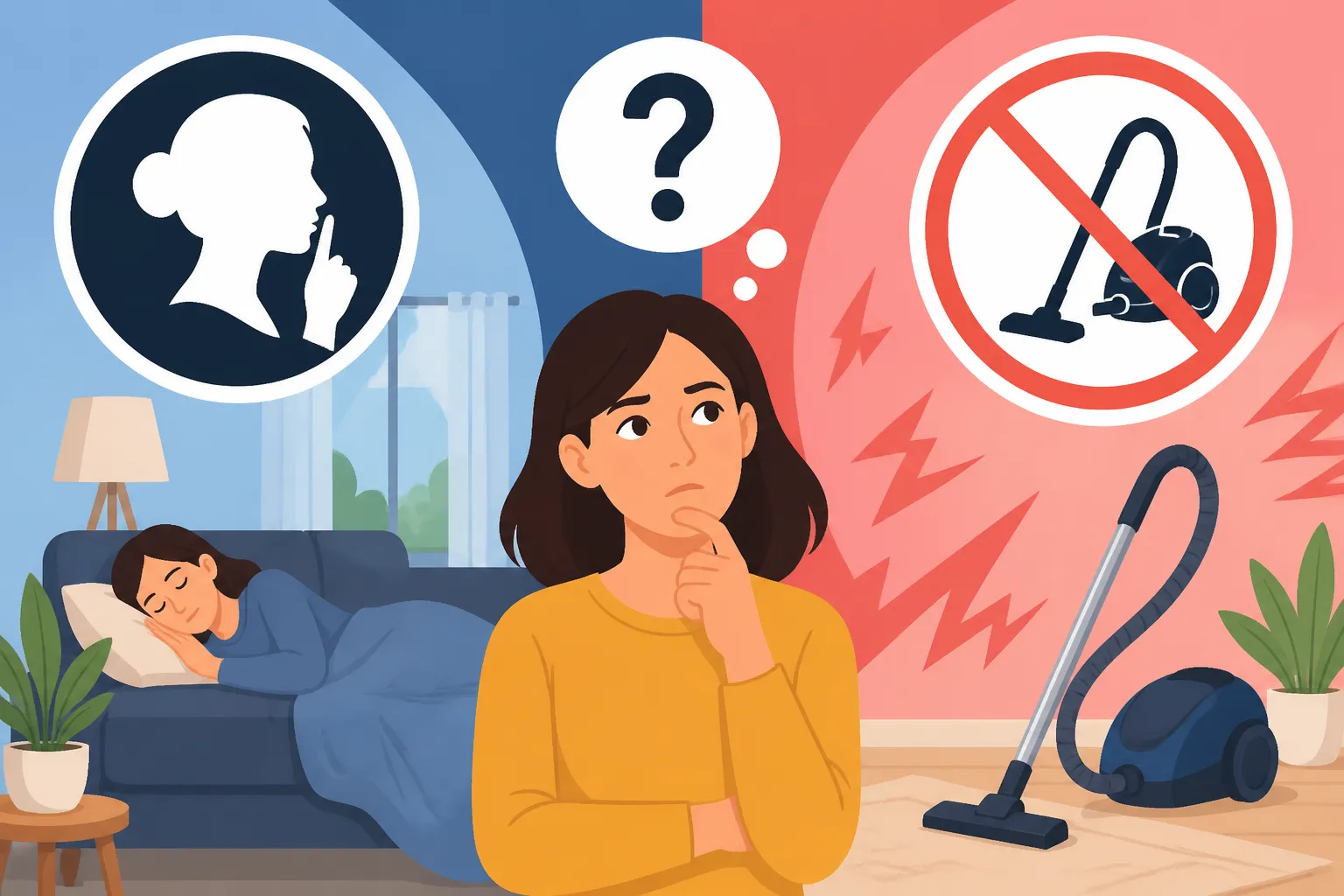
Quiet Hours (Ruhezeit): Can I Vacuum on a Sunday?
Moving to Austria often feels like stepping into a perfectly orchestrated symphony, until you accidentally hit a sour note by vacuuming on a Sunday morning. I remember the shock of receiving my first passive-aggressive note in the hallway over a simple load of laundry, and it taught me that noise isn't just about decibels here; it is about cultural respect. This guide navigates the unwritten and written rules of Austrian quiet hours so you can stay on good terms with your neighbors.
Understanding the Cultural Weight of Ruhezeit in Austria
In many countries, Sunday is a day to catch up on chores, power-wash the driveway, or finally hang those shelves. In Austria, doing so could result in a visit from the police or, at the very least, a very stern conversation with your Hausmeister (building manager). To thrive here, you have to understand that silence is a social contract. The concept of Ruhezeit (quiet time) is deeply ingrained in the national identity, reflecting a society that prioritizes collective well-being and rest over individual convenience.
This is particularly evident when you notice the Sunday Shopping Laws: Why Everything is Closed. If the grocery stores aren't allowed to open to ensure workers get a day of rest, the logic follows that your neighbor shouldn't have to listen to your industrial-strength vacuum while they are trying to enjoy their Sachertorte. As you begin Living in Austria 2027: The Expat Starter Guide, the first thing you must accept is that your schedule must bend to the rhythm of the neighborhood, not the other way around.
The "sacred" nature of Sunday (Sonn- und Feiertagsruhe) is not just a suggestion. It is a legal framework designed to protect the peace. While the world is becoming more 24/7, Austria holds firm to the idea that everyone deserves a period of guaranteed tranquility. If you are coming from a culture where productivity never sleeps, this transition can be frustrating, but once you adapt, you might find that the forced slowdown is actually one of the best parts of living here.
The Sunday Vacuuming Dilemma: Is it Actually Illegal
The short answer is: it depends on your building, but generally, you should avoid it. While there is no federal "anti-vacuuming" law that specifically names the appliance, the Austrian Civil Code (ABGB) and various local police ordinances prohibit "unbecoming noise" (ungebührlicher Lärm). What constitutes "unbecoming" is subjective, but on a Sunday, the threshold for noise tolerance drops significantly.
Most residents are governed by their specific Hausordnung (house rules). When you are Renting in Austria: MRG Laws, Leases, and Bestellerprinzip, your lease will almost certainly include a clause about noise. If your building is an older construction, known as an Altbau, the walls and floors are often thin, meaning your neighbor can hear every pass of the vacuum nozzle. In contrast, newer builds (Neubau) might have better soundproofing, but the cultural expectation of silence remains the same. You can learn more about these building differences in our guide on Altbau vs Neubau: Differences in Rent, Charm, and Heating.
If you absolutely must clean on a Sunday, ask yourself: "Can my neighbor hear this?" If you have a modern, ultra-quiet vacuum and thick carpets, you might get away with a quick five-minute cleanup. However, if you are planning a deep clean of the entire apartment, you are playing with fire. The general rule of thumb is "Zimmerlautstärke," or room volume. If the sound penetrates the walls of your neighbor’s flat, you are technically in violation of the peace.
General Quiet Hours You Need to Know
Ruhezeit isn't just a Sunday phenomenon. It happens every single day, and the timings are surprisingly consistent across the country. Standard quiet hours usually follow this schedule:
- Night Rest (Nachtruhe): Typically from 22:00 to 06:00 or 07:00. This is the most strictly enforced period.
- Midday Rest (Mittagsruhe): Often from 12:00 to 14:00 or 15:00. While less common in big city apartment blocks, it is still very much alive in suburban areas and smaller towns.
- Saturday Afternoons: In many districts, heavy gardening work or construction noise must stop by 12:00 or 15:00 on Saturdays.
- Sundays and Public Holidays: Total quiet for 24 hours.
Navigating these times is a core part of Everyday Etiquette: Garbage Sorting, Noise, and Ruhezeit. Within three minutes, my neighbor was knocking on the door to remind me that it was "Mittag." It felt extreme at the time, but in a densely populated city like Vienna, these rules are the only thing keeping everyone from losing their minds.
Typical Noise Tolerance Levels in Austria
| Activity | Weekdays (08:00 – 20:00) | Saturday | Sunday / Holidays |
|---|---|---|---|
| Vacuuming | Fully Acceptable | Acceptable until late afternoon | Strictly Discouraged |
| Drilling / Hammering | Permissible | Early morning only | Forbidden |
| Playing Piano / Music | Permissible (up to 2 hours) | Permissible (reduced hours) | Room volume only |
| Showering / Bathing | No restrictions | No restrictions | Generally fine (keep it short at night) |
| Moving Furniture | Permissible | Discouraged after noon | Strictly Forbidden |
What Happens if You Break the Rules
So, what actually happens if you decide to vacuum anyway? Usually, the escalation follows a very specific Austrian pattern. First, you will likely encounter the "passive-aggressive note." This is a hallmark of local life. You might find a typed letter (sometimes unsigned) on your door or in the common area, citing the exact paragraph of the house rules you violated.
If the behavior continues, your neighbors may contact the Hausverwaltung (property management). This can lead to a formal warning. In extreme cases, if the noise is late at night or exceptionally loud on a Sunday, someone might call the police. The Austrian police take "Lärmerregung" (noise disturbance) quite seriously, and they have the authority to issue immediate fines that can range from €30 to several hundred euros depending on the severity and your attitude.
If you find yourself on the receiving end of a dispute, it is important to know your rights and how to handle it. We have a detailed breakdown on Filing a Formal Complaint About Noisy Apartment Neighbors that covers both sides of the coin—how to complain if your neighbor is the loud one, and how to defend yourself if you are being unfairly targeted. Generally, a "Gespräch" (a calm chat) over coffee is always better than involving authorities, but that requires a baseline of neighborhood rapport.
Living with Families and Children
One common question for expats is: "What about my kids?" Austrian law is actually quite protective of "Kinderlärm" (child noise). It is legally recognized that children cannot be silent. Crying babies, toddlers running around, and general play are usually protected and cannot be used as grounds for an eviction or a fine, even during Ruhezeit.
However, parents are still expected to exercise "reasonable control." If your teenager is playing drums at 11:00 PM, that is not "child noise"—that is a disturbance. When Moving to Austria with Family: Schools and Logistics, it is helpful to introduce yourself to your downstairs neighbors early on. A small gesture, like a box of chocolates and a "Hey, we have a toddler, sorry if it gets loud," goes a long way in building the tolerance you will inevitably need.
If you are a student or a young professional looking to host people, keep in mind that "party noise" is the number one cause of friction. You can learn how to socialize without the drama by reading our tips on Making Local Friends Outside the Austrian Drinking Culture. Most Austrians are happy to let a one-off birthday party slide if you post a note in the stairwell a week in advance, providing your phone number and promising that the music will be turned down by 10:00 PM.
Practical Tips for Busy Expats
If you work 60 hours a week, the "No Vacuuming on Sunday" rule feels like a personal attack on your hygiene. How do you keep your house clean while respecting the local culture? Here are a few veteran tips I have picked up over the years:
- Invest in a Robot Vacuum: Most robot vacuums are significantly quieter than manual ones. You can often run them during the day while you are at work on a Tuesday, so your floors are clean by the time the weekend hits.
- The "Saturday Sprint": Treat Saturday morning like your cleaning window. Most shops are open, people are out and about, and the tolerance for noise is at its highest.
- Spot Cleaning: If you drop a bag of flour on Sunday, for heaven's sake, clean it up. But use a dustpan and brush or a small handheld vacuum for thirty seconds. No one will report you for thirty seconds of noise.
- Use the "Lüften" Strategy: In Austria, airing out your apartment is a daily ritual. If you open your windows for the mandatory 10-minute "Stoßlüften," the ambient street noise will often drown out minor indoor sounds.
- Check Your Lease: Some modern apartment complexes actually have sound-insulated laundry rooms in the basement that you can use on Sundays. If you are lucky enough to have this, take advantage of it.
Living in Austria requires a shift in mindset. You are no longer an island; you are part of a shared living ecosystem. By respecting the Ruhezeit, you aren't just following a boring rule—you are contributing to the very peace and order that likely attracted you to this country in the first place.
Disclaimer
This guide is intended for informational purposes only and does not constitute legal advice. Noise regulations can vary significantly by municipality, district, and individual housing contracts. Always consult your specific rental agreement or a qualified legal professional if you are facing a formal dispute or police intervention. Keep in mind that local police ordinances (Polizeiverordnungen) take precedence over general cultural advice.