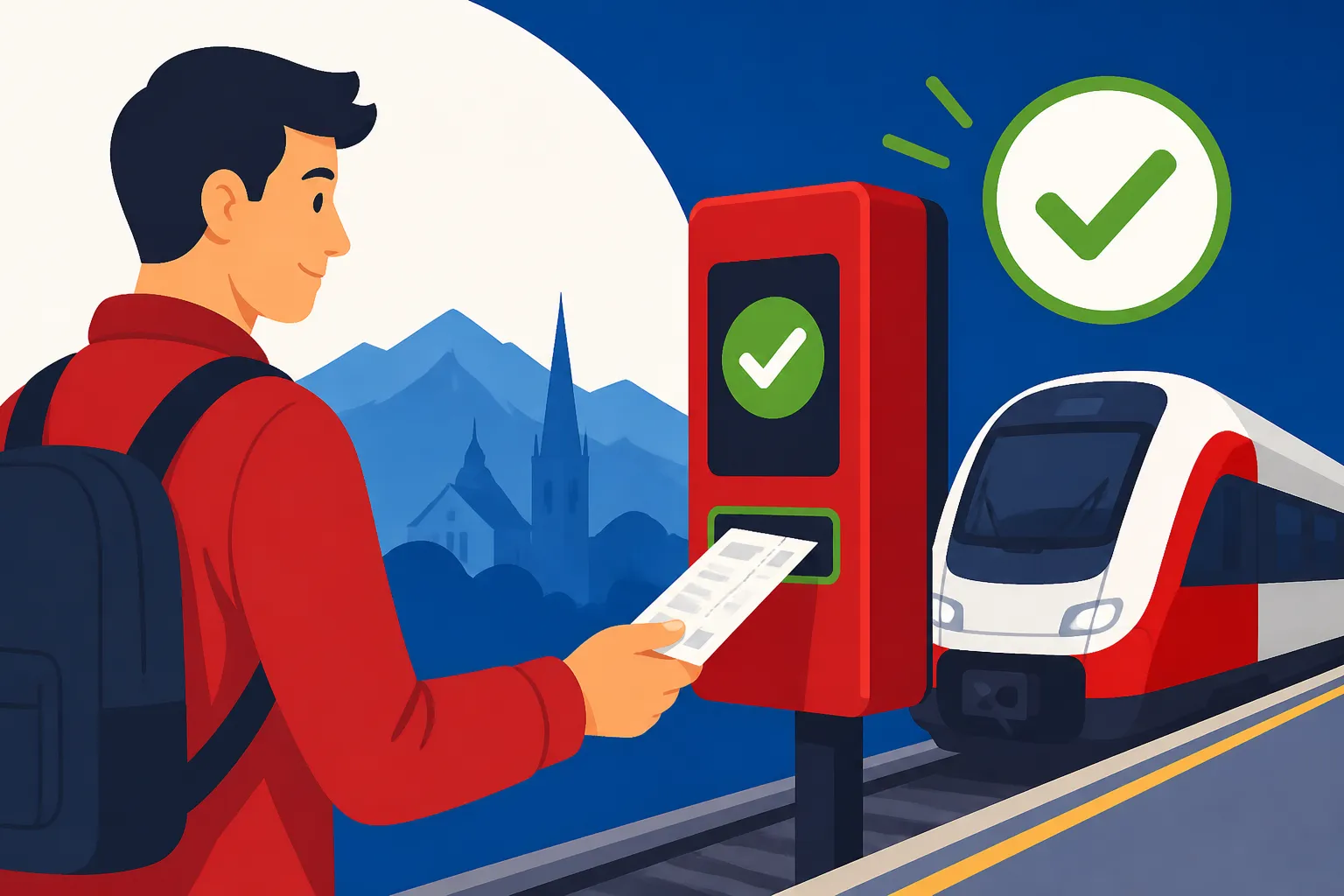
How to Validate Physical ÖBB Train Tickets Before Boarding
Standing on a crowded platform at Wien Hauptbahnhof with a crisp paper ticket in your hand can feel surprisingly stressful when the train is pulling in and you realize you have no idea if you are "legal" to board. I personally remember my first week in Vienna, frantically searching for a stamp machine while everyone else walked past me with local confidence. This guide solves the mystery of ticket validation so you never have to face a stern conductor without a properly stamped pass.
Understanding the ÖBB Physical Ticket Landscape
When you move to Austria, one of the first things you realize is that the "rules" of the road—or in this case, the rails—are built on a foundation of trust backed by very expensive consequences. If you are following the Living in Austria 2027: The Expat Starter Guide, you likely already know that efficiency is king here. However, the ticketing system is a hybrid of high-tech digital solutions and legacy paper systems that still require a bit of manual labor.
Physical tickets bought at an ÖBB station generally come from two sources: the large red touch-screen vending machines or the manned "Reisezentrum" counters. Depending on what you clicked during the purchase process, your ticket might be ready to go, or it might be a "blank" that requires a physical stamp before you step onto the train. The distinction is subtle but vital. If your ticket has a specific date and a specific time of departure printed on it, the system usually considers it "validated" for that specific journey. However, if you bought a regional ticket or a multi-journey strip, the conductor expects to see a physical timestamp from the platform machine.
For many newcomers, the confusion stems from the integration of national rail and local city transport. While you are navigating Transportation: The Klimaticket, Trains, and Wiener Linien, you will notice that city-specific tickets (like those for Vienna’s Kernzone) almost always require a stamp if they don’t have a printed start time. On the national level, ÖBB is slightly more modernized, but "open" tickets—those valid for any train on a specific day—are still common. If your ticket says "Fahrtantritt unverzüglich" (departure immediate), it is likely pre-validated. If it doesn't, you need to find the blue or red "Entwerter" box.
The Step by Step Validation Process for Paper Tickets
Locating the validation machine is your first mission. In major hubs like Salzburg Hauptbahnhof or Linz, these are usually found at the entrance to the platforms or right next to the ticket vending machines. They are small, waist-high pillars, often colored blue or red, with a thin horizontal slot. Unlike some countries where you validate at a gate, Austria uses an "open station" concept. There are no barriers. You can walk right onto the platform without a ticket, but the moment you cross the threshold into the train carriage, the law assumes you have a valid, stamped ticket.
To validate, you insert the top or bottom end of the ticket into the slot—usually face up, though the machine will often stamp both sides if you aren't careful. You should hear a distinct "clink-clunk" mechanical sound. This is the machine printing the station code, the date, and the exact minute of validation. Always double-check the print. If the ink is faint or the machine is jammed, do not board the train and hope for the best. In the world of Culture Shock: Adapting to Direct Austrian Communication, explaining to a conductor that "the machine was broken" without proof rarely works in your favor. If a machine is non-functional, find another one immediately or look for a station official.
If you are embarking on Weekend Domestic Travel via ÖBB Train Networks, you might be carrying a group ticket or a regional "Einfach-Raus" pass. These often require you to manually write the names of the travelers on the ticket in ink. Validation in this case is two-fold: the machine stamp for the time and your handwriting for the identity. Failure to do either can result in the ticket being declared invalid during a spot check.
Where to Find the Validation Machines (Entwerter)
| Location | Machine Appearance | Typical Usage |
|---|---|---|
| Vienna (Wiener Linien / S-Bahn) | Blue or Red pillars at station entrances | Short-trip tickets, 24/48/72 hour passes |
| Regional Stations (Styria, Tyrol) | Integrated into the red ÖBB ticket kiosks | Regional day passes and "open" route tickets |
| Main Hubs (Wien Hbf, Graz Hbf) | Freestanding units near platform escalators | Any ticket without a pre-printed timestamp |
| On-Board (Regional Trains only) | Small yellow/grey boxes near the doors | Very rare; usually only on local private branch lines |
Exceptions and Special Ticket Categories
Not every piece of paper needs a stamp, and this is where even veterans get tripped up. If you have opted for a "Sparschiene" ticket—the discounted, train-specific fares—these are never validated at a machine. They are tied to a specific train number and time. Similarly, if you printed your ticket at home on an A4 sheet of paper, do not try to shove that into the small validation slot. These "Home-print" tickets contain a QR code that the conductor scans. The same applies to those who have transitioned to Public Transport Passes: Weekly, Monthly, and Annual Options, where a plastic card or a smartphone app replaces the need for paper entirely.
There is a specific "trap" regarding the S-Bahn (suburban trains) in cities like Vienna. If you buy a ticket for the S-Bahn at an ÖBB machine, it might look identical to a national rail ticket. However, if that ticket is part of the integrated city network, it must be stamped before you enter the "Platform Area" (Gleisbereich), which is often marked by a white line on the floor. If you are unsure, look at the ticket for the words "Vor Fahrtantritt zu entwerten" (to be validated before starting the journey). If those words are there, and there is no stamp, you are technically traveling without a valid fare.
For those considering long-term residency, you might find that Is the Klimaticket Worth It? Cost and Benefit Analysis simplifies this immensely. With a Klimaticket, the days of hunting for validation machines are over. But for visitors or those on a budget using Money in Austria 2027: Banking, Payments, and Financial Setup to manage individual trips, the paper system remains a necessary skill.
Consequences of Non Validation and Fines
The Austrian term for riding without a valid ticket is "Schwarzfahren" (literally "black riding"). While it sounds like a minor administrative hiccup, the ÖBB and local transport authorities take it very seriously. If a conductor (Zugbegleiter) asks for your ticket and you present an unstamped "open" ticket, they will likely treat it as if you have no ticket at all. The logic is simple: if they didn't fine you, you could use that same unstamped ticket again tomorrow.
The Cost of the Fine for Schwarzfahren (Riding Without a Ticket) is substantial, usually starting around 100 to 130 Euros, plus the price of a full-fare ticket. These fines are often collected on the spot via credit card or bank transfer. The conductors have heard every excuse in the book, and while they can be polite, they are rarely lenient. They are required to uphold Everyday Etiquette: Garbage Sorting, Noise, and Ruhezeit and other social norms, which includes the "fairness" of everyone paying their way.
If you realize you’ve boarded a train with an unstamped ticket and the train has already left the station, your best course of action is to immediately seek out the conductor. Walk through the carriages until you find them. If you approach them before they start their ticket checks, they may allow you to purchase a ticket on board (often with a small service fee) or they might stamp your existing one if they believe it was a genuine mistake. However, if you wait until they reach your seat, the window for "honest mistakes" is closed.
Practical Tips for the Savvy Expat
To avoid the stress of validation, many residents are moving toward digital-only habits. Even if you prefer paper, you can use the ÖBB App to buy a ticket 30 seconds before the train arrives. These digital tickets are automatically validated for the next available connection. If you are still using the physical machines, look for the "Validate Now" option on the screen during the purchase process. If you select this, the machine will print the timestamp directly onto the ticket, saving you a trip to the "Entwerter" box.
Another local tip: keep your ticket until you have fully exited your destination station. Occasionally, there are "exit checks" at major stations, especially during peak tourist seasons or large events. If you've thrown your stamped ticket into a bin on the train, you might find yourself unable to prove you paid the fare when you reach the bottom of the escalator.
Finally, remember that different rules apply if you are crossing borders. If you are traveling to Germany or Hungary, your ÖBB ticket is usually valid for the entire journey, but the validation rules of the starting country apply. If you started in Vienna, the Austrian stamp is what matters. If you are a driver who usually sticks to the road, don't forget that Buying the Autobahn Vignette Toll Sticker Digitally 2026 is a similar "set it and forget it" system that avoids the manual hassle of physical stickers, much like how the ÖBB app avoids the hassle of physical stamps.
Disclaimer
This guide is intended for informational purposes and reflects the ticketing regulations and typical expat experiences in Austria as of 2026. Transport rules, fine amounts, and machine designs can change. Always check the official ÖBB website or consult a station agent if you are unsure about the validity of your specific ticket before boarding.