Transitioning from GIS to the New OBS Household Levy
If you’ve just moved to Austria and received a cryptic letter from the "OBS" demanding money, you might be tempted to toss it in the bin thinking it’s a scam. I made the mistake of ignoring my first official broadcasting letter years ago, only to face a flurry of stern reminders and late fees. This guide explains the massive shift from the old GIS model to the mandatory OBS household levy, ensuring you stay compliant without the stress.
From GIS to OBS: Why the System Changed for Everyone
For decades, the "GIS" (Gebühren Info Service) was the boogeyman for expats and locals alike. The old rules were based on the possession of "receiving equipment." If you had a television with a tuner or a radio, you had to pay. If you didn't have a TV, or if you went through the trouble of physically removing the tuner from your television set, you could legally opt out. I remember the "tuner-free" TV craze where stores specifically marketed screens to expats just so they could avoid the monthly fee.
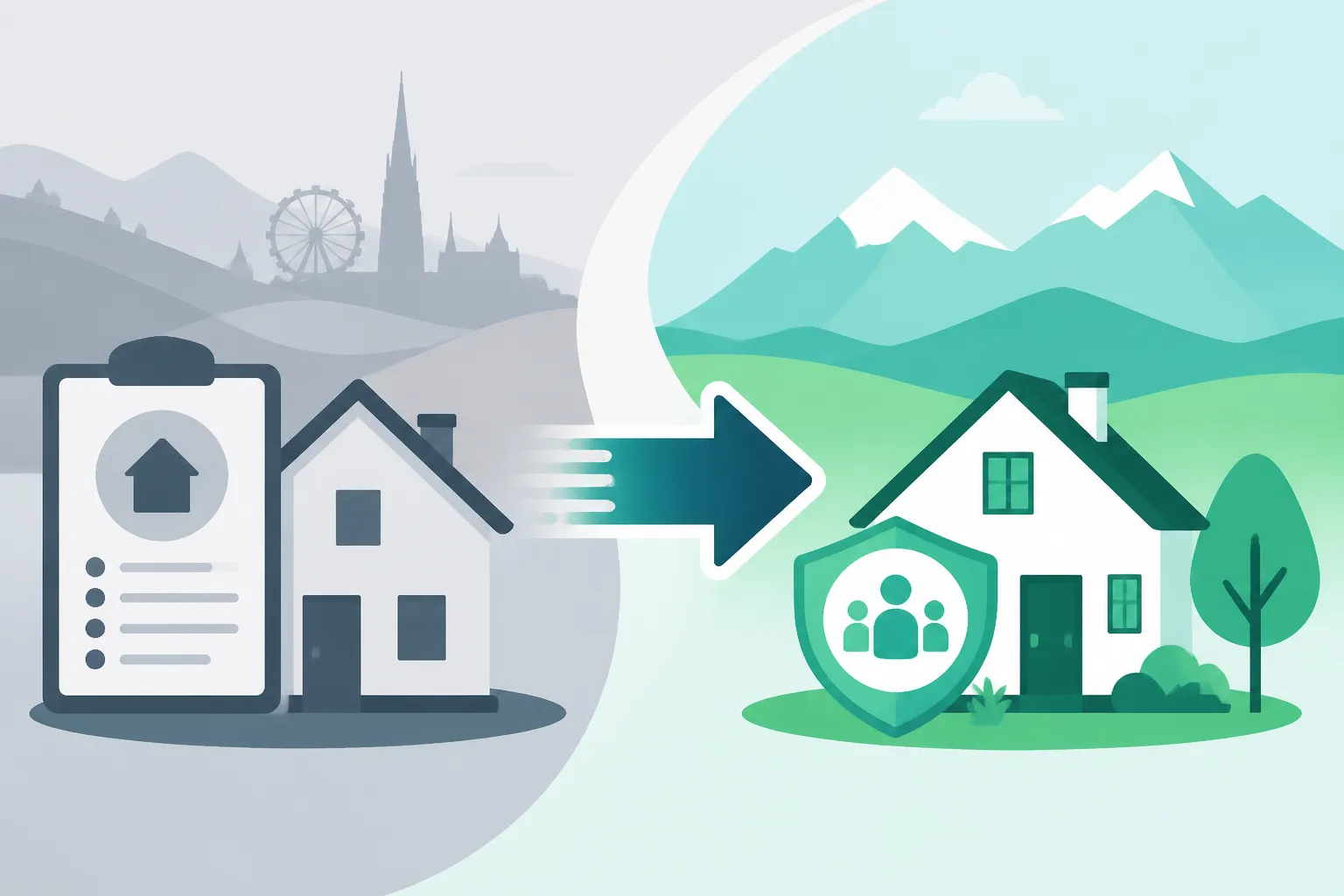
However, as of 2024 and continuing into 2026, the entire system has been overhauled. The GIS is gone, replaced by the OBS (ORF Beitrags Service). The most critical change is that the fee is no longer linked to what devices you own. It is now a "household levy" (Haushaltsabgabe). If you live in an apartment and have a The Meldezettel Process: Registering Your Address Legally completed, the government assumes you are benefiting from the public broadcasting service (ORF) in some way—whether via smartphone, tablet, or car radio—and therefore, you must pay.
This shift was designed to close the "streaming loophole." In the past, people argued that because they only watched ORF content via the internet and didn't own a traditional TV, they shouldn't pay. The Constitutional Court eventually ruled that the funding model had to be modernized. Now, the logic is one of social solidarity: everyone contributes so that public media remains independent of corporate interests. While it’s a hard pill to swallow for those of us who never turn on the TV, understanding this "universal" nature of the tax is the first step to avoiding legal headaches. For a broader look at how this fits into your monthly outgoings, check out the Cost of Living in Vienna: Singles vs Families.
Calculating Your Bill: Base Fees and Regional Taxes
One of the most confusing aspects of the new OBS system is that the amount you pay isn't the same for everyone in Austria. The cost is divided into a federal base fee and, in some cases, a regional provincial levy (Landesabgabe). The federal portion is significantly lower than the old GIS fee, which was one of the government's selling points during the transition.
In 2026, the base fee stands at approximately €15.30 per month. However, depending on which state you live in, you might see an extra couple of Euros added to your bill to fund local cultural initiatives or regional sports. It is important to note that several provinces, including Vienna, Upper Austria, Lower Austria, and Salzburg, have historically moved toward abolishing their state-level additions to ease the burden on residents. If you are living in Styria or Carinthia, you may still find yourself paying a slightly higher total than your friends in the capital.
| Province (Bundesland) | Base Fee (Monthly) | State Levy (Estimated) | Total Monthly Cost |
|---|---|---|---|
| Vienna | €15.30 | €0.00 | €15.30 |
| Upper Austria | €15.30 | €0.00 | €15.30 |
| Salzburg | €15.30 | €0.00 | €15.30 |
| Styria | €15.30 | ~€4.00 | ~€19.30 |
| Carinthia | €15.30 | ~€3.00 | ~€18.30 |
| Lower Austria | €15.30 | €0.00 | €15.30 |
Please keep in mind that these figures can be adjusted annually by the provincial parliaments. When you receive your first bill, it will clearly break down the "ORF-Beitrag" versus the state taxes. For a deeper dive into the specific legislation, see the ORF-Beitrag 2026: The New Broadcasting Household Levy Guide. It is also worth noting that unlike the old system, you generally won't be charged for your Do I Pay the ORF Fee for an Empty Secondary Residence? if no one is officially registered there as their main residence. This is a massive win for those of us with small weekend cabins in the Alps.
Registration and Payment: Navigating the Administrative Maze
If you are new to Austria, you don't actually need to go looking for the OBS; they will find you. The OBS has direct access to the Central Residence Register (ZMR). Once you register your address at the Meldeamt, your data is eventually synced with the OBS database. If no one at your address is currently paying the levy, you will receive a letter addressed to "An die Bewohner des Hauses" (To the residents of the house) or, more likely, directly to the person named on the Meldezettel.
When that letter arrives, you are legally required to respond. You will be asked to name one person in the household who will be the "account holder." In a shared flat (WG), only one person needs to pay. Many expats get into trouble because three different roommates all ignored the letter, leading to a "default registration" where the OBS simply picks one person and starts sending invoices. It is much better to coordinate with your flatmates and decide whose name will be on the account. You can then split the cost internally.
Payment frequency is another area where you have some control. You can choose to pay the full annual amount at once, which I personally prefer just to get it over with, or you can opt for payment every two months or every six months. The most seamless way to handle this is by setting up a SEPA direct debit. By providing your IBAN, the OBS will automatically deduct the fee, preventing any "forgotten" bills. If you prefer manual control, you can use the provided payment slips (Erlagschein) at the bank or via your online banking app. If you are still setting up your local finances, read about Available Payment Methods for the OBS Household Levy and Setting Up a Dauerauftrag (Standing Order) for Rent Payments to see how to automate your Austrian life.
Who Can Skip the Fee? Understanding Exemptions and Relief
The "universal" nature of the OBS levy doesn't mean there aren't exceptions. Austria has a robust social safety net, and the government recognizes that €180+ a year is a significant burden for certain groups. If you fall into a low-income category, you can apply for an exemption (Befreiung). This isn't automatic; you must proactively submit an application and provide proof of your financial situation.
Common groups eligible for exemption include students receiving the state study grant, individuals on unemployment benefits (AMS), and people receiving the "Ausgleichszulage" (minimum pension). There are also specific exemptions for people with profound hearing or speech impairments, though the rules have become stricter under the new household levy model. Generally, your household income must fall below a certain threshold after "recognized expenses" like rent and health insurance are deducted.
To apply, you will need to use the OBS online portal. This is where having your digital identity ready is a lifesaver; Using ID Austria for E-Banking and FinanzOnline Access makes the login and document upload process much faster. You will need to provide your latest income statements, your lease agreement, and proof of any social benefits. For a comprehensive list of what counts toward the income limit, refer to the Exemption Criteria for the ORF-Beitrag Fee. Students should also look into Student Self-Insurance Requirements and Monthly Costs 2026 to see how their overall budget might allow for further social support.
Real-World Scenarios and Moving Out
Life as an expat is rarely static. You might move from a shared flat into your own place, or you might leave Austria entirely. When you move within Austria, your OBS "membership" doesn't automatically move with you in the way you might expect. You are technically required to update your address with the OBS, though they will eventually find your new address via the Melderegister. To avoid being billed for two apartments simultaneously, always log into the portal and update your "Standardwohnsitz."
The biggest headache occurs when leaving the country. Cautionary stories circulate about people moving back to the US or UK, only to have their Austrian bank accounts drained months later because they forgot to cancel their OBS registration. Simply deregistering your address at the city hall (Abmeldung) is often not enough to stop the OBS billing cycle immediately. You must formally "terminate" your OBS account by proving you are moving abroad. This usually requires uploading a copy of your Abmeldebestätigung (deregistration confirmation). For more advice on this, check the guide on Deregistering from the ORF-Beitrag When Moving Abroad.
Finally, be wary of the "doorstep collectors." In the GIS era, inspectors would often knock on doors to check for hidden TVs. Under the OBS system, this is largely a thing of the past because everyone has to pay regardless of what’s inside the house. However, you might still receive official correspondence if there is a discrepancy in your registration. Always verify that any email or letter you receive is from the official "orf.beitrag.at" domain to avoid phishing scams. Austria is a wonderful place to live, but its bureaucracy requires a bit of "active management." Stay on top of your OBS letters, and you’ll have one less thing to worry about while enjoying your Melange at the coffee house.
Disclaimer
This article is for informational purposes only and does not constitute legal or financial advice. Regulations regarding the OBS household levy and provincial taxes are subject to change by the Austrian federal and state governments. Always consult the official OBS (ORF Beitrags Service) website or a qualified legal professional for the most current requirements based on your specific situation.