Postpartum Care: Midwives (Hebamme) and Home Visits
Coming home from an Austrian hospital with a newborn feels like being handed a high-stakes puzzle without the box lid. I remember sitting in my drafty Vienna Altbau, staring at a tiny, crying human and realizing the discharge nurse's German was far more technical than my sleep-deprived brain could handle. This guide solves the frantic search for professional support by explaining exactly how to secure, fund, and utilize postpartum midwife visits in Austria.
Understanding the Austrian Midwife System
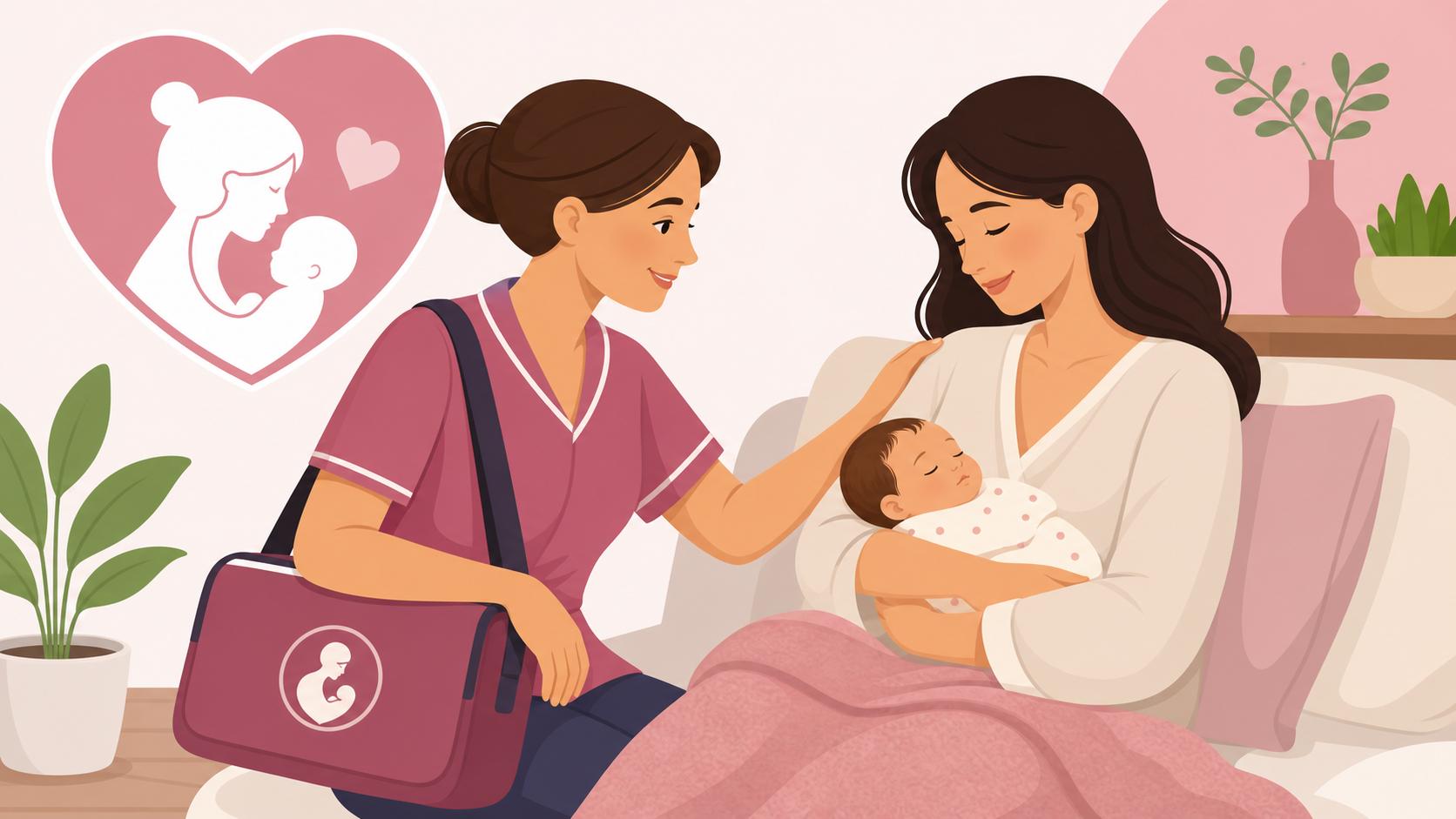
The Austrian healthcare system places a massive premium on the "Wochenbett," which is the eight-week recovery period following childbirth. Unlike some countries where you are left to your own devices after discharge, Austria provides a structured system of home visits conducted by a professional Hebamme (midwife). These professionals are the backbone of postpartum care, bridging the gap between the hospital environment and your new life at home.
Kassenhebamme vs Wahlhebamme
When you start your search, you will encounter two primary types of midwives: the Kassenhebamme and the Wahlhebamme. A Kassenhebamme has a direct contract with the public health insurance providers, such as the ÖGK or SVS. This means their services are billed directly to the state, and you generally do not see an invoice. This is the "gold standard" for convenience, but because they are fully covered, they are in extremely high demand and book up months in advance.
On the other side, we have the Wahlhebamme (private or "choice" midwife). These professionals do not have a direct billing contract with the public insurance funds. You pay them out of pocket and then submit the paid invoice for a partial refund. While this involves more paperwork and an initial financial layout, it often guarantees you a midwife who has more time for your specific concerns and perhaps better English proficiency. Navigating Healthcare Costs: Kassenarzt vs Wahlarzt Differences Explained is essential here, as the logic for midwives follows the same 80% refund rule as private doctors.
Why the Search Starts Early
In cities like Vienna, Graz, or Salzburg, the shortage of midwives is a frequent topic of conversation in expat Facebook groups. I’ve known parents who began calling midwives the moment they saw a positive pregnancy test. While that might feel extreme, waiting until your third trimester is a recipe for stress. Most midwives recommend securing your postpartum care by the 12th to 15th week of pregnancy.
The reason for this urgency is the "territory" system. Midwives usually cover specific districts or "Bezirke" to minimize travel time between home visits. If you live in the 22nd district of Vienna but find a midwife you love in the 7th, she may decline simply because the cross-city commute isn't feasible during a busy shift. Start your search locally and prioritize those who have easy access to your neighborhood.
The Role of the Hebamme in Your Home
A common misconception among newcomers is that a midwife is just there to check the baby. In the Austrian context, the Hebamme is equally focused on the mother’s physical and mental recovery. They are trained to monitor uterine involution, check the healing of any surgical sites or tears, and assess your overall hormonal transition.
Beyond the physical, they are your first line of defense against the overwhelming "Baby Blues." They provide a safe space to discuss the birth experience, which is vital for processing any trauma or unexpected interventions. They also act as a weight-monitoring station for the infant, ensuring that the initial weight loss common in newborns is being corrected through effective feeding.
Managing Postpartum Home Visits
The logistics of "Hausbesuche" (home visits) are highly regulated but also flexible based on your needs. In the first few days after leaving the hospital, the visits are frequent. If you leave the hospital early (an "ambulatory" birth), your midwife is legally required to visit you daily for the first few days to ensure both mother and child are stable.
Frequency and Duration of Visits
For a standard birth followed by a typical three-day hospital stay, the public insurance (ÖGK) generally covers daily home visits up until the fifth day after birth. Following that, you are entitled to seven additional visits until the end of the eighth week. However, these are not hard limits; if there are complications—such as breastfeeding difficulties, slow weight gain for the baby, or healing issues—the midwife can justify further visits that remain covered by insurance.
Each visit typically lasts between 30 and 60 minutes. During this time, the midwife will often ask you to set up a "station" on your bed or changing table where they can perform their checks. It is a very intimate, relaxed process designed to keep the mother and baby in their "nest" rather than trekking to a clinic. This is a significant benefit of Austria Healthcare System 2027: Complete Guide for Foreign Residents, which prioritizes home-based recovery.
What Happens During a Visit
The ritual of the home visit is fairly consistent across Austria. First, the midwife will check the baby’s weight using a portable digital scale or a traditional sling scale. They will inspect the umbilical cord stump for signs of infection and monitor for neonatal jaundice. If you are breastfeeding, they will often observe a feeding session to correct the "latch" and offer positions that minimize nipple pain or back strain.
For the mother, the midwife checks vital signs if necessary and palpates the abdomen to ensure the uterus is shrinking back to its original size. They are also experts in "Rückbildung" (postpartum regression/strengthening) and will show you gentle pelvic floor exercises you can start even in the first week. If you have questions about The Digital Eltern-Kind-Pass 2026: What Changed for Parents, the midwife is often the best person to ask, as they are now required to log certain data points into this new electronic system.
The Healing Phase and the Wochenbett
In Austria, the "Wochenbett" is treated with a level of reverence that often surprises expats from more "hustle-heavy" cultures. Your midwife will be the strongest advocate for you staying in bed. They will often remind you that the "Wochenbett" is for bonding and healing, not for hosting neighbors or cleaning the kitchen.
This cultural emphasis on rest is supported by the midwife’s visits. They provide the medical justification for you to stay put. If you find yourself struggling with the isolation of this period, your midwife can also connect you with "Frühe Hilfen" (Early Help) networks, which provide extra social support for families in those first intense months.
Financials and Social Insurance
Navigating the costs of postpartum care is one of the most confusing parts of the process, especially as the rules around Navigating Social Insurance: ÖGK, SVS, and BVAEB Overview can vary slightly depending on your employment status.
What is Covered by Public Insurance
If you have a Kassenhebamme, the process is "cashless." You provide your e-card (and eventually the baby's e-card), and she handles the rest. This covers the home visits, telephone consultations, and even some materials used during the visits. Note that there is a specific The Austrian e-card: Registration, Photo Rules, and Usage Guide that you should review to ensure your card is active before the birth.
If you have a Wahlhebamme, you will receive an invoice (Honornote) at the end of the care period. You must pay this in full first. Afterward, you submit the invoice and proof of payment to your insurance provider. You are generally reimbursed 80% of what the insurance would have paid a contracted midwife—not necessarily 80% of what you actually paid. Given that private midwives often charge more than the official state rate, your actual out-of-pocket cost might be higher than expected.
Refunding Private Midwife Costs
To get your refund, you need to ensure the invoice is formatted correctly. It must include your social insurance number, the baby’s details, the dates of every single visit, and a breakdown of the services provided. Many expats find it helpful to learn How to Submit a Wahlarzt Invoice to ÖGK for Refund because the digital submission process through the "Meine SV" portal is the same for midwives as it is for specialists.
| Service Type | Kassenhebamme Coverage | Wahlhebamme Coverage |
|---|---|---|
| First 5 days post-hospital | 100% Direct Billing | Partial Refund (~80% of state rate) |
| Days 6 to 8 weeks | Up to 7 visits included | Partial Refund per visit |
| Breastfeeding Consultation | Included | Usually included in visit fee |
| Travel Costs | Included | May be charged extra by private midwives |
Social Insurance Registration for the Baby
While the midwife can start visits using your insurance details, you need to get the baby their own insurance status as soon as possible. In Austria, this is usually a semi-automatic process if the birth is registered at the Standesamt, but you should double-check Registering a Newborn Baby for an e-card Automatically to avoid any gaps in coverage. Once the baby has their own e-card, the midwife will switch the billing for the "baby-specific" portions of the visit to the child's account.
The Eltern-Kind-Pass and Required Postpartum Checks
The Family Health: Eltern-Kind-Pass 2026 and Maternity Care System is the holy grail of pediatric and maternal health tracking in Austria. As of 2026, this system is fully digital, meaning your midwife will likely record her visits on a tablet that syncs with your ID Austria account.
Digital Updates and Logistics
The transition to the digital Eltern-Kind-Pass means you no longer have to worry about losing that little yellow booklet in a mountain of diapers. Your midwife will log the "Hebammengespräch" and the postpartum checkups. This is crucial because completing these checks is a prerequisite for receiving the full amount of Kinderbetreuungsgeld (Childcare Allowance). If you miss the documented midwife or doctor visits, the state can and will reduce your monthly payments.
Coordinating with a Pediatrician
While the midwife handles the home visits, you still need to see a Kinderarzt (pediatrician) for the "Mutter-Kind-Pass" examinations, specifically the one that occurs in the first week (often done in the hospital) and the one between the 4th and 6th week of life. Your midwife will often recommend local doctors, which is incredibly helpful when Finding an English-Speaking Pediatrician Accepting New Patients is your top priority.
The midwife and the pediatrician act as a two-pronged support system. If the midwife notices a heart murmur or a hip clicking during a home visit, she will tell you exactly how to phrase the concern to the pediatrician to ensure a swift referral. This collaborative care is a hallmark of the Austrian system and provides a massive safety net for new parents.
Specific Support for Expats in Austria
Being a new parent in a foreign country adds a layer of complexity to postpartum recovery. You aren't just learning how to change a diaper; you're learning how to do it while navigating a different language and different medical expectations.
Finding English-Speaking Midwives
Many Austrian midwives speak excellent English, but they may not advertise it prominently. When searching on platforms like "Hebammen.at," look for the language filters. In Vienna, organizations like the "Hebammenzentrum" or "Nanaya" are specifically geared toward supporting diverse families and can often help match you with a midwife who speaks your native tongue.
Don't be afraid to ask about language during your first "get-to-know-you" call. You need to be able to describe complex physical sensations and emotional states, so being comfortable with the language of your midwife is not a luxury—it’s a necessity. If you are struggling with the language barrier in other areas, you might also find it useful to look into Medical Translation Services: Interpreters for Hospital Visits.
Cultural Differences in Postpartum Care
You might find that Austrian midwives have very specific views on certain topics, like "Lüften" (the art of airing out a room) or the use of specific herbal teas for milk production (Stilltee). While some of this might feel like "old wives' tales," much of it is rooted in a long tradition of naturopathic care that is integrated into the formal medical system.
For example, the use of "Topfen" (quark) compresses for mastitis is a standard recommendation from even the most high-tech Austrian hospitals. Embracing these local methods can often be a great way to bond with your Hebamme. However, always feel empowered to advocate for your own preferences, especially regarding Mental Health in Austria: Counseling, Therapy, and Expat Support, if you feel your emotional needs aren't being met by traditional advice.
Dealing with Bureaucracy While Sleep-Deprived
One of the hardest parts of the postpartum period in Austria is the paperwork. Between the Meldezettel for the baby, the insurance registration, and the Applying for the Familienbeihilfe (Child Benefit) Allowance, the first month is a whirlwind of forms.
Your midwife has seen this a thousand times. Use her visits to ask for "form-checking." While she isn't a lawyer, she knows what a standard confirmation of birth looks like and can often tell you which government office you need to visit next. This informal guidance is often more valuable than the medical checks themselves for an expat trying to find their footing.
Practical Tips for the First Weeks (Wochenbett)
To make the most of your midwife’s visits and your recovery, a little bit of "Austrian-style" preparation goes a long way.
Stocking the Kitchen and Vorkochen
Austrians take the concept of "Kraftsuppe" (energy soup) very seriously for new mothers. This is usually a long-simmered beef or vegetable broth intended to replenish nutrients. Your midwife will likely ask if you are eating enough warm meals. My advice? Spend the last few weeks of your pregnancy "Vorkochen" (pre-cooking) and filling your freezer. When the midwife arrives for a 9:00 AM visit and sees you have a warm, nutritious meal ready, she will know you are on the right track.
Managing Visitors and Etiquette
The Austrian "Ruhezeit" (quiet time) isn't just for Sundays; it's a way of life in the Wochenbett. It is perfectly acceptable—and socially expected—to tell friends and even extended family that you are not taking visitors for the first two weeks. Your midwife can actually "prescribe" this rest if you have pushy relatives. In Austria, the focus is on the core family unit (the "Kernfamilie") establishing a rhythm before the outside world is invited in.
Creating a Support Nest
Before the baby arrives, set up a "Midwife Kit" in your home. This should include:
- A clean, flat surface for weighing the baby.
- A folder containing your The Austrian e-card: Registration, Photo Rules, and Usage Guide and the Eltern-Kind-Pass login details.
- A notebook to jot down questions between visits (because "pregnancy brain" becomes "newborn brain" very quickly).
- A comfortable chair with a side table for breastfeeding consultations.
By having these things ready, you allow the midwife to focus entirely on you and the baby rather than hunting for paperwork or a clear spot to set down her scale. This preparation ensures that every minute of those precious home visits is used to support your transition into parenthood in your new Austrian home.
Postpartum Care Comparison Table
| Feature | Standard Home Visit | Hospital Follow-up Clinic |
|---|---|---|
| Location | Your home / Bedroom | Hospital Outpatient Ward |
| Focus | Holistic (Mother + Baby + Environment) | Clinical / Specific issue |
| Travel Required | None (Midwife comes to you) | High (Often involves public transport) |
| Duration | 30–60 Minutes | 10–15 Minutes (after waiting) |
| Cost (Kassen) | €0 (Direct Billing) | €0 (with e-card) |
| Connection | Personalized, ongoing relationship | Rotating staff, often different doctors |
Medical Disclaimer
The information provided in this guide is for informational and educational purposes only and is based on the Austrian healthcare system. It is not intended as medical advice, diagnosis, or treatment. Postpartum care requirements can vary significantly based on individual health needs and complications. Always consult with your licensed Hebamme, obstetrician, or pediatrician regarding specific medical concerns for yourself or your newborn. If you or your baby experience an emergency, contact Austrian emergency services immediately by dialing 144.