Managing Household Waste: Strict Recycling Rules Explained
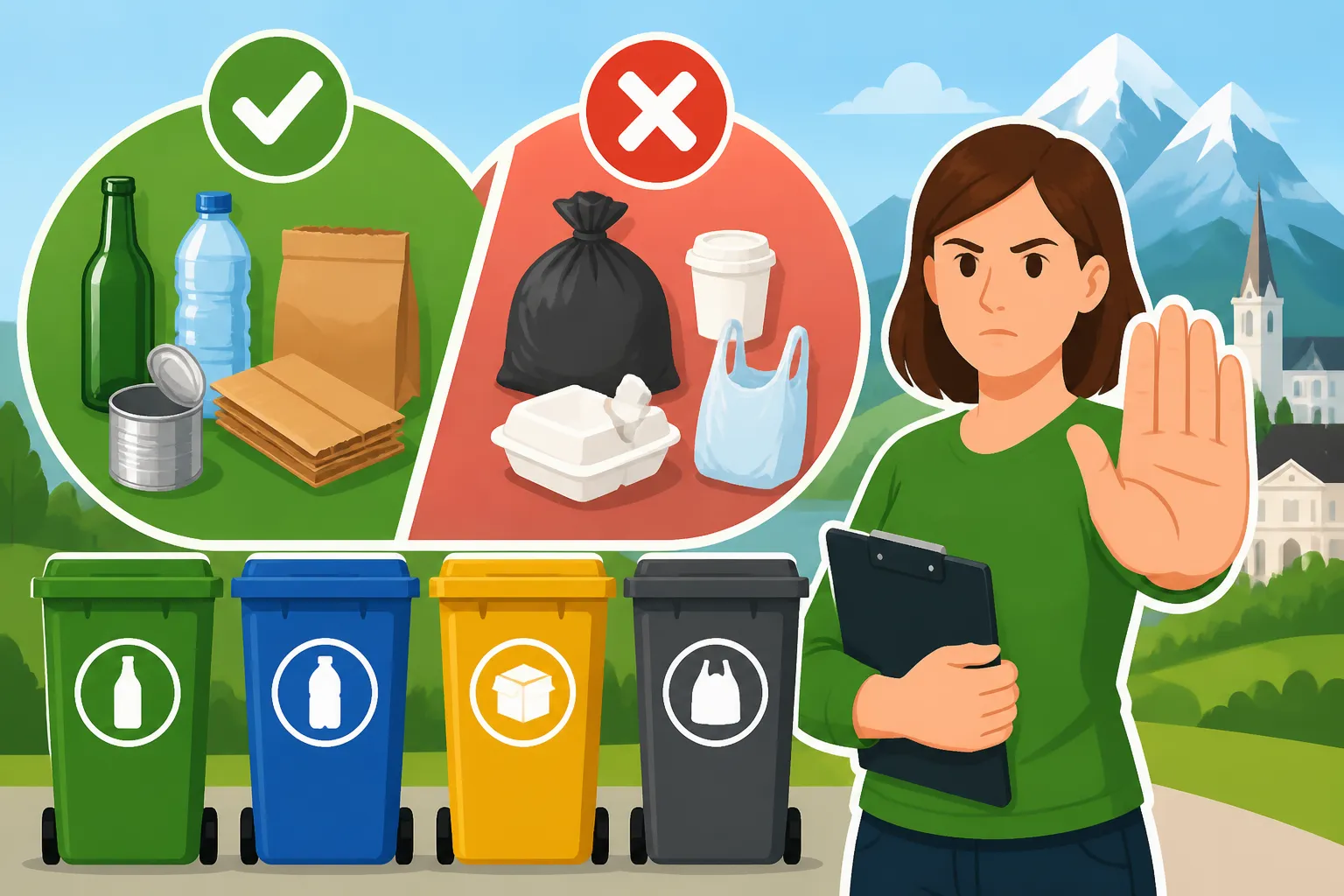
Standing in your kitchen with a greasy pizza box in one hand and a plastic yogurt lid in the other, feeling an escalating sense of dread as you stare at the row of colored bins, is a rite of passage for every newcomer. I remember my first month in Vienna when an elderly neighbor actually knocked on my door to "politely" explain that my cardboard sorting was subpar. This guide solves the complex puzzle of Austrian waste management so you can avoid the "trash police" and live sustainably.
Understanding the Austrian Waste Philosophy
The Austrian approach to waste isn't just about getting rid of things; it is a meticulously engineered system of resource recovery that borders on a national obsession. For a foreigner, the sheer granularity of the sorting can feel overwhelming, but it is rooted in a deep cultural respect for the environment and a pragmatic approach to circular economics. In Austria, waste is seen as a secondary raw material. If you throw a plastic bottle into the residual waste, you aren't just making a mess; you are viewed as wasting a resource that the state has already built an infrastructure to reclaim.
When you first arrive and start Living in Austria 2027: The Expat Starter Guide, the waste system will likely be one of your first major administrative hurdles. Unlike some countries where "recycling" is a single blue bin for everything, Austria requires you to be the primary sorter. This means the labor of the circular economy starts at your kitchen counter. You are expected to clean, separate, and correctly categorize every scrap of material before it ever leaves your apartment. This is not a suggestion; it is a civic duty that is often enforced by social pressure and, occasionally, by municipal fines.
The system is managed locally, which means while the broad strokes are the same, the specific colors of the bins might vary slightly if you are looking at the Graz Neighborhood Guide: Family Areas vs Student Hubs compared to the central districts of Vienna. However, the logic remains consistent: keep organic matter out of the landfill, keep toxins out of the water, and keep high-quality recyclables as pure as possible. This commitment is why Austria consistently ranks as one of the top recyclers in the European Union.
The Role of the MA 48 and Local Councils
In Vienna, the department known as MA 48 is legendary. They aren't just trash collectors; they are a cultural institution with their own merchandise, a catchy orange uniform, and a massive public presence. Their goal is to make waste management as transparent as possible. In other federal states, you will deal with different municipal bodies, but the level of service remains high. These organizations provide the bins, manage the collection schedules, and operate the specialized "Mistplatz" or waste collection centers.
Understanding your local provider is key because they dictate the schedule. In many Austrian cities, you can download apps that send you a push notification the night before the "Yellow Bag" or "Paper Bin" is collected. This level of digital integration is a lifesaver for expats who are still trying to figure out if it is a "Bio-Waste" week or a "Residual Waste" week. Failing to keep up with these schedules can lead to overflowing bins in your building's Müllraum, which is a quick way to alienate your neighbors.
Why Sorting Matters for Your Wallet
While it might feel like a chore, proper sorting actually keeps your utility costs down. The "Restmüll" (residual waste) is the most expensive type of waste for the city to process because it usually ends up in incinerators. Most municipalities charge the building owners based on the volume and frequency of residual waste collection. These costs are then passed down to you through the "Betriebskosten" (operating costs) section of your rent.
If your building's residents are excellent at recycling, the volume of expensive residual waste stays low, which can lead to lower monthly utility fees. On the other hand, if people are lazy and throw everything into the black bin, the building may need more frequent pickups or larger bins, driving up the Cost of Living Benchmarks for Singles, Couples, and Families for everyone in the house. In Austria, being eco-friendly is literally a financial strategy.
Decoding the Color Coded Bin System
The heart of the system is the array of bins you will find in your building's courtyard or at local collection points. While there has been a recent push to standardize these colors across the country, some regional differences persist. Generally, you are looking at five to six primary categories. Each has its own set of "strict" rules that can seem arbitrary until you understand the recycling technology behind them.
It is worth noting that if you are exploring the Vienna Neighborhood Guide: Best Districts for Expats, you will notice that the bins are everywhere. In more rural areas, you might have to drive your recyclables to a central collection point (Sammelinsel), but the categories remain the same. Let's break down exactly what goes where so you never have to second-guess yourself again.
Paper and Cardboard The Red Bin
The "Altpapier" bin is usually marked with a red lid or label. This is for clean paper, newspapers, magazines, and cardboard boxes. The golden rule here is that the paper must be clean. A pizza box soaked in grease is no longer "paper" in the eyes of the Austrian recycling system; the oil ruins the pulp during the recycling process. Such items must go into the residual waste.
Furthermore, you are expected to flatten every single cardboard box. Leaving a large, unflattened Amazon box in the red bin is considered a major breach of etiquette in Austrian apartment culture. It takes up unnecessary space and forces the bin to be emptied sooner than planned. If you have massive amounts of cardboard from a recent move, do not stuff it into the building's bin; instead, take it to a "Mistplatz." This is part of the Everyday Etiquette: Garbage Sorting, Noise, and Ruhezeit that helps you blend in with the locals.
Plastics and Metals The Yellow Bin
Traditionally, plastics (Gelbe Tonne) and metals (Blaue Tonne) were separate in many parts of Austria. However, as of 2026, most of the country has moved to a unified system where all "lightweight packaging" goes into the yellow bin or the yellow bag (Gelber Sack). This includes plastic bottles, yogurt cups, milk cartons (Tetra Paks), and metal cans.
When dealing with Yellow Bin vs Blue Bin: Sorting Plastics and Metals, the most important thing is to "de-nest" your trash. Don't put a metal lid inside a plastic yogurt cup. The automated sorting machines at the recycling plant use lasers and magnets to separate materials, and they cannot "see" the metal if it is hidden inside a plastic container. You don't need to scrub your containers with soap, but they should be "spoon-clean." A half-full bottle of ketchup thrown into the yellow bin can contaminate an entire batch of plastic.
| Category | Bin Color | What Goes In | What Stays Out |
|---|---|---|---|
| Paper | Red | Newspapers, letters, flattened boxes | Greasy pizza boxes, tissues, wax paper |
| Plastics/Metal | Yellow | PET bottles, cans, yogurt cups, Tetra Paks | Toys, hard plastics (buckets), pipes |
| Organic | Brown | Fruit scraps, coffee grounds, eggshells | Plastic bags (even "bio" ones), meat, diapers |
| White Glass | White | Clear jars, transparent wine bottles | Blue glass, ceramics, drinking glasses |
| Colored Glass | Green | Green, brown, or blue bottles | Mirrors, window glass, light bulbs |
| Residual | Black/Grey | Vacuum bags, cigarettes, hygiene products | Anything recyclable or hazardous |
Organic Waste The Brown Bin
The "Biotonne" is perhaps the most scrutinized bin in the country. This waste is often turned into high-quality compost or used for biogas production. Because of this, the purity of the waste is paramount. You can include fruit and vegetable scraps, coffee filters, tea bags, and small amounts of garden waste.
A common trap for expats is the "biodegradable" plastic bag sold in supermarkets. Many Austrian composting plants cannot process these bags because they don't break down fast enough for the industrial composting cycle. In many districts, these are strictly forbidden in the brown bin. It is better to use brown paper bags or simply empty your organic bin directly into the Biotonne. For a deep dive into the specifics of what is allowed, check out our guide on Bio-Waste (Biotonne) rules: what goes in the brown bin?.
Hazardous and Specialty Waste Management
Not everything fits into a colored bin. In fact, throwing the wrong thing into your household trash can be illegal and dangerous. Austria has a very robust system for "Problemstoffe" (hazardous substances). This includes batteries, light bulbs, old medicines, chemicals, and even cooking oil. It is worth knowing that the quickest way to get a "red slip" on your trash is by leaving a car battery next to the residual waste bin.
Dealing with these items requires a bit more effort, but the infrastructure is remarkably accessible. Most supermarkets have small collection boxes near the entrance for old batteries and small LED bulbs. For larger items, you will need to find your local hazardous waste collection point. In cities, these are often mobile stations that park in specific squares on a rotating schedule, making it easy for residents without cars to dispose of toxins safely.
The WÖLI and Cooking Oil Disposal
One of the more unique Austrian inventions is the "WÖLI." This is a reusable plastic container (usually bright yellow or green) provided by the city for collecting used cooking oil. You should never, ever pour oil down the drain in Austria; the plumbing in many of the beautiful "Altbau" buildings is old and prone to massive clogs.
Once your WÖLI is full of frying oil or the oil from jars of sun-dried tomatoes, you take it to a "Mistplatz" or a collection point and swap it for a clean, empty one. This oil is then recycled into biodiesel. It’s a small step that prevents massive infrastructure damage and contributes to the country's green energy goals. If you are just moving in and Sourcing Cheap Used Furniture on Willhaben Safely, you might even find an old WÖLI left behind in the kitchen cabinets by the previous tenant.
Expired Medications and Chemicals
Pharmacies (Apotheken) in Austria are generally required to take back expired or unused medications. Do not flush them down the toilet, as the water filtration systems are not designed to remove pharmaceutical compounds, which can then end up in the Danube. Simply take the pills out of their cardboard boxes (the boxes go in the red bin!) and hand the blister packs to the pharmacist.
For household chemicals like paint thinners, pesticides, or strong cleaning agents, you must wait for the "Problemstoffsammlung" (hazardous waste collection). These materials are treated with extreme caution. If you are unsure whether a substance is hazardous, look for the orange and black warning symbols on the packaging. When in doubt, keep it separate and ask at the local waste center.
Bulky Waste and Large Item Disposal
At some point, you will have an old mattress, a broken IKEA shelf, or a defunct microwave that won't fit in any bin. This is "Sperrmüll" (bulky waste). In many countries, you might just leave these on the curb and hope someone picks them up. In Austria, doing this without a scheduled appointment is considered illegal dumping and can result in significant fines.
If you have a car, the easiest solution is to visit a "Mistplatz." These are large, organized drive-through centers where you can drop off almost anything. Most residents are allowed to drop off household quantities for free or a very nominal fee. The staff there are famously efficient (and sometimes a bit grumpy if you haven't pre-sorted your items), so make sure your wood is separated from your metal before you arrive.
Booking Pickups and the Mistplatz
If you don't have a car, don't panic. Most municipalities offer a bulky waste pickup service. You usually have to call or fill out an online form to request a time. There is often a fee for this service, but it is the legal and stress-free way to clear out your cellar. For more details on the logistics, you can read our guide on How to Book a Free Sperrmüll (Bulky Waste) Pickup in Vienna.
Keep in mind that "Sperrmüll" does not include construction waste. If you are doing a major renovation in your apartment, you cannot use the standard bulky waste service. You will likely need to rent a "Mulde" (a large metal skip) and place it on the street, which requires a permit from the city. This is a common point of confusion for expats who try to dispose of old tiles or bricks at the regular waste center and get turned away.
Donating and Reusing Before You Toss
Before you head to the Mistplatz, consider the thriving second-hand culture in Austria. The platform "Willhaben" is the undisputed king of the used goods market. You can list items as "Zu Verschenken" (to give away for free), and someone will often come to your door within hours to take it off your hands.
Additionally, organizations like Carla (run by Caritas) or the 48er-Tandler in Vienna take high-quality used goods and resell them to fund social projects. This is not only more sustainable than recycling but also saves you the effort of hauling heavy furniture to a collection point. If you are still in the process of Sourcing Cheap Used Furniture on Willhaben Safely, you will quickly see how vibrant this "re-use" economy is.
Apartment Living and Community Etiquette
In Austria, the "Müllraum" (trash room) is a microcosm of social harmony—or discord. Because the bins are shared, your neighbors will notice if you aren't playing by the rules. It is not uncommon for a "Hausmeister" (building manager) or a particularly vigilant neighbor to leave a note on a bin if they find non-recyclables mixed in. While it feels like an invasion of privacy, they see it as protecting the community from higher fees and "uncleanliness."
The etiquette extends beyond just what goes in the bin; it is also about how and when you dispose of it. Dropping glass bottles into the recycling bin at 11:00 PM on a Sunday is a guaranteed way to receive a complaint. The "Ruhezeit" (quiet hours) are taken very seriously. Generally, you should avoid any noisy activity, including trash disposal, between 10:00 PM and 6:00 AM, and all day on Sundays and public holidays.
The Dynamics of the Trash Room
Most apartment buildings have a dedicated room or a fenced area for bins. Keep this area clean. If a bin is full, do not just pile your bags on top or leave them on the floor. This attracts pests and is considered highly disrespectful to the building staff. If the bins are consistently overflowing, it is a sign that the building needs to adjust its contract with the waste management company, which you should bring up with your "Hausverwaltung" (property management).
If you are new to the building, it’s worth taking a moment to read the signs posted in the Müllraum. They often contain specific instructions or even diagrams for that specific district. Following these to the letter will go a long way in establishing you as a "good" neighbor. This is particularly important if you are worried about Strict Move-Out Cleaning Rules for Rent Deposit Returns later on, as a history of poor waste management can sometimes lead to friction with the landlord.
Dealing with "Trash Police" and Disputes
If a neighbor confronts you about your recycling, my best advice is to remain calm and appreciative. Even if they are being overly pedantic, they usually believe they are helping you avoid a fine or helping the environment. A simple "Thank you for the tip, I’m still learning the system" usually diffuses the situation.
If you find that your neighbors are the ones failing to sort correctly, resulting in higher fees for you, the best course of action is to contact the Hausverwaltung. They can send out a general notice to all residents. In extreme cases, some buildings have even installed CCTV in trash rooms, though this is rare due to Austria's strict privacy laws. Generally, social pressure is the primary tool for enforcement.
Financial and Legal Implications
The Austrian legal system treats waste management seriously. While you aren't likely to go to jail for putting a plastic bottle in the paper bin, the administrative fines for "illegal dumping" or repeated violations of waste ordinances can be steep. These fines start in the hundreds of euros and can escalate quickly.
Furthermore, as mentioned earlier, waste collection is a significant part of your "Betriebskosten." If the city finds that a building's recycling bins are constantly contaminated with residual waste, they may reclassify the bins or increase the frequency of residual waste pickups, which costs the building more money. This is why landlords and property managers are so insistent on following the rules.
Waste Fees and Your Lohnzettel
While trash collection isn't a direct deduction from your paycheck like taxes, it is a mandatory cost of living. When you are looking at your monthly budget, ensure you account for the fact that utility costs in Austria are rising. Waste management is a public service, but it is not "free." You pay for it through your rent or, if you own a home, through quarterly municipal tax bills.
If you are a student or a low-income earner, you might be eligible for certain subsidies that cover part of your "living costs," but these are generally flat rates and don't change based on how much trash you produce. For a clearer picture of how these costs fit into your overall finances, you might want to look at our guide on Cost of Living Benchmarks for Singles, Couples, and Families.
Impact on Your Security Deposit
When it comes time to move out, your waste management habits can haunt you. If you leave a cellar full of "Sperrmüll" or leave the apartment "unclean" (which includes leaving trash behind), the landlord is legally entitled to deduct the cost of professional disposal and cleaning from your "Kaution" (security deposit).
Professional disposal services in Austria are expensive because they have to pay the same recycling and tipping fees you are trying to avoid. Expats often lose €500 or more from their deposit simply because they didn't want to make two trips to the Mistplatz at the end of their lease. For more tips on protecting your money, check out the Strict Move-Out Cleaning Rules for Rent Deposit Returns.
Sustainable Living Beyond the Bin
Recycling is the last line of defense. The true Austrian way is to avoid waste altogether. In recent years, the "Zero Waste" movement has exploded in cities like Vienna, Graz, and Linz. You will find numerous "Unverpackt" shops where you bring your own glass jars to fill with grains, pasta, and even detergents.
Even the standard supermarkets like Spar and Billa are making strides. Most now have robust "Pfand" (deposit) systems for glass bottles. When you buy a bottle of beer or certain brands of milk and yogurt, you pay a small deposit (usually 9 to 29 cents). You then return the empty bottle to an automated machine at the supermarket and get a voucher for the value. This system is incredibly efficient and ensures that high-quality glass stays in a closed loop.
Second-Hand Culture and the Digital Economy
Beyond Willhaben, there are numerous "Flohmärkte" (flea markets) held every weekend across the country. The Naschmarkt flea market in Vienna is world-famous, but smaller, local ones are where the real bargains are found. Participating in this culture of "re-use" is a point of pride for many Austrians, regardless of their income level.
Using digital tools can also help. Apps like "Too Good To Go" allow you to buy "surprise bags" of leftover food from bakeries and restaurants at a fraction of the price, preventing perfectly good food from being thrown away. Integrating these habits into your life will not only help the environment but also help you feel more connected to the local way of life.
The Future of Waste in Austria
The system continues to evolve. You will see more "smart bins" that notify the city when they are full, and an even greater emphasis on "circular design" where products are designed from the start to be easily disassembled and recycled.
By mastering the colored bins today, you are preparing yourself for a future where resource management is the most important skill a citizen can have. It might feel like a lot of work now, but once it becomes second nature, you’ll find yourself cringing when you visit other countries and see people throwing aluminum cans into the general trash. You have officially become part of the Austrian system.
Disclaimer
This guide is intended for informational purposes only and reflects the general waste management practices in Austria as of 2026. Rules and regulations can vary significantly between different federal states, municipalities, and even individual apartment buildings. Always prioritize the specific instructions provided by your local waste management authority (such as MA 48 in Vienna) or your property management. The author and publisher are not responsible for any fines, disputes, or damages resulting from the interpretation of this information.