Moving to Austria with Family: Schools and Logistics
Moving your entire life to a new country is a monumental task, but doing it with children adds a layer of complexity that can feel like solving a Rubik’s Cube in a dark room. I vividly remember the panic I felt standing in a crowded district office, clutching a stack of untranslated birth certificates while my toddler staged a protest on the linoleum floor. This guide is designed to dismantle that stress, providing a clear, step-by-step roadmap for navigating the Austrian school system and the intricate logistics of family relocation.
Navigating the Administrative Foundation for Families
The very first hurdle you will face is ensuring your family has the legal right to reside in the country, which involves more than just a passport stamp. For non-EU citizens, the Austria Visas & Residence Titles 2027: Complete Guide is your essential starting point, as it outlines the specific requirements for family reunification. You must ensure that each family member has their own individual application, even the infants. The paperwork can be grueling, and the authorities at the MA 35 in Vienna or the various provincial Bezirkshauptmannschaften are known for their meticulous attention to detail.
Once you land, the clock starts ticking immediately on your residency obligations. One of the most critical, yet often overlooked, tasks is The 3-Day Rule for Meldezettel Registration After Arrival. Every person in your household, regardless of age, must be registered at your local district office or town hall within three business days of moving into your new home. This document, the Meldezettel, is the "golden ticket" of Austrian life; without it, you cannot enroll your children in school, sign up for utilities, or even open a bank account. I learned the hard way that missing this window can result in uncomfortable questions and potential fines, so make it your absolute priority on day one.
Beyond the initial registration, families moving from outside the EU must be prepared for the "Anmeldebescheinigung" if they are EU/EEA citizens staying longer than three months. This is a separate step from the Meldezettel and confirms your right of residence based on employment or sufficient means. For those on a Red-White-Red card, your family members will typically receive a Red-White-Red Card Plus, which grants them full access to the Austrian labor market. Keeping these documents organized in a dedicated "Austria Folder" will save you hours of frustration when you are asked for proof of residency for the tenth time.
Finding a Home That Works for the Whole Family
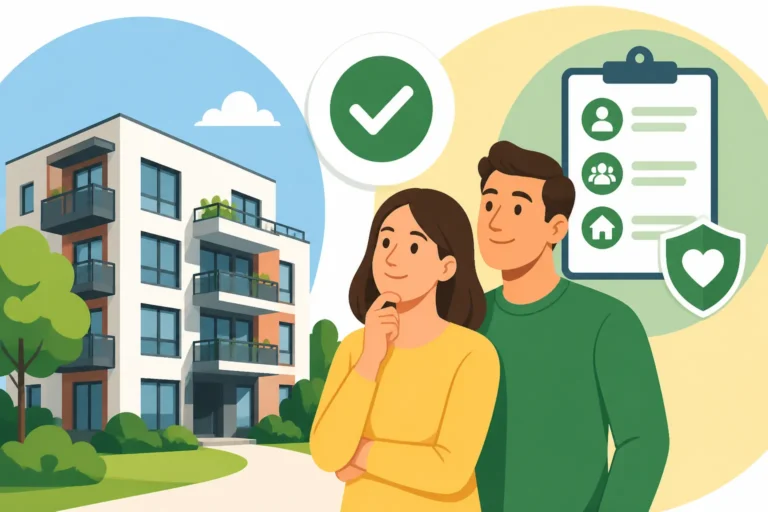
Housing in Austria is not a one-size-fits-all market, and what works for a single professional rarely meets the needs of a family of four. When searching for a flat, you will frequently encounter the terms Altbau and Neubau. An Altbau refers to the classic, high-ceilinged buildings constructed before World War II, often featuring beautiful parquet floors and large windows. However, they can be drafty and expensive to heat in the winter. Before signing a lease, it is wise to research Altbau vs Neubau: Differences in Rent, Charm, and Heating to understand the long-term cost implications for a larger family space.
Location is everything, especially when you are balancing school runs with work commutes. If you are settling in the capital, the Vienna Neighborhood Guide: Best Districts for Expats can help you identify family-friendly pockets like the 13th (Hietzing) or the 19th (Döbling), which offer more green space and proximity to international schools. In cities like Graz or Salzburg, look for neighborhoods that are well-connected by tram lines, as navigating narrow European streets in a large SUV is a recipe for stress. Most Austrian families rely heavily on public transport, and living within a five-minute walk of a "U-Bahn" or "Bim" (tram) stop will significantly improve your quality of life.
The Austrian rental market has a few quirks that can catch expats off guard. For instance, many apartments are rented "unfurnished," which in Austria can literally mean no kitchen cabinets, no stove, and no light fixtures. As a family, the last thing you want is to move into a home where you cannot cook a meal for your children on the first night. Always clarify if a kitchen (Einbauküche) is included. Additionally, be aware of the "Ruhezeit" or quiet hours, which are strictly enforced in many apartment blocks. Vacuuming or letting children play loudly on a Sunday can lead to a stern knock on the door from a neighbor, so finding a building with a "Hof" (courtyard) or a nearby park is essential for burning off that kid energy.
The Austrian School System from Kindergarten to Graduation
The education system in Austria is high-quality but can feel rigid and confusing to newcomers. It begins with the Kindergarten system, which is heavily subsidized or even free in many provinces, including Vienna. However, getting a spot is not guaranteed. You must pay close attention to Kindergarten Registration Timelines, as the main enrollment window often happens in January or February for a start in September. If you miss this window, you may find yourself on a long waiting list, forced to look at private options that can cost significantly more.
Once your child reaches the age of six, they enter the mandatory school system, starting with Volksschule (elementary school). After four years, the system "splits," which is a point of great stress for many parents. Based on grades and teacher recommendations, children move either to a Mittelschule (secondary school) or a Gymnasium (academic secondary school). The Gymnasium is the path toward the "Matura" (high school diploma), which is required for university entrance. This early tracking system can feel intense, but there are always pathways to switch between school types later if a child’s academic performance changes.
For many expat families, the language barrier is the biggest concern. While public schools offer "Deutschförderklassen" (German support classes) to help non-native speakers integrate, some parents prefer the continuity of an English-speaking environment. There are several International vs Bilingual Schools in Vienna and Beyond that cater specifically to the expat community. Bilingual schools, such as the Vienna Bilingual Schooling (VBS) program, offer a middle ground where subjects are taught in both German and English. These spots are highly competitive and often require an "orientation talk" to assess the child's language skills, so start your research at least a year before your planned move.
Healthcare and Social Support for Your Children
The Austrian healthcare system is world-class, and once you are employed or self-employed, your family is covered under your social insurance. You will need to understand The Austrian e-card: Registration, Photo Rules, and Usage Guide to ensure every family member can access medical services. Unlike some countries where you might wait weeks for a specialist, the Austrian system allows you to book directly with a pediatrician (Kinderarzt). I recommend finding a pediatrician before you even arrive, as many of the best English-speaking doctors have "patient stops" and aren't taking new clients.
A unique and vital part of raising a child in Austria is the Family Health: Eltern-Kind-Pass 2026 and Maternity Care System. This is a small booklet (now transitioning to a digital format) that tracks a child's development from pregnancy through age five. Completing the scheduled examinations is not just about health; it is a legal requirement to receive the full amount of "Kinderbetreuungsgeld" (childcare allowance). If you miss a check-up, the state can significantly reduce your monthly payments, so treat that booklet like a second passport.
Financial support for families in Austria is quite generous compared to many other nations. Every family residing in Austria is entitled to "Familienbeihilfe," regardless of their income. You can learn more about Applying for the Familienbeihilfe (Child Benefit) Allowance to ensure you receive this monthly stipend, which increases as the child gets older. Additionally, there are tax credits like the "Familienbonus Plus" that can significantly reduce your annual tax burden. These benefits are a testament to Austria's "family-first" culture, providing a much-needed financial cushion during the expensive transition period.
Transport, Logistics, and Moving the Household
Getting around Austria with a family is remarkably efficient, thanks to a transport network that actually works. While you might be tempted to bring your car from home, you should first evaluate Is the Klimaticket Worth It? Cost and Benefit Analysis. The Klimaticket allows for unlimited travel on all public transport across the country for a flat annual fee. For a family, this means stress-free weekend trips to the Alps or the lakes without worrying about parking or winter tires. If you do choose to drive, remember that Austria has strict rules about child seats and a mandatory winter tire law from November to April.
When it comes to the physical move, the logistics of importing your household goods can be a headache. If you are moving from outside the EU, you can usually import your "Umsiedlungsgut" (relocation goods) duty-free, provided you have owned them for at least six months and intend to keep them. You will need to provide a detailed inventory list and proof that you have moved your "center of life" to Austria—this is where your Meldezettel and employment contract come into play again. Hiring a relocation agent who specifically understands the Austrian customs office can be a lifesaver.
Managing daily household chores also requires a bit of local knowledge. For instance, Austria has some of the strictest recycling rules in the world. You will need to learn the Recycling Bins Color Code: Altpapier, Plastik, Restmüll to avoid dirty looks (or even fines) from your neighbors. Teaching your children to separate the "Bio-Müll" (organic waste) from the "Altglas" (old glass) is a rite of passage for every expat family. It might seem trivial, but integrating into these small cultural norms is the quickest way to feel like a local and show respect for your new community.
Language Integration and the Social Transition
While many Austrians speak excellent English, especially in business settings, your family's social success depends heavily on Learning German for Life and Career Success in Austria. For children, the immersion in school usually happens quickly, and you will likely find them correcting your grammar within six months. For parents, the transition can be slower. I found that joining a local "Eltern-Kind-Zentrum" (parent-child center) was the best way to practice my "playground German" while meeting local parents who could explain the hidden nuances of the school system.
Integration in Austria often happens through "Vereine" or clubs. Whether it is a local football club, a music school, or the volunteer fire department in smaller towns, these organizations are the heartbeat of Austrian social life. Encouraging your children to join a sports team or a hobby group is the fastest way for them to make friends outside the expat bubble. For you, it provides a window into the "real" Austria, beyond the tourist sites and the bureaucracy. Austrians can be reserved at first, but once you share a "Spritzer" or a coffee at a local "Heuriger," those barriers tend to melt away.
Finally, be prepared for "culture shock" in the form of directness. Austrians value honesty and punctuality. If you are five minutes late for a school meeting, it is noticed. If your child isn't wearing a hat on a slightly chilly day, a "venerable" local might stop you on the street to offer unsolicited advice. Don't take it personally; it’s a sign of a society that feels a collective responsibility for the well-being of the community. Embracing these quirks—and the incredible safety and high standard of living that come with them—is the key to making your family’s move to Austria a long-term success.
Family Relocation and Schooling Comparison Table
| Feature | Public School (Volksschule) | International School | Bilingual School (VBS) |
|---|---|---|---|
| Primary Language | German | English | German & English |
| Curriculum | Austrian National | IB or US/UK | Austrian National |
| Annual Cost | Free (Excl. meals/after-care) | €15,000 – €30,000+ | Free (Competitive entry) |
| Social Integration | High (Local community) | Moderate (Expat bubble) | High (Mixed) |
| Admission | Based on residence district | Application & Interview | Language Assessment |
| Typical Hours | 8:00 AM – 12:00/4:00 PM | 8:30 AM – 3:30 PM | 8:00 AM – 4:00 PM |
Disclaimer
The information provided in this guide is for general informational purposes only and does not constitute legal, financial, or professional advice. While we strive to keep the content up to date for 2026, Austrian laws, visa requirements, and school enrollment procedures are subject to change. Always consult with official government sources, such as the Austrian Federal Chancellery or your local municipality, before making significant relocation decisions. Management of individual cases may vary based on specific circumstances and changes in regional regulations.