Visa Process for Bringing Minor Children to Austria
Oh, the joy and trepidation of bringing your kids along for this grand adventure of expat life! I totally get it. Moving to Austria as an adult is one thing, but adding your precious little ones into the mix brings a whole new layer of complexity and, let's be honest, a fair bit of worry. You want to make sure you're doing everything right, dotting every 'i' and crossing every 't', so their transition is as smooth as possible. Trust me, I've seen countless expat parents navigate this maze, and while it feels overwhelming, it is absolutely doable. This guide is here to walk you through the visa and residence permit process for your minor children, helping you prepare for every bureaucratic hurdle Austria might throw your way.
Understanding the Basics: Who Can Bring Their Children to Austria?
First things first, let's clarify who can actually bring their minor children to Austria and under what circumstances. It's not always as straightforward as just being a parent; Austrian law, like many immigration systems, has specific definitions and requirements.
The 'Anchor Parent' and Eligibility Criteria
In most cases, the parent who already has, or is in the process of obtaining, a valid residence permit for Austria acts as the "anchor" for the family reunification process. This means your own visa or residence title largely dictates what kind of permit your child can apply for. Generally, if you hold a Red-White-Red Card, an EU Blue Card, or certain other types of long-term residence permits, you'll find the path to bringing your children much smoother than if you're, say, on a short-term visa. The underlying principle is that Austria wants to ensure that the "anchor parent" is stably settled and able to support their family. This stability usually translates into requirements around your income, your living situation, and the type of residence title you hold. For instance, if you're here on a student visa, the options for family reunification might be more restricted or have different financial thresholds than someone working full-time on a Red-White-Red Card (RWR): Application and Requirements. It's crucial to understand your own status first, as it forms the foundation for your child's application.
Different Visa Categories for Minors: Family Reunification vs. Other Paths
For minor children, the primary route to obtaining a residence permit in Austria is through what's called "family reunification" (Familienzusammenführung). This falls under the "Residence Permit – Family Member" (Aufenthaltstitel Familienangehöriger) category. This permit is specifically designed for family members of individuals who already hold a residence title in Austria. It's not just a fancy name; it's a specific legal pathway. There are, however, nuances. For instance, if you are an EU/EEA or Swiss citizen living in Austria, your family members, including children, generally enjoy more straightforward rights to residence under EU freedom of movement laws, often only requiring an "Anmeldebescheinigung" and not a full visa application. Registering as an EU Citizen (Anmeldebescheinigung) in Austria is a critical step for these families. For non-EU/EEA citizens, the family reunification permit is typically a "Visa D" application initiated at an Austrian embassy or consulate in your home country, leading to a residence permit upon arrival. It's rare for minor children to come under other visa categories unless they are, for example, students of a certain age with independent means, but for the vast majority, family reunification is the name of the game.
Age Limits and What 'Minor' Truly Means in Austrian Law
When we talk about "minor children," Austrian immigration law usually refers to children under the age of 18. This distinction is absolutely critical because once a child turns 18, they are considered an adult (volljährig) and typically cannot apply under the same family reunification criteria. At that point, they would generally need to apply for their own independent residence title, such as a student visa or a work permit, depending on their circumstances. If your child is nearing their 18th birthday, it becomes a race against time. You need to get their application in and approved before they turn 18, as waiting too long could mean they'd have to navigate a much more complex and demanding process on their own. Austrian law is quite strict on this, so planning ahead is paramount. It's also worth noting that some benefits, like the Familienbeihilfe (Child Benefit) Allowance, have age limits and conditions tied to schooling or training that extend beyond 18, but these are separate from the initial residence permit eligibility.
Navigating the Bureaucracy: The Application Process, Step-by-Step
This is where things can start to feel a bit like wading through treacle, but with a clear roadmap, it becomes much more manageable. The application process for your children's residence permits requires meticulous attention to detail and patience.
Where to Apply: Austrian Embassies Abroad vs. MA 35/BH
The first major decision point is where to apply. For non-EU/EEA citizens, the standard procedure for a family reunification visa (Visa D) is to apply at the competent Austrian embassy or consulate in your country of residence before your child travels to Austria. This is crucial. Your child cannot simply enter Austria as a tourist and then apply for a long-term residence permit; they must have the correct visa to enter for this purpose. The embassy will process the initial application, and upon approval, issue a Visa D, which allows them to enter Austria. Once they arrive, you'll then need to apply for their actual residence permit (Aufenthaltstitel) within a specified timeframe, usually at the local municipal authority (MA 35 in Vienna) or the district administration (Bezirkshauptmannschaft or BH) in other federal states. There are very few exceptions where an "inland switch" is possible for children, so assume you need to start abroad. Missing this step can lead to significant problems, including deportation risks. Applying for a Visa D at an Austrian Embassy Abroad is generally the starting point for most.
The Pre-Application Checklist: Before You Even Touch a Form
Before you even think about filling out forms, you need to gather your documents. This is often the most time-consuming part, and getting it right prevents frustrating delays. Think of it as a treasure hunt where every item is non-negotiable.
Here's a snapshot of what you'll typically need to prepare:
| Document Type | Specifics for Minor Children | Notes |
|---|---|---|
| Identification | Child's valid passport (original + copy) | Must be valid for at least six months beyond intended stay. |
| Child's birth certificate (original + certified translation) | Proves parentage. If parents are divorced, custody papers might also be needed. Where to Get a Marriage Certificate Translated for Austria can provide insights on translation requirements. | |
| Parent's Status | Copy of your valid Austrian residence permit (e.g., RWR Card) | Proves your legal residency and eligibility to sponsor family reunification. |
| Financial Proof | Proof of sufficient funds to support the child | Bank statements, salary slips, employment contract showing adequate income. This is critical to show you can provide for your child without relying on public funds. The specific amount can vary but expect a significant sum. For adult applicants, Proof of Funds 2026 (1273 EUR) for Non-Working Permits gives an idea of thresholds. |
| Accommodation | Proof of suitable accommodation in Austria (e.g., lease agreement) | A rental contract (Mietvertrag) for an apartment large enough to house your entire family. The size needs to be appropriate for the number of residents. Submitting a Mietvertrag (Lease) for Visa Applications provides further details. |
| Health Insurance | Valid health insurance coverage for the child | Must cover all risks, often requiring public Austrian health insurance or comprehensive private insurance. Your child will need to be co-insured under your public health insurance (ÖGK, SVS, BVAEB) or have their own private policy. |
| Consent | Consent form from the non-accompanying parent (if applicable) | If only one parent is moving with the child, the other parent must provide notarized consent. |
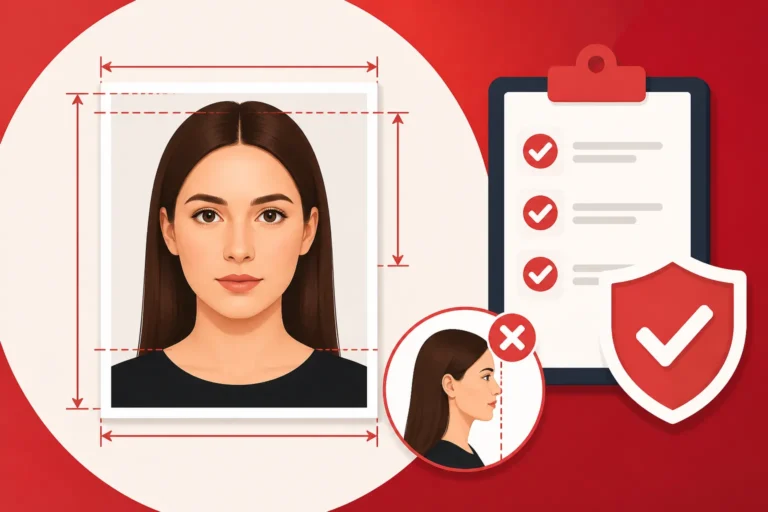
| Photos | Passport-sized photos of the child | Strict biometric requirements. Don't skimp on getting these professionally done. |
| Language | German language certificates (if required, depending on age) | While often waived for very young children, older minors might face language requirements for integration, especially for Daueraufenthalt-EU Permanent Residency later on. |
| Criminal Record | Police clearance certificate (for older minors, if applicable) | Typically for applicants over 14, proving they have no criminal record in their home country. |
Remember, every single foreign document that isn't already in German or English must be translated by a sworn and certified translator in Austria or one recognized by the Austrian authorities. And many documents will need an apostille or legalization from the Austrian embassy in your home country. This step, Apostille and Legalization Requirements for Foreign Documents, is frequently underestimated in terms of time and cost, so plan for it early!
Submitting the Application and the Waiting Game
Once you have all your documents, it's time to submit the application at the appropriate embassy or consulate. You'll typically need to schedule an appointment, often well in advance. During the appointment, your child may need to be present (depending on age) for fingerprinting and biometric data collection. This is also where you'll pay the application fees. After submission, prepare for the waiting game. MA 35 application timelines can be frustratingly long, and embassies often rely on the processing times in Austria. It's not uncommon for it to take several weeks, or even a few months, for a decision to be made. While waiting, resist the urge to constantly call or email unless specifically requested; you'll hear from them when there's an update. Keep copies of everything you submit!
Essential Documents: Get Them Right the First Time!
Let's dive deeper into the nitty-gritty of the documents, because this is often the make-or-break part of your application. Any missing document or incorrect translation can send you back to square one, costing you precious time and sanity.
Proving Parentage and Guardianship
The cornerstone of any family reunification application for children is proving their relationship to you. This starts with their birth certificate. Make sure it's the official, unabridged version, not just a short form. This document explicitly names the parents. If you are divorced or separated from the other parent, you'll also need comprehensive proof of sole custody or a notarized consent form from the non-accompanying parent. This consent form typically needs to explicitly state that the non-accompanying parent agrees to the child residing in Austria with you, and it should be accompanied by a copy of their valid identification. Without this, especially if both parents are still alive and have parental rights, your application will simply hit a wall. Austrian authorities are very cautious about parental abduction and ensuring the child's best interests, so these documents are scrutinized carefully. If the other parent is deceased, you'll need the death certificate.
Financial Stability and Accommodation for Your Child
Austria needs to be convinced that your child won't become a burden on the state. This means demonstrating sufficient financial resources. The exact income threshold can change, but it's generally based on ensuring that, after deducting your rent and other fixed costs, you have enough remaining income to support yourself and your child(ren). This income needs to be regular and verifiable, typically through your employment contract, recent payslips, and bank statements. Minimum Income Requirement to Bring Your Family to Austria will give you a detailed breakdown of these thresholds. For accommodation, your rental agreement (Mietvertrag) is key. It must clearly state the size of the apartment and ideally the number of rooms. The authorities will assess whether the living space is "adequate" for the entire family. A one-room studio for a family of three will likely raise red flags. If you're staying in temporary accommodation upon arrival, such as a serviced apartment or with friends, you might need a formal "Wohnrechtsvereinbarung" – a declaration from the landlord or main tenant confirming your family can live there – in addition to a plan for permanent housing. This is often an issue when trying to get a Meldezettel Using a Hotel or Serviced Apartment.
Health Insurance and Language Requirements for Minors
Comprehensive health insurance is non-negotiable for all residents in Austria, including children. For children joining an "anchor parent" who is employed, the easiest and most common route is to have the child co-insured (Mitversicherung) under your public health insurance (ÖGK, SVS, BVAEB). This typically requires you to register them with your insurer once they have their initial residence permit or Visa D. You can learn more about this by reading Co-insuring Family Members (Mitversicherung) on Your Policy. Until that co-insurance is active, or if you don't have public insurance, you'll need proof of private travel health insurance that covers their entire stay until public insurance can be arranged. This private insurance must meet specific requirements regarding coverage amounts and duration.
Regarding language, for very young children (e.g., under 6), language certificates are almost always waived. For older children, especially those approaching school age or teenage years, while not always a strict requirement for the initial residence permit, authorities might look for evidence of integration potential. For long-term residence (Daueraufenthalt-EU) or later citizenship applications, German language proficiency (typically B1) becomes mandatory for children as well. So, while you might not need an A1 certificate for a 5-year-old, it’s certainly something to keep in mind for their future in Austria. Early exposure to German, even through playgroups or cartoons, will immensely help their integration into school and social life.
Settling In: What Happens After Arrival in Austria?
So, you've done it! Your child has their Visa D, they've arrived, and now the real adventure begins. But the paperwork isn't quite over yet. There are crucial steps you need to take upon arrival to formally establish their residency and integrate them into Austrian society.
The All-Important Meldezettel and e-card Registration
Within three business days of your child's arrival in Austria, you must register their address by obtaining a Meldezettel. This is a non-negotiable legal requirement for everyone residing in Austria. You'll do this at the local municipal office (Meldeamt) for your district. You'll need their passport, birth certificate, and your lease agreement. Don't delay this, as there can be fines for late registration. Once the Meldezettel is secured, you'll then proceed to formalize their health insurance. If you're publicly insured, you'll submit the necessary documents to your insurance provider (ÖGK, SVS, BVAEB) to co-insure your child. They will then receive their own e-card, which is essentially their health insurance card and proof of social security number. This e-card is vital for accessing medical care, just like yours. The waiting period for the physical e-card to arrive in the mail can be a few weeks, but once registered, their coverage is usually retroactive. Having an active e-card is also a prerequisite for many other administrative tasks, including extending their residence permit. Make sure you understand The Austrian e-card: Registration, Photo Rules, and Usage Guide to prepare for this.
Schooling and Childcare: Getting Your Kids Integrated
Integrating your children into the Austrian education system is a huge step. For kindergarten-aged children (Kindergarten), registration often happens far in advance, sometimes a year or more, especially for desirable public spots. Contact your local district office (Magistratisches Bezirksamt) or the city's education department (Stadt Wien Bildung und Jugend, if in Vienna) to understand the deadlines and process. For school-aged children (Volksschule, Mittelschule, Gymnasium), registration usually occurs in spring for the upcoming academic year. You'll need their Meldezettel, birth certificate, and potentially previous school reports. Children without German language skills will often receive intensive language support to help them integrate, and many schools offer German as a Second Language (DaZ) programs. If you're considering international or bilingual schools, their admissions process will be separate and typically year-round, but often with long waiting lists. Finding Childcare: Kindergarten Registration Timelines will be essential for younger kids. For older ones, exploring International vs Bilingual Schools in Vienna and Beyond might be a priority.
Understanding Parental Benefits and Support
Once your child is legally residing in Austria and you are contributing to the social security system, you might be eligible for certain parental benefits. The most significant is the "Familienbeihilfe" (Family Allowance), which is a monthly payment provided by the state to support families with children. The amount depends on the child's age and the number of children you have. You apply for this at the Finanzamt (tax office) via FinanzOnline. It's a non-taxable benefit that can significantly help with the costs of raising children in Austria. Additionally, new parents might be eligible for "Kinderbetreuungsgeld" (Childcare Allowance), which provides financial support for parents who take time off work to care for young children. There are different models for this, offering flexibility depending on how long you plan to take parental leave. Understanding these benefits can ease the financial burden and help your family thrive. Exploring Family Financial Benefits: Wochengeld and Kinderbetreuungsgeld will provide more detail.
Bringing your minor children to Austria is a journey filled with paperwork and appointments, but it's also a deeply rewarding step towards building your new life here as a family. Stay organized, be patient, and don't hesitate to seek clarification from the authorities if you're unsure about any step. It's worth all the effort for your family's future in this beautiful country.
Disclaimer
Please remember that immigration laws and regulations in Austria can change. While I strive to provide accurate and up-to-date information, this guide is for informational purposes only and does not constitute legal advice. Always consult official government sources (such as the Austrian Embassy/Consulate, MA 35, or Bezirkshauptmannschaft) or a qualified immigration lawyer for personalized advice regarding your specific situation.