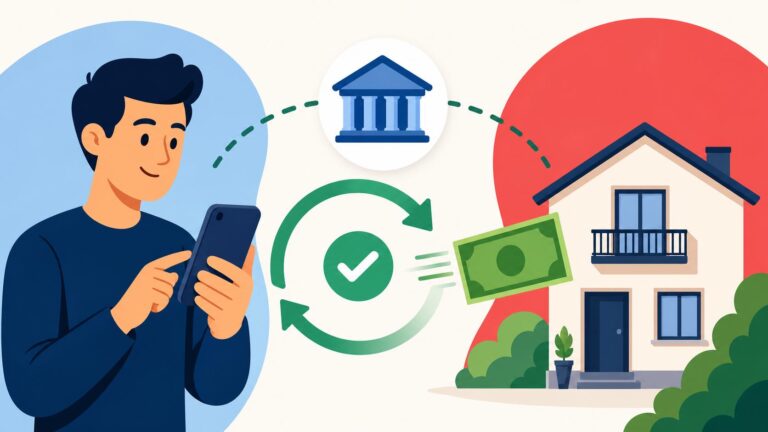
Sending Money Home: Wise vs Standard Bank Transfers
Sending money across borders often feels like watching your hard-earned euros disappear into a black hole of administrative nonsense. I still remember the first time I tried to send a birthday gift home from my local Sparkasse branch, only to realize my family received nearly fifty euros less than I sent due to "intermediary fees." This guide meticulously breaks down whether Wise or standard Austrian bank transfers are the better choice for your wallet in 2026.
The Traditional Austrian Banking Experience
Navigating the financial landscape in Austria as an expat usually begins with a visit to a physical branch of Erste Bank, Raiffeisen, or Bank Austria. While these institutions provide a sense of security and a physical point of contact, their methods for handling international transfers are often rooted in the legacy SWIFT system. This system was designed decades ago and involves multiple "correspondent" banks, each taking a small bite out of your transfer as it passes through their hands.
When you walk into a branch in Vienna or Graz to initiate a transfer, you are often met with a "flat fee" that seems reasonable—perhaps €15 or €20. However, this is rarely the total cost. The hidden fees are where the real damage is done. In my early days here, I didn't realize that my bank was also applying a 3% to 5% markup on the exchange rate, which meant for every €1,000 I sent, I was losing another €30 to €50 without even seeing it listed as a fee. For anyone trying to manage Money in Austria 2027: Banking, Payments, and Financial Setup, understanding these nuances is the first step toward financial literacy in the Eurozone.
Furthermore, traditional banks often have strict cut-off times. If you miss the 2:00 PM window on a Friday, your money might not even begin its journey until Monday morning. This lack of agility can be incredibly frustrating when you are trying to time a mortgage payment or help a family member with an emergency. The paperwork required for larger sums can also be daunting, often requiring a physical signature or a phone call with an "advisor" who may or may not speak fluent English.
The Hidden Reality of SWIFT Fees
The Society for Worldwide Interbank Financial Telecommunication (SWIFT) is the backbone of traditional international banking. When you send money from Austria to a non-SEPA country (like the US, India, or Australia), your bank sends a message to another bank, which then sends it to another, until it reaches the destination. Each of these "intermediary banks" can deduct a fee for their services. These are the High SWIFT Transfer Fees at Traditional Austrian Banks that often catch expats off guard.
The most frustrating part about these fees is that your local Austrian bank often cannot tell you exactly how much the intermediaries will charge. You are essentially sending money into a tunnel and hoping for the best. On a small transfer, such as a modest gift, the intermediary fee can end up higher than the amount actually being sent. It is a system built on opacity, which is the exact opposite of what a modern expat needs.
Exchange Rate Markups the Silent Profit
Beyond the visible service fees, traditional banks make a significant portion of their revenue from "the spread." This is the difference between the mid-market exchange rate (the one you see on Google or Reuters) and the rate the bank gives you. In Austria, even the most prominent banks rarely offer the mid-market rate to retail customers. Instead, they use a "buy" or "sell" rate that is heavily weighted in their favor.
When you look at your Lohnzettel Breakdown: Gross vs Net Salary Explained, you see exactly where your money goes in terms of taxes and social security. You deserve that same level of transparency when sending that money abroad. Unfortunately, traditional banks often bury the exchange rate markup in the fine print of their terms and conditions, making it nearly impossible to calculate the true cost of your transfer until after the money has already landed.
Dealing with Traditional Support and Physical Branches
One perceived advantage of using a bank like Raiffeisen or Erste is the ability to walk into a branch and speak to someone. In Austria, the "Berater" (advisor) culture is still very strong. However, for many expats, this can be a double-edged sword. If your German isn't quite at a C1 level, explaining complex international wire transfer issues can lead to misunderstandings.
I’ve spent far too many lunch breaks waiting in line at a bank branch in the 1st District, only to be told I needed a different form or that the person who handles international transfers was on a "Mittagspause." While these banks are reliable and highly regulated, their "human touch" often comes at the cost of efficiency and modern digital convenience. For most of us, the goal is to spend less time in the bank and more time enjoying the mountains or the coffee houses.
Enter Wise in the Austrian Context
Wise, formerly known as TransferWise, arrived on the scene with a completely different philosophy. Instead of moving money across borders via a chain of expensive banks, Wise uses a peer-to-peer model. They have pools of currency in almost every country they operate in. When you want to send Euros from Austria to British Pounds in the UK, you aren't actually "sending" money across a border. You are paying Euros into Wise’s Austrian account, and Wise is then paying out Pounds from their UK account to your recipient.
This model allows Wise to bypass the SWIFT network entirely for many popular currency routes, which is why they are often the "Hero" of Cross-Border Money: Best Ways to Transfer Funds. For an expat living in Vienna, this means your transfer often happens at the speed of a local SEPA Transfers, Dauerauftrag, and Paying Rent transaction. In many cases, transfers from an Austrian account to a home country can complete in under ten minutes.
One of the greatest features for us in Austria is the integration with local payment methods. You can fund your Wise transfer using a standard SEPA transfer from your Austrian bank, or even better, via a debit card or "Sofort" (Klarna), which is ubiquitous here. This flexibility makes the process feel much more like a modern app experience and less like a 1990s bureaucratic hurdle.
Real Time Transparency and Mid Market Rates
The core selling point of Wise is the use of the mid-market exchange rate. They do not hide their profit in the spread. Instead, they show you exactly what the current global rate is and charge a single, transparent service fee. This fee is usually a small percentage of the transfer amount plus a fixed cost. Before you even click "send," the app tells you exactly how much will arrive in the recipient's account.
This level of transparency is addictive. Once you’ve used a service that shows you the exact second your money will arrive and exactly how much the fee is down to the cent, going back to the "guesswork" of a traditional bank feels like a massive regression. For those who are Using Wise to Transfer Salary to an Austrian Account, this transparency ensures that your monthly budget remains predictable, even when the Euro is fluctuating against other currencies.
Integration with Austrian ID Systems
The digital landscape in Austria has evolved significantly. Wise has kept pace by streamlining their "Know Your Customer" (KYC) processes for residents here. While you used to have to hold up your passport for a grainy photo, many expats can now verify their identity quite quickly. This is crucial because Austrian financial regulations are notoriously strict to prevent money laundering.
Once you are verified, the app functions seamlessly. You can hold multiple "balances" within the app, allowing you to convert your Euros into other currencies when the rate is favorable and hold them there until you need to send them. This "multi-currency" feature is a godsend for anyone who still has financial obligations back home, such as student loans or a mortgage.
The Convenience of the Wise Card in Austria
Beyond just transfers, Wise offers a debit card that works perfectly in the Austrian ecosystem. While Austria has historically been a "cash is king" society, the post-pandemic shift toward "Bankomat" and contactless payments is permanent. The Wise card allows you to spend your Euro balance anywhere in Austria without fees, but its real power is when you travel outside the Eurozone.
If you’re taking a weekend trip to Prague or Budapest, the Wise card automatically converts your Euros to Czech Koruna or Hungarian Forint at the mid-market rate. This saves you from the predatory exchange rates at airport ATMs or the "tourist" rates offered by local currency exchange booths. It effectively turns your phone and wallet into a global financial tool, tailored for the nomadic life of an expat.
Comparative Cost Analysis: A Deep Dive
To truly understand which service is better, we need to look at specific scenarios. The "best" option often depends on how much you are sending and how quickly you need it to get there. While Wise is almost always cheaper for small to mid-sized transfers, there are niche cases where a traditional bank might actually make sense—though those cases are becoming rarer by the year.
For a standard transfer of €1,000 to a non-Euro currency, the difference is usually night and day. A traditional Austrian bank might charge €15 in fees and lose another €30 in the exchange rate, totaling €45 in costs. Wise might charge a total of €7.50 with zero exchange rate markup. Over a year of monthly transfers, that’s a savings of nearly €450—enough for a nice ski weekend in Tyrol or a very fancy dinner in the 1st District.
Sending Small Amounts vs Large Transfers
If you are sending small amounts—say, €100 for a niece's birthday—traditional banks are a disaster. The flat fee alone might represent 15% of the total amount. Wise, on the other hand, scales its fees proportionally, making small transfers incredibly cheap. This makes it feasible to send small "just because" gifts without feeling like you’re being robbed by the banking system.
However, if you are sending a massive sum—for example, €100,000 for a house down payment—you need to do some math. Some traditional banks cap their transfer fees at a certain level. While the exchange rate markup will still be a huge factor, you should compare the total "landed" amount between Wise and your bank. That said, even for large amounts, Wise’s "high-volume" discounts often keep them ahead of the curve.
| Feature | Standard Austrian Bank (e.g., Erste/Raiffeisen) | Wise (TransferWise) |
|---|---|---|
| Exchange Rate | Bank's own rate (usually 2-5% markup) | Mid-market rate (no markup) |
| Fixed Fees | €15 – €50 per transfer | Low fixed fee (usually < €1) |
| Intermediary Fees | Often unpredictable (SWIFT) | None (P2P model) |
| Transfer Speed | 3 – 5 business days | Seconds to 2 business days |
| User Experience | Often requires branch visit or complex IB | Fully digital/App-based |
| Transparency | Low (hidden fees in the rate) | High (all fees shown upfront) |
Speed and Delivery Timelines
In the world of 2026, waiting five days for money to move is unacceptable. Standard bank transfers from Austria can be slow because they rely on manual processing at various stages of the SWIFT chain. If a bank in the chain has a public holiday, your money sits in limbo.
Wise utilizes local banking networks. Since they are essentially doing two local transfers rather than one international one, the money moves at the speed of the local systems. In the UK, this means "Faster Payments" (near-instant); in the US, it means "ACH" or "Wire." This speed is a massive psychological relief. Getting a notification on your phone that says "Your money has been delivered" ten minutes after you sent it is a world away from checking your bank balance every morning for a week.
Multi Currency Accounts for Expats
One of the most powerful tools for the modern expat is the ability to hold money in different "buckets." Traditional Austrian banks usually only offer Euro accounts. If you want a USD or GBP account, you often have to open a separate "foreign currency account" with high monthly maintenance fees.
Wise offers these "local" account details for free. You can have a US routing number, a UK sort code, and an Australian BSB all within one app. This is incredibly useful if you are still receiving income from abroad, such as freelance work or rental income. You can receive that money as if you were a local in that country, hold it in that currency, and only convert it to Euros when the exchange rate is in your favor.
Practical Steps for Setting Up Your Transfers from Austria
If you’ve decided to move away from traditional bank transfers, setting up Wise is straightforward, but there are a few Austrian-specific tips that will make your life easier. First, you’ll need to link your Austrian bank account. Most people use their "Girokonto" (checking account). When you initiate a transfer in the Wise app, it will give you their Austrian IBAN and a unique reference number.
The "Reference Number" is the most important part. When you make the transfer from your Erste or Sparkasse app, you must include that code in the "Verwendungszweck" (reason for payment) field. This is how Wise’s system automatically matches your Euros to your account. If you forget this, your money isn't lost, but it will be delayed while a human at Wise tries to figure out who the money belongs to.
Linking Your Austrian Account SEPA vs Card
You have two main ways to fund your Wise transfers from an Austrian bank: SEPA transfer or Debit/Credit Card. A SEPA transfer is usually free from your Austrian bank’s side and takes anywhere from a few hours to one business day. This is the best method for larger amounts where you want to minimize fees.
Funding via a Debit Card is instant but comes with a slightly higher fee from Wise’s side. I usually reserve the card method for smaller, urgent transfers where the extra €1 or €2 fee is worth the "instant" delivery. Most Austrian "Bankomatkarten" issued in the last few years are now co-branded with Visa or Mastercard, meaning they work perfectly for online card payments.
Compliance and Documentation for Large Amounts
Austria has very strict anti-money laundering (AML) laws. If you are sending a significant amount of money out of the country—usually anything over €12,500—your bank or Wise may be required to report it to the Oesterreichische Nationalbank (OeNB) for statistical purposes. This sounds scary, but for most people, it's just a checkbox or a quick form.
If you are sending even larger amounts (e.g., over €50,000), be prepared to provide "Proof of Funds." This might be a sales contract for a house, a pay slip, or a bank statement showing an inheritance. Wise is very proactive about this; they will usually email you and ask for a PDF of the document. Having these documents ready in a folder on your computer will save you days of back-and-forth.
Using ID Austria for Verification
One of the best things about living in Austria is the ID Austria and E-Government Tools for Foreign Residents. This digital ID system allows you to sign documents and verify your identity with the same legal weight as a physical signature. While Wise has its own verification system, having your ID Austria set up makes it much easier to pull official documents (like your Meldezettel) if you ever need to prove your residence in Austria to satisfy a bank's compliance department.
In the past, we had to go to the "Bezirkshauptmannschaft" or the "Magistrat" for every little thing. Now, your digital identity is your passport to the financial world. Ensure your Wise profile matches the address on your Meldezettel exactly. Austrian systems are very particular about things like "Stiege" (staircase) and "Tür" (door) numbers. If your address in Wise is "Main Street 1" but your official registration says "Main Street 1/2/14," it can cause a flag in the system.
Specialized Scenarios: Mortgages, Savings, and Family Support
For many of us, sending money home isn't just about one-off gifts; it's about maintaining a life in two places. If you are an expat who has kept a property back home, you likely have a monthly mortgage payment. Using a Dauerauftrag (standing order) from your Austrian bank to Wise can automate this entire process. You set your Austrian bank to send X amount of Euros to Wise on the 1st of every month, and set Wise to convert and send that money to your mortgage provider on the 3rd.
This automation takes the stress out of "remembering" to send money and ensures you never miss a payment. It also allows you to "set and forget" your exchange rate strategy. By sending a fixed amount every month, you are effectively "dollar-cost averaging" your exchange rate, which is a much safer financial strategy than trying to "time the market" for one big annual transfer.
Paying Overseas Mortgages and Student Loans
When paying a mortgage or student loan, precision is key. If you owe exactly $1,250.45, you need that exact amount to land in the recipient's account. Standard banks make this difficult because they can't guarantee the final amount after intermediary fees. Wise has a "Specific Amount" feature where you can tell the app exactly how much the recipient needs to get, and it will calculate exactly how many Euros you need to send to cover that, fees included.
I use this feature for my student loans back home. I know exactly how many Euros will leave my account, and I know for a fact that the loan provider won't send me a "late payment" notice because they were $5 short due to a hidden banking fee. It’s this level of control that makes Wise the superior choice for recurring international obligations.
Tax Implications of Sending Money Out of Austria
A common question among expats is: "Will I get in trouble with the Finanzamt for sending money home?" Generally, as long as the money is coming from your taxed income (which you can prove via your Lohnzettel Breakdown: Gross vs Net Salary Explained), you are free to do what you want with it. There is no "gift tax" in Austria for most family transfers, but there are reporting requirements for very large sums.
If you are sending money to a non-family member, or if the amount is exceptionally high (over €50,000 to relatives or €15,000 to others), you might need to declare it to the tax authorities. This isn't necessarily to tax the money, but to ensure it's not being used for money laundering. If you are unsure, it is always worth spending an hour with a "Steuerberater" (tax advisor) to ensure you are compliant with the latest 2026 regulations.
Final Verdict: Which One Should You Choose?
In the battle between Wise and traditional Austrian bank transfers, the winner for 95% of expats is clearly Wise. The combination of the mid-market exchange rate, radical transparency, and sheer speed makes it impossible to justify the high costs and slow timelines of a standard wire transfer. The only real reason to use a traditional bank is if you are sending extremely large sums where you have negotiated a "private banking" rate, or if you are sending to a country that Wise does not yet support.
For everyone else—from the student sending €50 home to the professional paying a mortgage—the digital-first approach is the way to go. It saves you money, it saves you time, and most importantly, it saves you from the "financial vertigo" of not knowing where your money is or how much of it will actually arrive. We live in an era of Cross-Border Money: Best Ways to Transfer Funds where we should expect our financial tools to be as mobile and agile as we are.
Managing your Money in Austria 2027: Banking, Payments, and Financial Setup is about more than just having a local account for your salary. It's about building a bridge between your life here and your roots elsewhere. By choosing the right transfer partner, you ensure that more of your money stays where it belongs: with you and your loved ones, rather than in the pockets of intermediary banks.
Disclaimer
The information provided in this guide is for informational purposes only and does not constitute financial, legal, or tax advice. While we strive to provide the most up-to-date information regarding Austrian banking and Wise services in 2026, exchange rates, fees, and regulations are subject to change. Always perform your own due diligence and consult with a qualified professional before making significant financial decisions.