How to Renew Your European Health Insurance Card (EHIC)
Finding yourself at a pharmacy in a remote corner of the EU only to realize your insurance coverage has lapsed is a nightmare scenario for any traveler. I remember standing in a clinic in rural Slovenia, handing over my card, and seeing the receptionist point to an expiry date that had passed two weeks prior. This guide explains exactly how to renew your European Health Insurance Card (EHIC) while living in Austria so you never face that same sinking feeling.
Understanding the EHIC in the Austrian Context
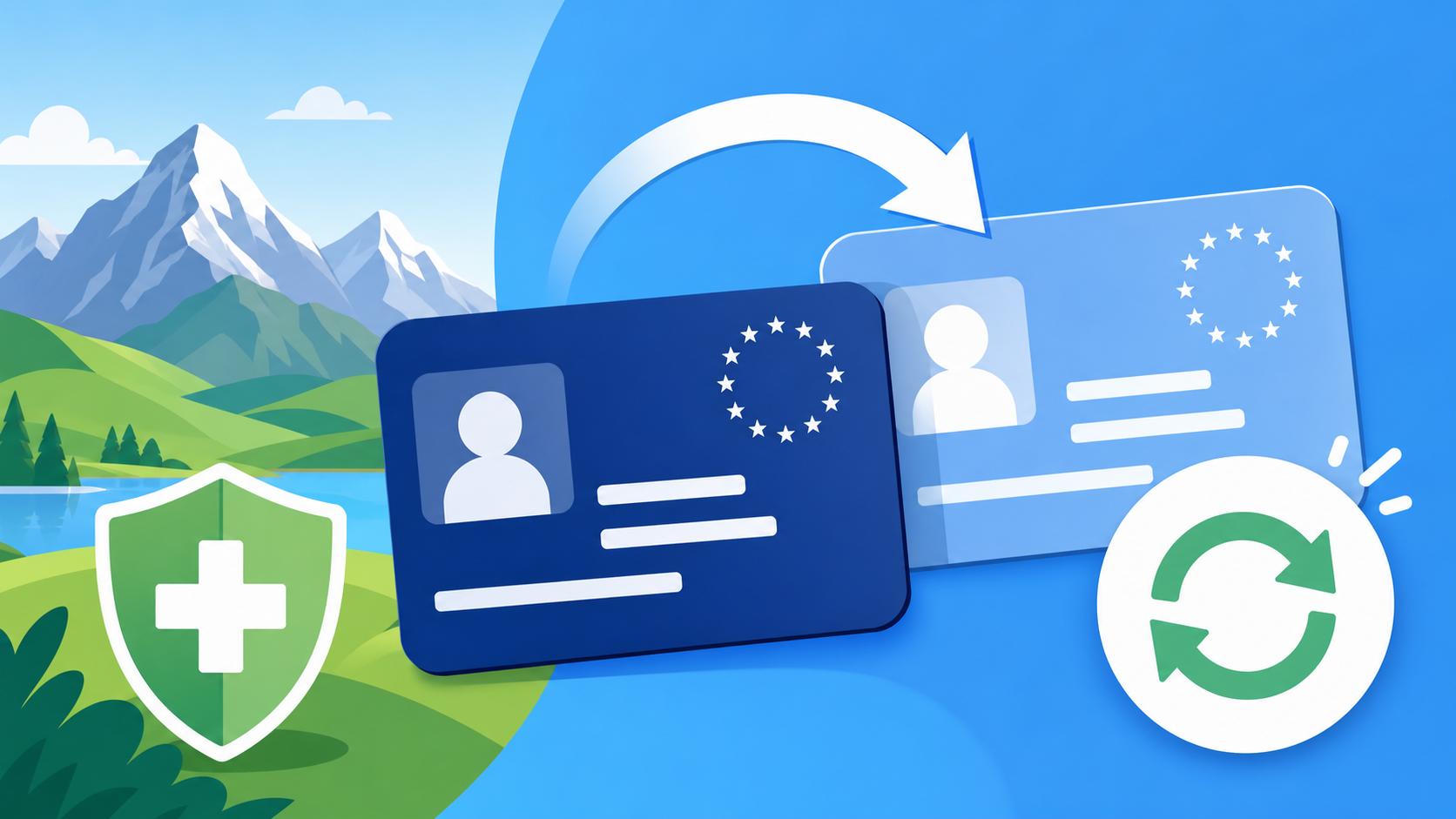
In Austria, the European Health Insurance Card is not a separate piece of plastic that you need to carry in your wallet. Instead, it is integrated directly onto the back of your Austrian e-card. If you flip your e-card over, you will see a blue background with several fields containing your personal data and an expiry date. This is your EHIC. It allows you to access state-provided healthcare during a temporary stay in any of the EU countries, as well as Iceland, Liechtenstein, Norway, and Switzerland, under the same conditions and at the same cost as people insured in that country.
The system is designed to be seamless, but for expats, it often feels like a riddle wrapped in an enigma. Your eligibility for the EHIC depends entirely on your status within the Austria Healthcare System 2027: Complete Guide for Foreign Residents. If you are employed, a student, or a freelancer paying into the social security system, you are generally covered. However, the card on your back isn't always "active." If those fields on the reverse side are filled with "X" marks, your card is effectively useless for international travel, and you will need to understand why before you can "renew" or activate it.
The Digital Shift and Your e-card
Austria has significantly digitized its administrative processes. While the physical e-card remains the primary tool for doctors, much of the management has moved to the ID Austria platform. When we talk about "renewing" your EHIC, we are often talking about renewing the physical e-card itself or updating your insurance status so that the next card you receive has a valid EHIC section. You must ensure your data is up to date in the Navigating Social Insurance: ÖGK, SVS, and BVAEB Overview systems to ensure the physical card production reflects your current coverage.
Who is Entitled to the Card
Eligibility is not just about having a residence permit; it is about your active contribution to the social insurance funds. Whether you are covered by the ÖGK (the general fund), the SVS (for the self-employed), or the BVAEB (for public servants), your insurance provider is responsible for issuing the card. If you are currently under Student Self-Insurance Requirements and Monthly Costs 2026, you are also entitled to a valid EHIC, provided your premiums are paid and your residency is established.
When and Why Your EHIC Needs Renewal
The most obvious reason for renewal is the expiry date located in the bottom right corner of the blue side of your e-card. Unlike some countries where these cards last for a decade, Austrian EHIC sections typically have a shorter validity period, often between five and ten years, depending on your insurance history and age. However, for many expats, the "renewal" process is actually triggered by other life events.
If you have recently moved and updated your Meldezettel Registration Process, or if you have changed your name due to marriage, your old card becomes technically obsolete. While it might still work at your local Hausarzt, it could cause issues at a foreign hospital where the data on the card must match your passport exactly. Furthermore, if you lose your card, the replacement process serves as a de facto renewal. In these cases, you should follow the steps for a Lost e-card: Reporting and Replacement Process Explained to ensure your new card arrives with the correct EHIC details.
The Mystery of the X Fields
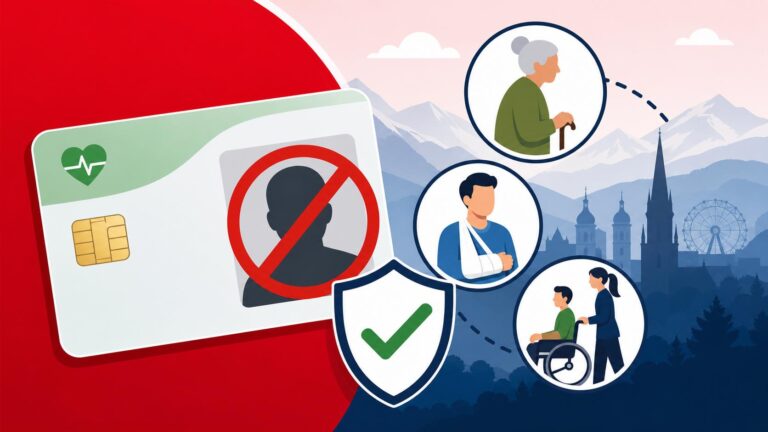
One of the most common frustrations for foreigners in Austria is receiving a brand-new e-card where the back is covered in asterisks or "X" marks. This happens when the insurance provider cannot guarantee long-term coverage. This is common for people on short-term work contracts or those who have just arrived in the country. In this scenario, you don't "renew" the card; instead, you must request a "Provisorische Ersatzbescheinigung" (PEB), which is a paper replacement certificate that acts as your EHIC until your insurance history is long enough to justify a fully valid plastic card.
Comparing EHIC and Private Options
It is a common misconception that the EHIC is a substitute for travel insurance. It is not. The EHIC covers "necessary medical care," which means it gets you back on your feet so you can continue your trip or get home. It does not cover mountain rescue—a high risk if you are hiking in the Alps—nor does it cover private hospital stays or repatriation. For those needs, you should look into Public vs Private Health Insurance in Austria Explained to see if an additional private policy is right for you.
| Feature | European Health Insurance Card (EHIC) | Private Travel Insurance |
|---|---|---|
| Cost | Free (included in social insurance) | Monthly or per-trip premium |
| Coverage | State hospitals/doctors only | Private and state facilities |
| Repatriation | Not covered | Usually covered |
| Mountain Rescue | Not covered | Often covered (e.g., Alpinpolizze) |
| Co-pay | Same as locals in that country | Usually zero or fixed deductible |
Step-by-Step Guide to Renewing Your EHIC in Austria
Renewing your EHIC in Austria is largely an automated process, but it requires you to be proactive about your administrative standing. If your card is expiring, the social insurance provider (ÖGK, SVS, or BVAEB) will typically trigger the production of a new card automatically and mail it to your registered address. However, this only happens if they have a valid photo of you on file.
Step 1: Check Your Photo Status
Since 2020, almost all e-cards must have a photo of the holder. If the insurance fund does not have a photo of you from your passport, driver's license, or residence permit, they will not print a new card, and your EHIC will lapse. You should consult The e-card Photo Requirement: How and Where to Register to see if you need to visit a registration office. If you are an EU citizen and do not have an Austrian driver's license, you likely need to take a physical photo to a specific office to ensure your card can be renewed.
Step 2: Update Your Insurance Data Online
The most efficient way to manage your renewal is through the "MeineSV" portal or by Activating ID Austria as a Non-Citizen Resident. Once logged in, you can check the status of your current card and see when a replacement is scheduled to be mailed. If your current card has expired and a new one hasn't arrived, you can trigger a "Service-Bestellung" (service order) through the portal. This is significantly faster than trying to call the hotline, which often has long wait times during peak hours.
Step 3: Handle the Gap with a PEB
If you are traveling tomorrow and realize your card is expired, do not panic. You can download a "Provisorische Ersatzbescheinigung" (PEB) directly from the insurance portal. This PDF document is legally equivalent to the EHIC. You can print it out or keep it on your phone. It is valid for a maximum of six months and is the standard solution for those who are Mandatory Coverage: Who Must Register for Public Health Insurance but do not yet meet the criteria for the physical blue EHIC back.
Step 4: Validate the New Card
When your new card arrives, check the back immediately. Ensure your name is spelled correctly and that the expiry date is in the future. If you still see "X" marks despite being in Austria for several years, there may be a glitch in your insurance record. This often happens to freelancers who switch between the SVS and ÖGK. In such cases, a quick visit to your local insurance office (Kundenservice) is usually required to "merge" your records and trigger a correct card.
Practical Tips for Travelers and Expats
Using your EHIC abroad is usually straightforward, but there are local nuances that can catch you out. In countries like France or Belgium, you often have to pay for the doctor's visit upfront and then seek reimbursement. In Austria, we are used to the "Sachleistungssystem," where we just show the card and walk out. When you are abroad, always ask if the doctor accepts "State Insurance" or the EHIC. If you accidentally go to a private doctor, the EHIC will not cover you, and you will be stuck with a heavy bill.
Dealing with Lost or Stolen Cards While Abroad
If your card is stolen while you are on holiday, your first step should be to contact Emergency Services in Austria: 144, Hospitals, and Crisis Steps to report the theft if it was part of a larger crime, but more importantly, you need to contact your Austrian insurance provider to get a replacement certificate (PEB) faxed or emailed to you or the hospital where you are staying. Having a digital copy of your e-card (front and back) saved in a secure cloud folder is a lifesaver in these moments.
The Role of the EHIC in Non-EU Countries
It is vital to remember that the EHIC does not work in most countries outside of Europe. If you are traveling to the USA, Asia, or even some neighboring Balkan countries that are not yet EU members (like Serbia or Montenegro), your Austrian e-card's back is just a piece of blue plastic. For these trips, you must secure separate travel insurance. Even within the EU, the EHIC only covers "medically necessary" care. This is a broad term that doctors interpret based on your condition—it essentially means you can't travel abroad specifically to get a surgery for free, but if you break your leg, you're covered.
Navigating the Language Barrier
While many doctors in European hubs speak English, having your insurance details clear is crucial. If you find yourself in a situation where the local provider doesn't recognize the Austrian e-card, you can point to the EU flag symbol on the back. Most medical administrative staff across the continent are trained to recognize that specific blue layout. If you need assistance with translation in a medical context, you might find Medical Translation Services: Interpreters for Hospital Visits useful, although these are more commonly used for planned treatments rather than emergency travel care.
Health and Medical Disclaimer
The information provided in this guide is for informational purposes only and does not constitute legal or professional medical advice. While we strive to keep the details accurate and up to date, Austrian social insurance laws and EU regulations regarding the EHIC are subject to change. Always verify your current insurance status and coverage limits directly with your provider (ÖGK, SVS, or BVAEB) before traveling. The authors and this website are not responsible for any costs incurred due to expired or invalid insurance documentation. For specific medical emergencies, always contact the local emergency number (112 in the EU or 144 in Austria).