Lüften: The Austrian Art of Ventilating Rooms in Winter
The first time you see thick condensation pooling on your window sill in a Viennese January, you might think your building’s insulation has failed. I remember frantically calling my landlord about a suspected leak, only to be given a stern, twenty-minute lecture on my "breathing and cooking habits." This guide explains the essential practice of Lüften so you can master the art of winter ventilation, protect your health, and keep your security deposit safe.
The Cultural and Scientific Necessity of Stoßlüften
In many countries, keeping the windows sealed from November to March is considered common sense for saving energy. In Austria, however, you will quickly realize that "fresh air" is treated with a reverence usually reserved for Alpine spring water. If you walk past an apartment building in the morning, you will see windows flung wide open, even when it is five degrees below zero. This isn't because Austrians enjoy being cold; it is a calculated defense mechanism against the unique challenges of local housing.
The fundamental problem is moisture. As part of your Living in Austria 2027: The Expat Starter Guide, you must understand that the average human exhales about one to two liters of water every day just by breathing. Add in a morning shower, a pot of boiling pasta, and a rack of wet laundry drying in the living room, and your apartment becomes a tropical greenhouse. In the tightly sealed environments of modern Austrian windows, that moisture has nowhere to go. It searches for the coldest surface in the room—usually the corners of exterior walls or the window frames—and settles there as condensation.
If this moisture remains, it leads to Schimmel (mold). This is the expat’s greatest enemy in Austria. Not only is it a health hazard, but under most Renting in Austria: MRG Laws, Leases, and Bestellerprinzip agreements, the responsibility for preventing mold through "proper ventilation" falls squarely on the tenant. If mold appears because you failed to ventilate, you, not the landlord, will likely be liable for the expensive professional remediation costs.
The Technique: Stoßlüften vs. Kippen
Most foreigners arrive with the habit of "tilting" their windows—a position known in German as Kippen. It seems logical: a small, steady stream of fresh air keeps the room from feeling stuffy without letting all the heat out. However, in the eyes of an Austrian building expert, Kippen in winter is a cardinal sin.
Why Tilting is Inefficient
When you leave a window on "tilt" during the winter, you are doing two things incorrectly. First, the air exchange is incredibly slow. It can take upwards of an hour to fully replace the stale, humid air in a room. Second, and more dangerously, the constant stream of cold air significantly cools down the masonry around the window frame. This "cold bridge" becomes the perfect spot for condensation to form as soon as you close the window.
This habit also sends your heating bills skyrocketing. Because the air is moving slowly, your thermostat stays active, trying to fight the constant draft. If you are trying to keep Estimating Average Utility Costs (Electricity/Gas) in Winter under control, you must move away from the Kippen habit immediately.
The Power of the Shock Vent
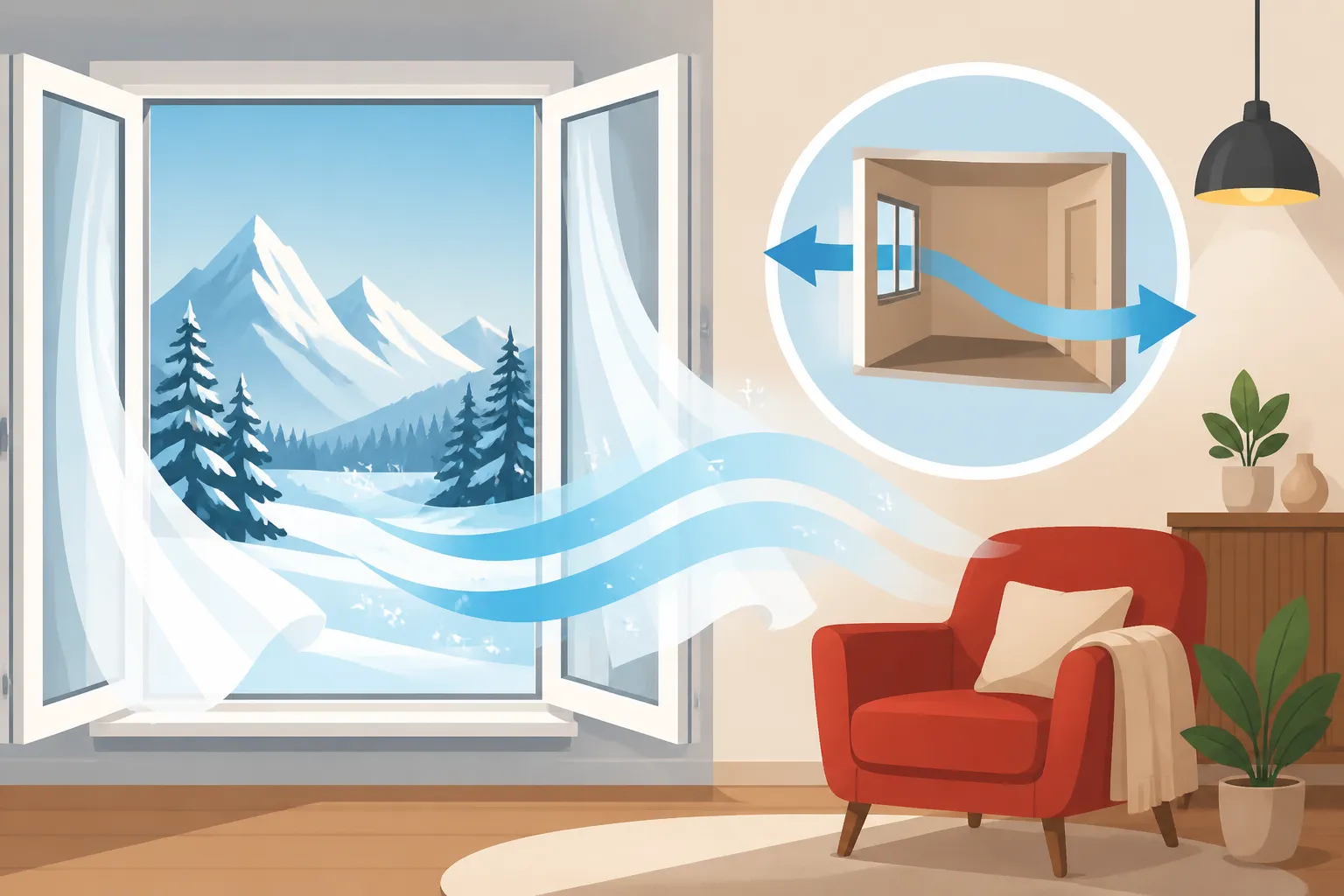
The gold standard is Stoßlüften, which translates to "shock ventilation." The process is simple but requires discipline:
- Turn your radiator valves to zero or the "frost" setting.
- Open the windows completely—not just on tilt, but wide open.
- Leave them open for exactly five to ten minutes.
- Close them tightly and turn your heat back to your preferred setting.
Because cold winter air is much drier than the warm air inside, it acts like a sponge. In those five minutes, the dry outside air rushes in and "soaks up" the humidity. Crucially, because the process is fast, the actual walls and furniture in your room don't have time to lose their stored heat. Once you close the window, the fresh, dry air warms up almost instantly, making the room feel comfortable again within minutes.
Mastering Querlüften and Room-Specific Rules
If you want to be truly efficient, you should graduate to Querlüften (cross-ventilation). This involves opening windows or doors at opposite ends of the apartment to create a "Durchzug" or draft. This is the fastest way to refresh an entire home. In a standard Altbau vs Neubau: Differences in Rent, Charm, and Heating scenario, a good cross-breeze can fully replace the air in an entire three-room apartment in as little as three minutes.
The Bathroom and Kitchen
These are high-humidity zones that require immediate action. After a shower, do not simply open the bathroom door to let the steam into the rest of the apartment; you are just spreading the moisture to rooms that are harder to ventilate. Instead, open the bathroom window wide immediately. If your bathroom has no window, ensure the mechanical vent is clear of dust and run it for at least 15 minutes after your shower.
In the kitchen, the same rule applies. Even if you have a high-end extractor hood, it is often not enough to handle the steam from a large meal. Opening a window while cooking is a small price to pay to avoid moisture-related issues later. If you find yourself needing repairs for vents or windows, always look for Finding English-Speaking Plumbers and Electricians who understand the specific requirements of Austrian building codes.
The Bedroom Strategy
We spend eight hours a night breathing into a relatively small space. In the morning, the humidity in a bedroom can easily exceed 70%. The very first thing you should do upon waking up—before coffee, before checking your phone—is to fling the bedroom window wide open. This clears the "night air" and prevents the moisture from soaking into your mattress and curtains. This is also a good time to check your Gas Boiler Maintenance (Thermenwartung): Tenant Responsibility status, as a well-functioning heater is vital for the rapid re-heating of the room after a morning vent.
| Ventilation Method | Efficiency | Wall Temp Impact | Recommended For |
|---|---|---|---|
| Kippen (Tilt) | Very Low | High Cooling (Bad) | Summer months only |
| Stoßlüften (Shock) | High | Minimal Cooling | Standard winter use |
| Querlüften (Cross) | Extreme | Negligible | Fast humidity removal |
Practical Tools and Avoiding Schimmel
For many expats, guessing the humidity level is a recipe for disaster. I highly recommend spending ten or fifteen Euros on a digital hygrometer. This small device measures the percentage of moisture in the air. In an Austrian winter, you should aim to keep your indoor humidity between 40% and 55%. If the display creeps above 60%, it is a signal that you need to perform a shock vent immediately.
Dealing with Condensation
If you wake up and see water droplets on the glass of your windows, do not just let them evaporate. This water will eventually run down into the wooden frames or the silicone seals, providing a breeding ground for black mold. Keep a dedicated micro-fiber cloth or a small squeegee on your window sill and wipe the glass dry every morning. This simple two-minute task is one of the most effective ways of Preventing Mold (Schimmel) in Old Altbau Apartments.
Furniture Placement
A common mistake in beautiful old apartments is pushing large wardrobes or sofas directly against an exterior wall to save space. In winter, this creates a stagnant pocket of air where the wall stays cold and moisture accumulates. Always leave a gap of at least 5 to 10 centimeters between your furniture and any wall that faces the outside. This allows the air from your Stoßlüften sessions to circulate behind the furniture, keeping the wall dry and mold-free.
When budgeting your monthly expenses, remember that proper ventilation is a cost-saving measure. By keeping the air dry, your heating system works more efficiently. You can compare rates and manage your usage through various Electricity Providers in Austria (Wien Energie, Verbund) to ensure you are getting the best deal while keeping your apartment in top condition.
Landlord Disputes and the Legal Side
In Austria, the "battle of the mold" is a frequent point of contention. If you discover a dark spot in the corner of your ceiling, your first instinct might be to blame a leaking roof or poor insulation. While that is sometimes the case, the landlord’s first defense will always be to ask about your ventilation habits.
If you are proactive, you can avoid these disputes. Keeping a log of your humidity levels or showing that you have a hygrometer in every room demonstrates that you are a responsible tenant who understands the local climate. If you do encounter structural issues, being well-versed in Money in Austria 2027: Banking, Payments, and Financial Setup and insurance can help you navigate the costs of legal advice or professional inspections.
Remember, the goal of Winterizing Your Austrian Apartment Against Drafts is not to create a vacuum-sealed box, but to manage the exchange of energy and moisture. It may feel counter-intuitive to open the windows when it's snowing, but your health, your wallet, and your relationship with your landlord will all benefit from embracing the "shock" of the Austrian winter air.
Disclaimer
The information provided in this guide is for general informational purposes only and does not constitute legal or professional advice regarding building maintenance or Austrian rental law. Always consult with a qualified professional or a tenant protection association (such as the Mietervereinigung) for specific issues regarding mold, building structure, or rental disputes in Austria.