Family Reunification Visa (Familienangehöriger) Process
Waiting months for a decision while your spouse is thousands of miles away is the most soul-crushing part of moving to Austria. I remember refreshing my email every hour for weeks, convinced I’d missed the one message from MA 35 that would finally let us be together. This guide breaks down the Family Reunification Visa (Familienangehöriger) process so you can navigate the bureaucracy and reunite your family faster.
Understanding the Family Reunification Visa Landscape in Austria
The first thing you realize when moving to Austria is that there isn't just one "family visa." The path you take depends entirely on the legal status of the person already living in Austria, whom we call the "sponsor." If you are a non-EU citizen trying to join another non-EU citizen, the rules are significantly stricter than if you were joining an Austrian or an EU citizen. It sounds unfair, and quite frankly, it feels that way when you’re neck-deep in paperwork, but understanding these tiers is the only way to ensure you file the right application.
Who Qualifies as a Family Member
In the eyes of the Austrian government, "family" is defined quite narrowly for immigration purposes. Generally, this includes your legal spouse, your registered partner, and your minor children (under 18) who are unmarried. Many expats have tried to bring over their elderly parents or adult siblings, only to find the door firmly shut. Bringing extended family is an uphill battle involving strict quotas and massive financial requirements. If you are an EU citizen, your rights are slightly broader under the freedom of movement laws, but for third-country nationals, you must stick to the core nuclear family definition.
For those joining an EU citizen, the process is slightly different and often involves Registering as an EU Citizen (Anmeldebescheinigung) in Austria for the sponsor first. The family member then applies for a "Settlement Card" (Niederlassungskarte), which is valid for five years and provides much more flexibility than the standard Red-White-Red family permits.
The Different Tiers of Reunification
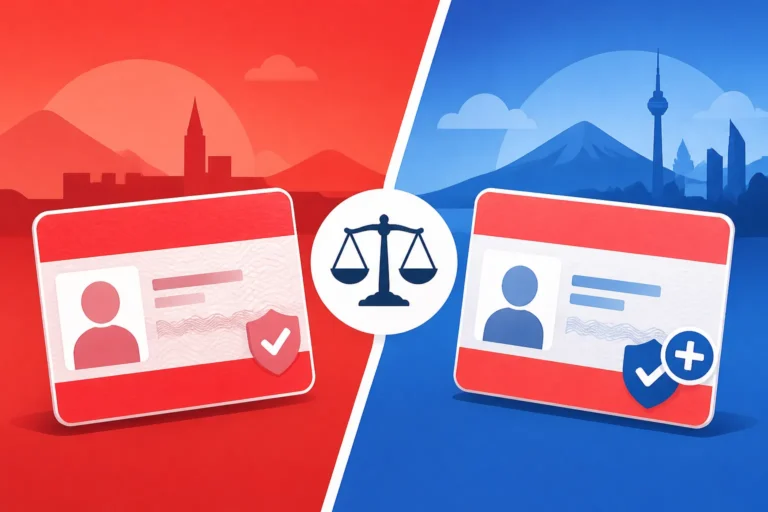
The specific permit you receive usually mirrors the sponsor's permit. If your partner has a Red-White-Red Card, you will likely receive a Red-White-Red Card Plus. This "Plus" is the holy grail of family reunification because it gives you full access to the Austrian labor market from day one. You aren't tied to a specific employer, and you don't need a separate work permit.
However, if the sponsor has a more restricted permit, such as a "Settlement Permit" (Niederlassungsbewilligung), your rights might be more limited. There is also the "Settlement Permit – Gainful Employment Excepted," which is often used by families of financially independent residents. In these cases, you are allowed to live in Austria, but you are legally barred from working unless you switch to a different permit later. Always double-check which specific title you are eligible for, as the wrong box checked on an application form can lead to months of delays.
Core Requirements and the 2026 Salary Thresholds
Austria does not allow "poverty immigration." To bring a family member, you must prove that you can support them without relying on the Austrian welfare system. This is where most applications hit a snag. The government calculates a "subsistence level" that you must meet after paying your rent and any debt obligations. If your salary falls short by even fifty euros, the application can be rejected.
Proof of Sufficient Funds: Meeting the 2026 Increase
The financial requirements are updated every year. For 2026, the thresholds have increased significantly to reflect inflation and the rising cost of living. You must demonstrate a stable, regular monthly income. For a couple, the required net income is substantially higher than for a single person, and each child adds an additional requirement.
When calculating your income, the authorities look at your net pay (after taxes and social insurance). They also factor in your "regular expenses." If your rent is particularly high, they will deduct the amount that exceeds a standard "free-to-spend" allowance from your calculated income. It is wise to keep a "buffer" of at least 200-300 euros above the official limit just to be safe. You can find the specific breakdown in our guide on the Minimum Income Requirement to Bring Your Family to Austria.
| Category | Monthly Net Requirement (2026 Estimates) | Notes |
|---|---|---|
| Single Sponsor | ~€1,218 | Base amount for the sponsor |
| Married Couple | ~€1,921 | Combined net income |
| Per Child | +~€188 | Additional per minor child |
| Rent Allowance | Variable | Deductions apply for high rent |
For those not working, you may need to show significant savings or a Proof of Funds 2026 (1273 EUR) for Non-Working Permits depending on the specific residency title you are seeking.
Health Insurance and the e-card Requirement
You cannot live in Austria without "all-risk" health insurance. For family reunification, this usually means being co-insured with the sponsor. If the sponsor is employed and has public insurance (ÖGK), the process is relatively straightforward. You will need to apply for "Mitversicherung" (co-insurance). Once approved, the family member will receive their own e-card.
However, there is a "catch-22" here: the immigration office (MA 35) wants proof of insurance to approve the visa, but the insurance company often wants the visa to approve the insurance. To solve this, you usually need a "preliminary insurance confirmation" or a private travel insurance policy that meets the "Schengen" requirements for the initial entry period. Once you are physically in Austria and registered at your address, you can finalize the public insurance.
The Importance of Proof of Accommodation
The size of your apartment matters. You cannot legally house a family of four in a 30-square-meter studio. The authorities require a "standard" living arrangement, which usually means enough separate rooms for parents and children of different genders. You must provide a signed lease (Mietvertrag) or a "Wohnrechtsvereinbarung" (an agreement allowing you to live in someone else's home for free).
Be very careful with "Befristet" (fixed-term) leases. If your lease expires in three months, MA 35 will likely reject your application because you haven't shown "long-term" accommodation. Ideally, your lease should be for at least one to three years.
Navigating the German Language Requirement
Austria wants its residents to integrate, and for the government, integration starts with the German language. Unless you fall into an exempt category, most family members must prove they have at least A1 level German skills before they even set foot in the country.
Passing the Integration Agreement Level A1
This requirement is often called "German before arrival." You must provide a certificate from a recognized provider—usually the ÖSD, Goethe-Institut, or Telc. The certificate cannot be older than two years at the time of application. Some families are delayed by six months simply because they cannot find an exam date in their home country. If you know you are moving to Austria, start your German classes yesterday.
The A1 exam is basic—you need to be able to introduce yourself, ask for directions, and handle very simple daily interactions. However, the stress of the "visa exam" makes it feel much harder than it is. We have a detailed breakdown on Meeting the German A1/B1 Language Certificate Requirements that can help you prepare for what the examiners are actually looking for.
Exemptions to the Language Rule
Not everyone has to take the test. If you have a university degree (Bachelor’s or higher), you are often exempt, provided your degree is recognized. The logic is that your high level of education demonstrates the ability to integrate and learn. This is a huge relief for many, but the process of proving your degree's equivalency can be its own nightmare.
Other exemptions include minor children, people with significant physical or mental health issues (supported by a specialized medical report), and family members of "Very Highly Qualified" Red-White-Red Card holders. If your spouse is a top-tier tech lead or a scientist, you might skip the A1 requirement entirely. For more details, check if your situation allows for University Degree Exemptions from the German Language Requirement.
Step-by-Step Guide to the Application Process
The application for family reunification is usually submitted at the Austrian embassy or consulate in your home country. You cannot simply fly to Vienna as a tourist and "switch" to a family visa while you are here, unless you are from a visa-free country (like the US, Canada, or the UK).
Preparing Your Documents: Apostilles and Translations
This is the "paperwork" phase, and it is where most people lose their minds. Every foreign document—birth certificates, marriage certificates, police clearance reports—must be legalized. This usually means getting an "Apostille" from your home government. If your country isn't part of the Hague Convention, you need "Full Legalization," which involves multiple stamps from different ministries.
Once you have the stamps, you need the documents translated into German. Austria is incredibly picky about this. They usually require translations from "court-certified" translators. If you get a cheap translation from a random website, MA 35 will likely reject it. Always look for Certified Translations of Documents: What the Rules Demand to ensure you aren't wasting money. Furthermore, ensure you understand the Apostille and Legalization Requirements for Foreign Documents for your specific country before you leave.
The MA 35 Application Timeline: What to Actually Expect
On paper, the authorities have up to six months to decide on your application. In reality, especially in Vienna, it can take longer. The "processing time" starts only when the application is "complete." If they send you an email asking for one more bank statement, the six-month clock essentially resets in their minds.
I’ve spent many mornings standing in line at the Dresdner Straße office of MA 35. It is a test of patience. The staff are often overworked and can seem abrupt. It isn't personal; it's the system. For a realistic look at what you’re up against, read our community's take on The Truth Behind MA 35 Google Reviews: Expat Experiences. The best strategy is to be over-prepared. Bring three copies of everything, organized in a folder, and stay polite even when you’re frustrated.
Biometrics and Fingerprinting Procedures
Once your application is pre-approved, you will be invited for a biometrics appointment. This is the final step. They will take your fingerprints, a digital signature, and a specific "EU-standard" passport photo. If you are applying from abroad, this happens at the embassy. If you are already in Austria (on a visa-free stay), it happens at the local immigration office.
Shortly after this appointment, you will receive a notification that your "Aufenthaltstitel" (residence permit) is ready for pickup. This is the moment you can finally breathe. The physical card is your "golden ticket" to living, working, and traveling within the Schengen area.
Living with a Family Reunification Visa
Getting the card is the beginning of your new life, but there are rules you must follow to keep it. The most important one is the "integration agreement." Most family members must reach B1 level German within two years of arriving. If you don't, you might not be able to renew your permit, and you certainly won't be able to apply for permanent residency.
Work Rights for Dependents (Spouses) on Family Visas
If you hold a "Red-White-Red Card Plus," you have the same work rights as an Austrian citizen. You can be a CEO, a freelancer, or work part-time at a café. This is a massive advantage compared to many other countries where "dependent" spouses are barred from working for years.
If you are looking for a job, you can use your residence card as proof of your right to work. Employers in Austria are often hesitant if they don't see that "Plus" on your card, so make sure it's clearly stated in your CV. You can read more about the nuances of Work Rights for Dependents (Spouses) on Family Visas to understand exactly what you can and cannot do.
Family Financial Benefits: Wochengeld and Kinderbetreuungsgeld
Austria is a very family-friendly country. Once you are legally resident and insured, you are entitled to many of the same benefits as locals. If you are pregnant, you can access "Wochengeld" (maternity pay) and later "Kinderbetreuungsgeld" (childcare allowance).
The "Familienbeihilfe" (family allowance) is a monthly payment for every child living in your household. It helps cover the costs of clothing, school supplies, and food. However, applying for these benefits requires a mountain of paperwork, including proof that the child is actually living with you. For parents, understanding the Visa Process for Bringing Minor Children to Austria is essential to ensuring these benefits are processed correctly.
Moving from Family Reunification to Permanent Residency
After five years of continuous residence in Austria, you can apply for "Daueraufenthalt-EU." This is permanent residency. It means you no longer have to worry about the "quota" system or meeting the strict income requirements of the family visa every year.
To get this, you must have passed your B1 German exam and a "Values and Orientation" course. Permanent residency is the ultimate goal for most expats because it provides security. It’s the final step before potentially seeking citizenship. If you’ve made it through five years of MA 35 renewals, Applying for Daueraufenthalt-EU After 5 Years will feel like a victory lap.
Common Challenges and Troubleshooting
No immigration journey is perfectly smooth. Problems will arise, whether it's a lost document or a change in your personal life. The key is to be proactive. In Austria, "I didn't know" is rarely accepted as an excuse by the authorities.
Dealing with MA 35 and Delays
If your application has been sitting for more than six months without a word, you have the right to file a "Säumnisbeschwerde" (complaint about delay). This forces the administrative court to look at your case. However, this is a "nuclear option." Sometimes it speeds things up; other times, it makes the authorities scrutinize your file even harder.
It is worth trying to get an update through a "friendly" inquiry first. If you live in a smaller town, the "Bezirkshauptmannschaft" (district authority) is usually much faster and more communicative than the big offices in Vienna.
What Happens to a Spouse Visa if You Get Divorced?
This is a scary topic but an important one. If your right to live in Austria is based entirely on your marriage (the family reunification permit), a divorce can put your residency at risk. Generally, if you have been married and living in Austria for at least three years, you may be able to "detach" your permit and get an independent residence title.
However, you must still meet the income and accommodation requirements on your own. If you find yourself in this situation, you must notify the immigration office immediately. Failing to do so can result in your permit being revoked for "fraudulent" residence. You can find more specific legal guidance on What Happens to a Spouse Visa if You Get Divorced? to protect your status.
Notifying Authorities of Changes
Any major change in your life—moving to a new apartment, changing your name after marriage, or having a child—must be reported. When you move, you must update your Informing MA 35 When Moving to a Different Vienna District within three days. This is the famous "Meldezettel" system. If the police or the immigration office try to contact you at an old address and the mail is returned, they may start the process of cancelling your visa.
Summary Table of Family Reunification Requirements
| Requirement | Description | Typical Document Needed |
|---|---|---|
| Proof of Relationship | Legal marriage or partnership | Marriage Certificate (Apostilled) |
| Financial Stability | Stable net monthly income | Payslips from last 3-6 months |
| Accommodation | Appropriate-sized apartment | Signed Lease Agreement (Mietvertrag) |
| Health Insurance | Full "all-risk" coverage | Insurance Record (Versicherungsdatenauszug) |
| Language Skills | A1 German (or University Degree) | ÖSD/Goethe Certificate or Diploma |
| Legal Record | Clean criminal history | Police Clearance from home country |
Disclaimer
This guide is intended for informational purposes only and does not constitute legal advice. Immigration laws and salary thresholds in Austria are subject to frequent changes by the Ministry of the Interior. While I have lived through this process and strive for accuracy, you should always consult the official website of the Austrian Migration Service or seek professional legal counsel from a specialized immigration lawyer before submitting your application. Individual cases can vary significantly based on nationality, specific residence titles, and local administrative interpretations.