After-Work Drinks Culture: Do You Have to Attend?
Navigating the transition from office hours to social hours in Austria can feel like walking a tightrope between professional commitment and personal exhaustion. I remember my first month at a Viennese firm, staring at my watch at 5:01 PM while everyone else started cracking open beers, wondering if my "career-limiting move" was simply wanting to go home. This guide explains the nuances of Austrian after-work culture, identifies when you should show up, and how to politely decline without damaging your reputation.
Understanding the Austrian Concept of Feierabend
In Austria, the term Feierabend is more than just a timestamp; it is a cultural institution. It literally translates to "celebration evening," marking the sacred boundary between your labor and your life. While the German-speaking world is famous for its efficiency, Austrians have a unique way of softening that rigidity through social bonding.
The Philosophy of Work-Life Separation
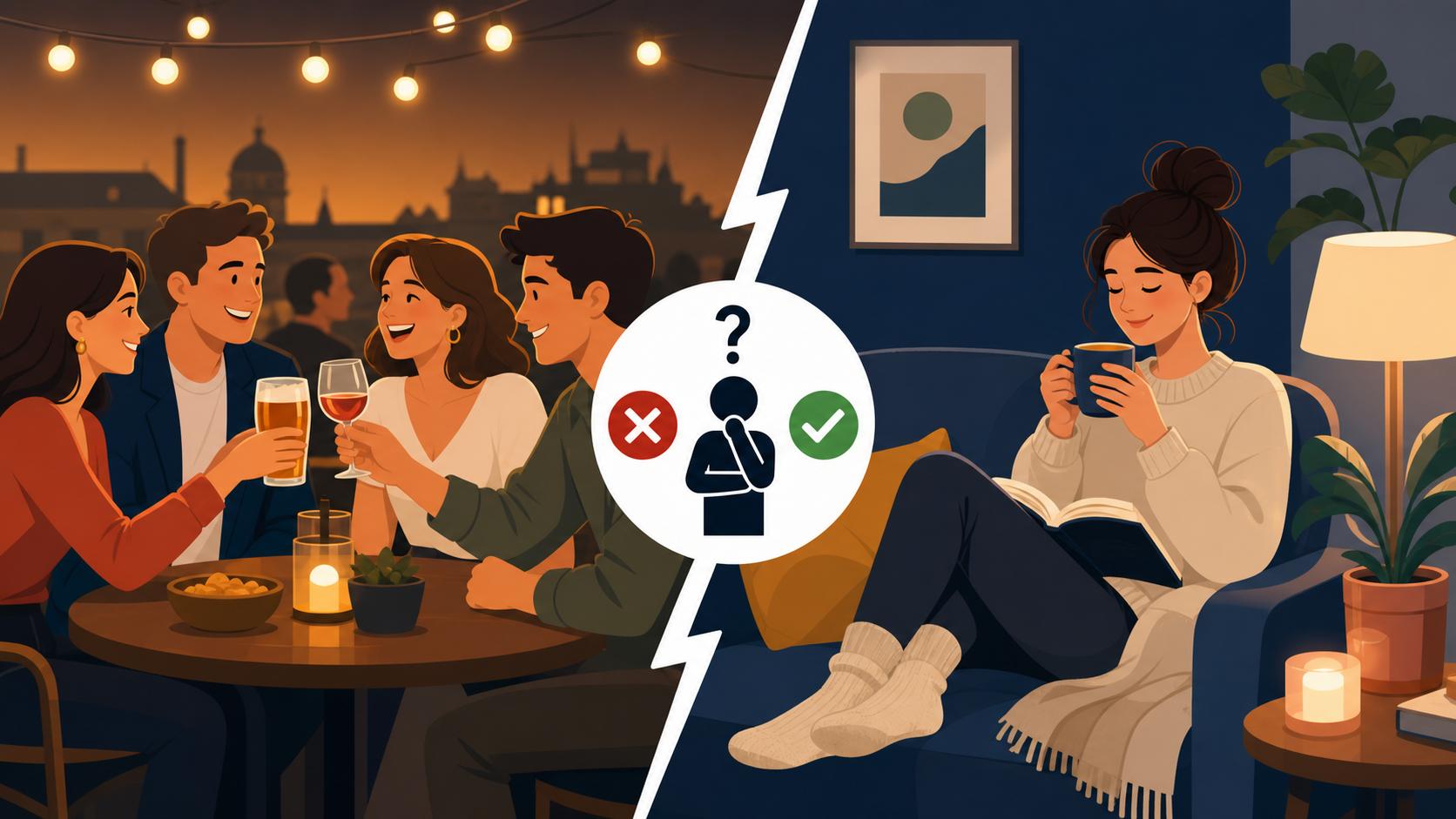
Austrians generally take their downtime very seriously. Unlike in some high-pressure global hubs where staying late is a badge of honor, in many Austrian sectors, staying late can actually be seen as a sign of poor time management. However, the Feierabendbier (the after-work beer) serves as a bridge. It is a moment where the hierarchy of the office is supposed to melt away, allowing colleagues to connect as individuals. For an expat, this is often the only time you will hear the real "office tea" or understand the unspoken dynamics of your department.
Social Bonding and Vitamin B
In Austria, success is often dictated by Vitamin B—where the "B" stands for Beziehungen (relationships). You might have the best technical skills in the room, but if you are the person who always rushes out the door the second the clock strikes five, you are missing out on the relational capital that leads to promotions or smoother project approvals. These informal gatherings are where trust is built. If you are currently looking for a role and want to understand the landscape better, checking a Job Hunting Strategy for English Speakers in Austria can help you find companies that match your social energy.
The Ritual of the First Drink
The first round is usually the most important. In many traditional companies, the boss might even be the one to suggest a quick drink at a nearby Beisl (a traditional Viennese pub). There is a specific rhythm to this: it is usually one or two drinks, a bit of venting about the current workload, and then everyone heads to their respective districts. If you are new to the city, knowing the Vienna Neighborhood Guide: Best Districts for Expats can help you estimate your commute time so you know exactly how long you can afford to stay.
Is Attendance Mandatory? The Unwritten Rules
Technically and legally, you are never required to attend social events outside of your contracted hours. Your contract is a legal document overseen by the Employment Rights: Arbeiterkammer, Contracts, and Leave, and social drinking is not a job requirement. However, "mandatory" is a spectrum in the professional world.
The Probation Period Pressure
If you are currently in your first month or two of a new job, the social pressure is significantly higher. During the Probation Period (Probezeit): Rights and Termination Risks, an employer can terminate your contract without giving a specific reason. While it is unlikely you would be fired solely for skipping drinks, being "a good team fit" is a common metric used during this period. Attending at least one social gathering every two weeks during your Probezeit is a strategic move to show you are integrated into the team.
Industry Variations: Startups vs. Public Sector
The expectation varies wildly depending on where you work. In the burgeoning tech scene in the 2nd or 10th districts, after-work drinks might involve craft beer, pizza, and late-night gaming sessions. In these environments, social life and work life are heavily blurred. Conversely, if you work in the public sector or for a large traditional firm, the gatherings are more formal and less frequent. Understanding Austrian Work Culture: 14 Salaries, Meetings, and Etiquette will give you a better idea of how these different sectors operate and what the standard "social tax" might be for your specific industry.
The Frequency Factor
You do not have to attend every single Friday afternoon session. A good rule of thumb for expats is the "50% Rule." Aim to attend half of the informal gatherings. This maintains your presence in the social circle without burning you out or making you feel like you have no life outside the office. It also prevents you from becoming the "ghost" of the office—the person everyone knows by name but no one actually knows.
| Company Type | Social Frequency | Drinking Culture | Exit Strategy Ease |
|---|---|---|---|
| Tech Startup | High (Weekly+) | Heavy / Craft Beer | Difficult (Socially) |
| Corporate/Bank | Medium (Monthly) | Moderate / Wine | Easy |
| Public Sector | Low (Quarterly) | Light / Traditional | Very Easy |
| Creative/Media | High (Dailyish) | Heavy / Cocktails | Moderate |
Navigating the Drinks: Etiquette and Drinking Culture
If you do decide to go, there are specific Austrian social codes you need to be aware of. Failing to follow these won't get you fired, but it might make the experience more awkward than it needs to be.
The Du vs. Sie Transition
One of the most complex parts of working in Austria is the transition from the formal Sie to the informal Du. Often, the after-work drink is the exact setting where a senior colleague will offer you the Du. This is a significant milestone in your integration. If you are unsure about the rules, read up on Du vs Sie at the Workplace: When to Switch before you head to the pub. Accepting the Du while sharing a drink is a sign that you have moved from "the foreigner in the office" to "a member of the team."
Alcohol-Free Options and Social Pressure
While the culture is centered around the Feierabendbier, Austria is becoming increasingly health-conscious. You will almost never be ridiculed for ordering an Apfelsaft gespritzt (apple juice with sparkling water) or a non-alcoholic beer. The act of "belonging" is tied to your presence at the table, not the alcohol content in your glass. If you have health concerns or are managing a condition, you can rest easy knowing that the Vienna Healthcare Guide: Top Expat Clinics and Hospitals and the general medical community in Austria support a balanced lifestyle.
Eye Contact and Toasting
In Austria, when you toast (Anstoßen), you must make direct eye contact with the person you are clinking glasses with. Failing to do so is considered rude and, according to local superstition, brings seven years of bad luck in a very specific area of your life. Use traditional Austrian Greetings: Grüss Gott, Servus, and Handshakes when you arrive at the table, but once the drinks are poured, a simple "Prost" or "Zum Wohl" with a firm gaze is the gold standard.
Strategic Alternatives to the Late-Night Pub
If you genuinely dislike the pub environment or have family commitments that make evening drinks impossible, you are not doomed to be a social pariah. You just need to be more intentional about your "daytime networking."
The Power of the Business Lunch
Austrians love a good Mittagsteller (daily lunch special). If you can't make it to the drinks, suggest a lunch at a nearby restaurant once a week with different colleagues. This allows for the same "Vitamin B" building in a sober, time-boxed environment. It shows you value the relationship without requiring you to sacrifice your evening routine or deal with a late-night commute.
Coffee Culture as Networking
In cities like Vienna or Graz, the coffee house is just as important as the pub. Inviting a colleague for a quick Melange in the afternoon can provide a 20-minute window for social bonding. This is often more productive for your career than a three-hour drinking session because the conversation remains slightly more professional while still being relaxed. If you find yourself needing to talk about more serious personal topics, such as how to handle a Sick Leave (Krankenstand): Employer Notification and Doctor Notes, a quiet coffee shop is much better than a loud bar.
Making Friends Outside of Work
It is also vital for your mental health to have a social circle that isn't tied to your paycheck. Relying solely on office drinks for your social life can lead to "office-think." Explore Making Local Friends Outside the Austrian Drinking Culture to find hobby groups, sports clubs (Vereine), or expat meetups that don't involve post-work exhaustion. Having a life outside the office makes you a more well-rounded person, which, ironically, often makes you more likable at those occasional office drinks you do attend.
Setting Boundaries without Social Penalty
The key to successfully navigating after-work drinks is consistency and communication. You want to be known as the person who is "great to have around" but also "has a busy, fulfilling life."
The "Hard Stop" Strategy
When you join the group for drinks, state your exit time early. "I'd love to join for one, but I have a hard stop at 6:30 PM for a commitment." This sets the expectation that you are participating but not staying until the lights go out. It prevents the awkwardness of trying to sneak away while everyone is ordering their third round.
Focusing on Quality over Quantity
One hour of engaged, friendly conversation is worth more than four hours of sitting in the corner scrolling on your phone. If you are going to attend, be present. Ask your Austrian colleagues about their weekend plans, their favorite hiking spots, or how they are spending their 13th and 14th Salary Explained: Holiday and Christmas Pay. Showing interest in their culture and lives will make your early departure much more acceptable.
Respecting the Ritual
Even if you hate the idea of after-work drinks, never belittle the practice. For many of your colleagues, this is a cherished part of their routine that helps them decompress. Respect the ritual, participate when you can, and always be the first to offer a "Schönen Feierabend!" (Have a nice evening!) as you head out the door.
Disclaimer
This guide is for informational purposes only and does not constitute legal or professional career advice. Social norms can vary significantly between specific companies and regions within Austria. Always consult your internal company handbook or a legal professional regarding your specific employment rights.