Losing Your Residence Card While Traveling Outside Austria
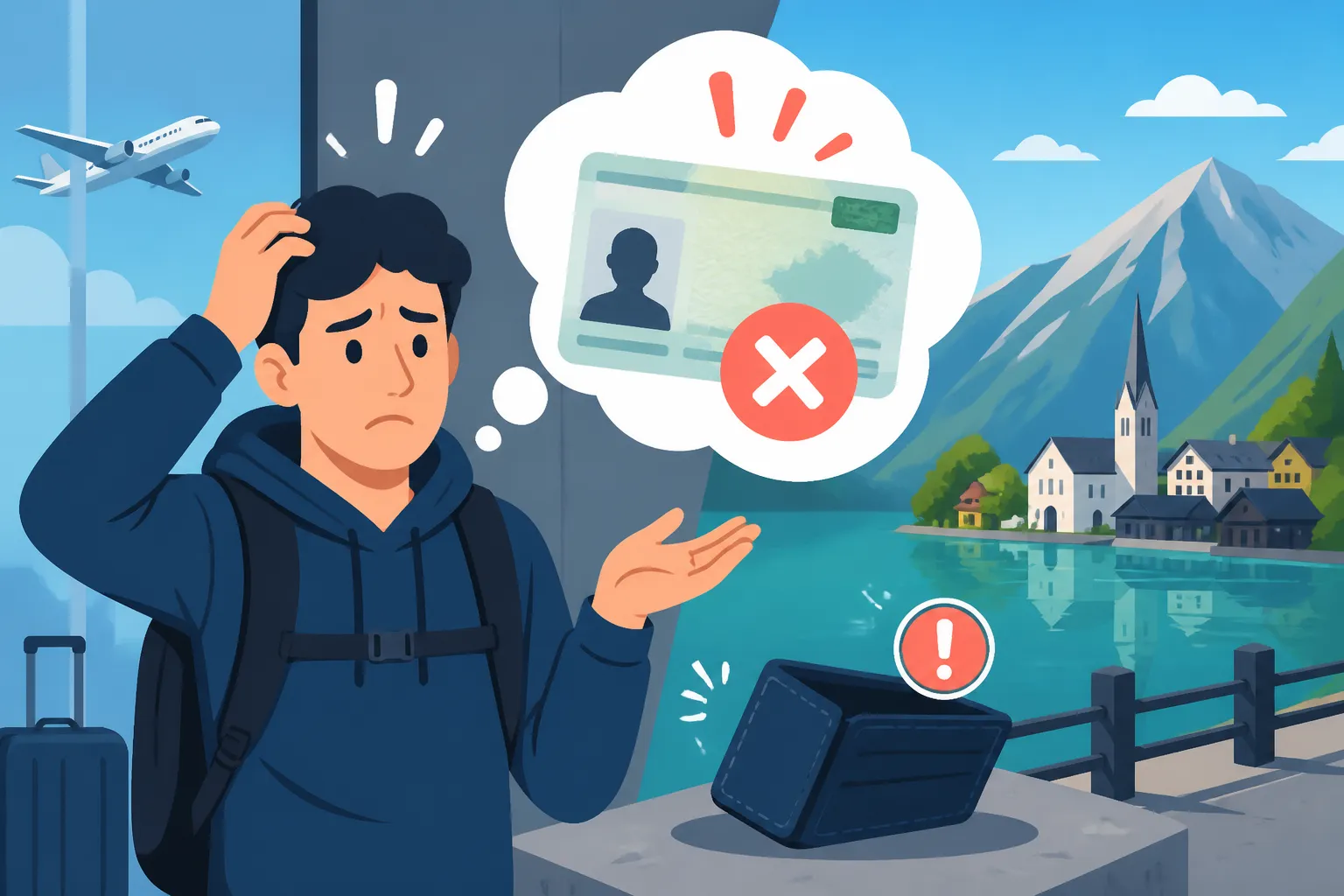
You've just landed in a foreign country, excited for your trip, when that knot of dread forms in your stomach – your wallet's gone. Or perhaps you're packing to return to your beloved Austria, and your residence card, your precious Aufenthaltstitel, is nowhere to be found. This terrifying scenario is unfortunately a reality for many expats, and the panic is real. This guide is here to walk you through the precise, often painstaking, steps you need to take if you find yourself in this incredibly stressful situation, from that initial moment of panic abroad to finally getting a new card back in Austria.
That Sinking Feeling: Immediate Steps When Your Austrian Residence Card Goes Missing Abroad
The moment you realize your residence card is gone, it feels like your whole world shifts. You're far from home, reliant on a document that has vanished. Before the full-blown panic sets in, take a deep breath. There's a clear, albeit somewhat lengthy, path to navigate this.
Assessing the Situation: Lost, Stolen, or Misplaced?
First, try to determine if your card is genuinely gone or just temporarily misplaced. Retrace your steps. Did you leave it at the hotel? Is it tucked into a different compartment of your bag? A thorough search can save you a world of trouble. If, after a meticulous search, it's clear the card is no longer with you, the next step depends on whether you suspect it was stolen or simply lost.
If you believe your residence card, along with perhaps your passport or other valuables, was stolen, your immediate priority shifts to personal safety and securing any remaining documents or funds. Block credit cards, inform your bank, and take stock of what else might be missing. The emotional toll of a theft is significant, so prioritize your well-being. If you simply lost it, the urgency is still high, but the context is different. Regardless, the official actions you need to take are largely the same.
The All-Important Police Report: Your First Official Step
This is non-negotiable, whether your card was lost or stolen. You must file a police report in the country where the incident occurred. This isn't just a suggestion; it's a critical piece of evidence that Austrian authorities and the embassy will require.
Head to the nearest local police station. Explain clearly, in as much detail as possible, what happened: when, where, and what items are missing (specifically mentioning your Austrian residence card). If there's a language barrier, try to bring a friend who speaks the local language or use a translation app. Be patient; these processes can take time, especially in foreign police stations. Ensure you get a physical copy of the police report, preferably translated into English or German if possible, though an untranslated original is still better than nothing. This report will be your official proof that the card is no longer in your possession, protecting you from potential misuse of your identity and serving as a key document for your journey back to Austria and the subsequent replacement application. Without this report, proving your situation to Austrian authorities will be significantly harder.
Contacting Home Base: Engaging Austrian Authorities While Still Abroad
Once you have that police report in hand, your focus turns to getting back to Austria. This almost always involves contacting an Austrian diplomatic mission.
Reaching Out to the Nearest Austrian Embassy or Consulate
The Austrian embassy or consulate in the country you're currently in becomes your lifeline. They are the official representatives of Austria and are equipped to help citizens and residents in distress. Find their contact information online – a quick search for "Austrian Embassy [Country Name]" should yield results. Many embassies have dedicated emergency phone numbers or email addresses for urgent cases like lost travel documents.
When you contact them, clearly state your situation: you've lost your Austrian residence card (and possibly your passport), you're abroad, and you need assistance to return to Austria. Be prepared to provide:
- Your full name and date of birth.
- Your Austrian address (Meldezettel details).
- Details of your lost residence card (type, expiry date if you remember it).
- The police report number and date of filing.
- Any details of your travel itinerary.
They will guide you on the next steps, which will almost certainly involve a personal visit to the embassy or consulate. Sometimes, depending on the country and your nationality, they might advise contacting the embassy of your home country first if your passport is also lost, as getting a new passport might be a prerequisite for specific emergency travel documents. However, for the residence card, the Austrian mission is key.
What to Bring: Documents and Information for Your Embassy Visit
When you visit the embassy, being prepared can significantly speed up the process. Gather every piece of identification and documentation you still have.
Essential items include:
- The Police Report: As mentioned, this is paramount. Bring the original and several copies.
- Any Remaining ID: Your national ID card, a driver's license, student ID, or even old, expired passports can help prove your identity.
- Copies of Lost Documents: This is where a little foresight pays off! If you had digital or physical copies of your lost residence card, passport, or Meldezettel, bring them. These copies provide vital information like your card number, date of issue, and personal data that the embassy needs. Many expats make a habit of keeping scanned copies of all important documents on a secure cloud drive or email.
- Proof of Austrian Residency: Your Meldezettel (registration form) confirms your address in Austria. Again, a copy is incredibly helpful.
- Passport Photos: Two recent passport-sized photos are usually required for any temporary travel document. It's always a good idea to carry a few spares when traveling.
- Flight Information: Details of your planned return journey.
- Proof of Funds: You might need to demonstrate you have the means to pay for any emergency travel documents or your return trip, though this is less common for residents getting back to their country of residence than it is for tourists.
The embassy staff will review your documents, verify your identity (which can be more challenging without your passport), and advise you on the specific type of emergency travel document they can issue.
Navigating the Emergency Travel Document Process
This is where things can get a bit nuanced. The Austrian embassy typically cannot issue you a new residence card abroad. That's a process handled by the immigration authorities (MA 35 in Vienna, or the Bezirkshauptmannschaft elsewhere) back in Austria. What they can issue is an emergency travel document that allows you to return to Austria.
For EU citizens with a lost Austrian residence card, an emergency passport or temporary travel document from their home country's embassy might be sufficient to re-enter the EU, along with the police report and proof of residence. However, for non-EU citizens, the process is usually more stringent. The Austrian embassy might issue a "Notpass" (emergency passport) or a "Sichtvermerksersatz" (visa replacement document), specifically valid for a single entry back into Austria. This document essentially serves as a temporary substitute for your visa or residence permit for the purpose of travel.
Be aware that these emergency documents come with a fee, and the processing time can vary. In straightforward cases, they might be issued within a day or two, but if your identity requires extensive verification, it could take longer. The embassy will also inform relevant Austrian border control authorities about your situation to facilitate your re-entry. It's a temporary solution to a big problem, designed solely to get you back on Austrian soil.
The Journey Back to Austria: Entry, Reporting, and Replacement
With your emergency travel document in hand, the next hurdles are re-entering Austria and initiating the official replacement process.
Border Control: Showing Your Emergency Document and Explaining Your Situation
Upon arrival at an Austrian airport or border crossing, you will need to present your emergency travel document and the police report. It's crucial to be honest and clear about your situation. Explain that your residence card was lost or stolen abroad, and the embassy issued this temporary document for your return.
Border control officers are familiar with these scenarios, but they will still conduct thorough checks. They will verify your identity against their systems and cross-reference the information provided by the embassy. While usually straightforward, expect some additional questions and potentially a longer wait time than usual as they process your temporary entry. Remain calm, polite, and cooperative, providing all requested information and documents. They may make a note on your file indicating the loss of your card.
Reporting to MA 35 or Bezirkshauptmannschaft Upon Arrival
Once you've safely returned to your Austrian home, the administrative journey continues. You must officially report the loss or theft of your residence card to the relevant Austrian immigration authority. In Vienna, this is MA 35 (Magistratsabteilung 35), and in other parts of Austria, it's the local Bezirkshauptmannschaft (District Authority) or Magistrat.
It's highly advisable to do this as soon as possible, ideally within a few days of your return. You'll need to schedule an appointment or visit during their designated walk-in hours, which can sometimes be a challenge, as many expats can attest when dealing with MA 35 and Bezirkshauptmannschaft Procedures for Expats. You will need to bring:
- Your Police Report: The original document from abroad is essential.
- Your Emergency Travel Document: The one issued by the Austrian embassy.
- Your Passport or National ID: Any remaining valid identification you have.
- Meldezettel: Proof of your current address in Austria.
- Recent Passport Photos: Again, two high-quality, biometric photos.
- Proof of Health Insurance: While not strictly for the loss report, it will be needed for the replacement application, so have your Austria Healthcare System 2027: Complete Guide for Foreign Residents details ready.
During this appointment, you will formally declare the loss or theft. They will register this in their system and issue you a confirmation of the report, often called a "Verlustanzeige" or "Bestätigung über die Abhandenkommen des Aufenthaltstitels." This document is very important as it serves as temporary proof that you have reported the loss, and you are taking steps to get a new card. It's not a travel document, but it confirms your legal status is being addressed.
The Formal Application for a Replacement Card
Once the loss is officially reported, you can apply for a new residence card. This is effectively a "renewal" or "replacement" application, even if your card wasn't expired. The specific requirements and forms will be similar to your initial application or a standard renewal.
You'll need to fill out the appropriate application form (often a "Antrag auf Ausstellung eines Aufenthaltstitels" or "Antrag auf Erneuerung/Verlängerung eines Aufenthaltstitels," specifying "replacement" as the reason). The documents typically required include:
- The Loss Report Confirmation: The document issued by MA 35 or Bezirkshauptmannschaft.
- Your Passport/National ID: Original and copies.
- Current Meldezettel: Original and copy.
- Proof of Financial Means: Bank statements, employment contract, payslips.
- Proof of Health Insurance: Confirmation of your public (ÖGK, SVS, BVAEB) or private health insurance.
- Recent Passport Photos.
- Payment for Fees: There will be administrative fees for the replacement card, which can vary depending on the type of residence permit and the current year's regulations. As of recent changes, the fees for issuing a residence permit card typically involve an application fee, an issuance fee, and a delivery fee for the card itself. Always check the official MA 35 or Bezirkshauptmannschaft website for the most up-to-date fee schedule.
- Certified Translations of Documents: What the Rules Demand (if you had any non-German documents from the police report etc.)
The authorities will review your application and process it. This is essentially starting a mini-application process over again, so ensure all documents are complete and correct.
The Waiting Game and Temporary Solutions
After submitting your application for a replacement card, you enter the waiting period. Processing times can vary significantly depending on the volume of applications and the specific type of residence permit. It might take anywhere from a few weeks to several months.
During this time, you will usually receive a "Fiktionsbescheinigung" or a similar temporary document. This certificate confirms that your application for a new residence permit is pending and that you have the right to reside in Austria. It is crucial to understand its limitations:
- Travel within Schengen: A Fiktionsbescheinigung generally does not permit travel outside of Austria or the Schengen Area. If you need to leave Austria for any reason while waiting for your new card, you must consult MA 35 or the embassy of your destination country before you travel. Traveling Outside Schengen While Your Permit is Renewing is a common concern.
- Proof of Residence: It serves as temporary proof of your legal residence within Austria.
You might also be issued a temporary identification sticker in your passport or a separate paper document. Always carry this document with you. If your old card was nearing its expiry date, you might be worried about What Happens if Your Card Expires While Renewal is Pending? – rest assured, the Fiktionsbescheinigung covers this gap. It’s always smart to keep a close eye on Timing Your Residence Permit Renewal to Avoid Gaps in the future.
Beyond the Bureaucracy: Tips for a Smoother Process and Future Prevention
Navigating the loss of a vital document abroad is incredibly taxing. While the immediate crisis is about getting home, the long-term goal is preventing a repeat and handling the local Austrian process efficiently.
Understanding Processing Times and Temporary Solutions
Be realistic about processing times. Austrian bureaucracy, while thorough, isn't always fast. Especially in major cities like Vienna, MA 35 can have significant backlogs. Try to get an estimated processing time when you submit your application.
During this period, if you're employed, keep your employer informed. Your residence permit is tied to your right to work, so they'll need to be aware of the situation. While your Fiktionsbescheinigung typically covers your work rights during the waiting period, clarity with your HR department is always best. For students, inform your university.
Co-ordinating with Your Employer or University (If Applicable)
Your residence card is intrinsically linked to your ability to work or study in Austria. If you're employed, your employer's HR department should be informed immediately about the loss of your card and the steps you're taking to replace it. While the Fiktionsbescheinigung usually allows you to continue working, some employers might require additional documentation or simply need to update their records. This open communication ensures there are no misunderstandings regarding your employment status. They might also be able to provide letters of employment to support your replacement application if needed.
Similarly, if you are a student, notify your university's international office. They can offer guidance and potentially provide letters confirming your enrollment, which can be useful when dealing with immigration authorities. Both your employer and university can be valuable allies in navigating the administrative hurdles, especially given the common frustrations expats express when interacting with authorities, as seen in The Truth Behind MA 35 Google Reviews: Expat Experiences.
Safeguarding Your Documents: Proactive Measures
Once you've been through this ordeal, you'll likely become a hyper-vigilant document protector. Here are some proactive measures to save yourself future headaches:
- Digital Copies: Before any trip, scan your passport, visa, residence card, Meldezettel, driver's license, and any other critical documents. Save them to a secure cloud storage service (like Google Drive, Dropbox, or OneDrive) and email them to yourself. This way, you can access them from anywhere with an internet connection.
- Physical Copies: Keep physical photocopies of these documents in a separate bag from your originals. A small, secure folder in your checked luggage or a different carry-on can be a lifesaver.
- Emergency Contact List: Carry a physical list of emergency contacts, including the Austrian embassy/consulate in your destination country, your bank's emergency number, and trusted family/friends.
- "What to do if lost" Kit: Some expats create a small "emergency kit" in their travel bags containing spare passport photos, a list of critical phone numbers, and a note detailing who to contact if their documents are lost.
- Travel Smarter with Less Risk: Consider only carrying what you absolutely need when out and about in a foreign city. Leave your original residence card and passport locked safely in your hotel safe if a copy or another form of ID will suffice for your daily activities. While you always need official ID on you in Austria, abroad, assessing risk is key.
Taking these steps might seem excessive until you're in the situation of a lost residence card. Then, every piece of backup information feels like a precious treasure.
Navigating the loss of your Austrian residence card while traveling abroad is undeniably a stressful experience, riddled with bureaucratic hoops. However, by following these steps methodically and staying patient, you can successfully return to Austria and obtain your replacement document. Remember, you're not the first expat to face this, and the systems are in place to help you through it.
Here's a quick summary table for key contacts and actions:
| Situation | Immediate Action | Key Contact/Authority | Required Documents (Initial) |
|---|---|---|---|
| Realize card is lost/stolen abroad | Secure other valuables, retrace steps, file police report | Local Police in country of incident | Proof of identity (if available), details of loss |
| Need to return to Austria | Contact Austrian diplomatic mission | Austrian Embassy or Consulate in current country | Police report, copies of lost ID, passport photos |
| Arrive at Austrian border | Present emergency document and explanation | Austrian Border Control (Airport/Land) | Emergency travel document, police report, any other ID |
| Back in Austria: Report loss officially | Schedule appointment/visit immediately | MA 35 (Vienna) / Bezirkshauptmannschaft (elsewhere) | Police report, emergency travel document, passport/ID, Meldezettel |
| Apply for replacement card | Complete application forms, gather all documents | MA 35 (Vienna) / Bezirkshauptmannschaft (elsewhere) | Loss report confirmation, passport/ID, Meldezettel, proof of funds & insurance, photos, fees |
Disclaimer
The information provided in this guide is intended for general informational purposes only and does not constitute legal advice. While we strive to provide accurate and up-to-date information, immigration laws and procedures in Austria can change frequently. We strongly recommend consulting with the official Austrian authorities (MA 35, Bezirkshauptmannschaft, or the Austrian Embassy/Consulate) or a qualified immigration lawyer for personalized advice regarding your specific situation. This guide is based on publicly available information as of June 2026.