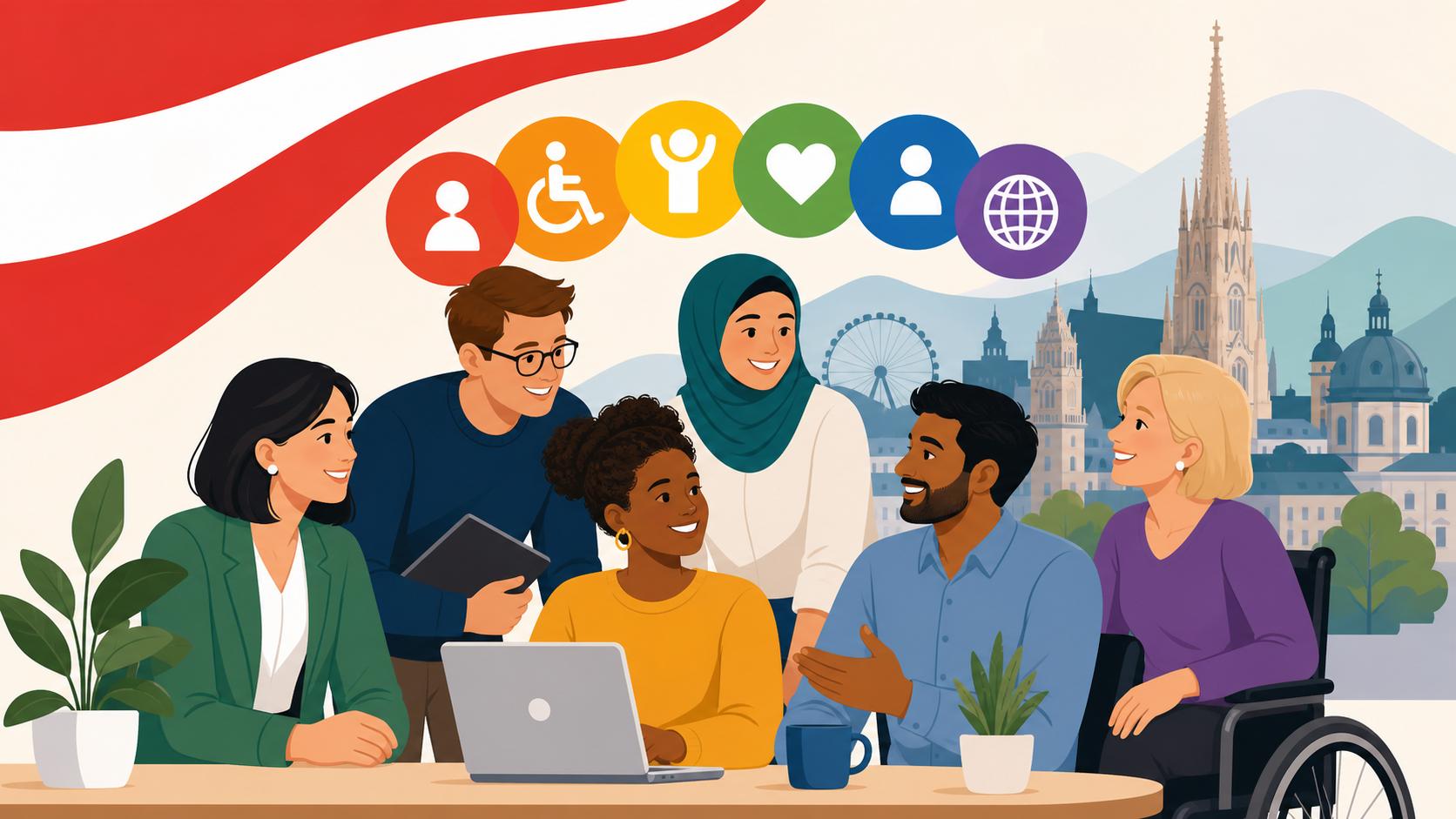
Diversity and Inclusion Initiatives at Austrian Workplaces
Walking into a traditional Austrian office can often feel like entering a highly synchronized orchestra where you are the only one without the sheet music. I remember sitting in my first departmental meeting in Vienna, terrified to speak because I didn't know if "Du" or "Sie" was appropriate for the project lead, let alone how to navigate the subtle cultural cues of the "old guard." This guide meticulously breaks down how diversity and inclusion initiatives are currently reshaping the Austrian workplace to help you find an environment where you truly belong.
The Shifting Landscape of Austrian Corporate Culture
For decades, the Austrian workplace was defined by a rigid, hierarchical structure often referred to as "Beamten-Mentalität" (a civil servant mentality), even in the private sector. This meant that seniority and a perfect command of the German language were the primary keys to advancement. However, the necessity for international talent has forced a massive cultural pivot. Austrian companies are realizing that to remain competitive, they must move beyond "tolerance" and toward active "inclusion." This shift isn't just happening in the tech hubs of Vienna or Linz; it is trickling down into the more conservative industrial sectors of Styria and Upper Austria.
From Hierarchies to Flat Structures
The most visible sign of a D&I-forward workplace in Austria today is the move toward "flache Hierarchien" (flat hierarchies). In these modern environments, the traditional "Herr Magister" or "Frau Doktor" titles are being phased out in favor of first-name basis and open-door policies. This change is particularly beneficial for expats who may come from cultures where direct communication is the norm. When a company advertises its commitment to diversity, they are often signaling that they value your unique perspective as much as your technical skills. To understand how these social dynamics play out in daily life, you should familiarize yourself with the basics of Austrian Work Culture: 14 Salaries, Meetings, and Etiquette to avoid common social pitfalls.
The Role of the Kollektivvertrag in Promoting Equity
One of the unique aspects of the Austrian system is the "Kollektivvertrag" (Collective Agreement). While it might seem like just another piece of administrative paperwork, it actually serves as a foundational tool for inclusion. These agreements set minimum standards for pay and working conditions, ensuring that international workers aren't underpaid compared to their Austrian peers. Many of these agreements have been updated to include specific clauses regarding non-discrimination and the protection of marginalized groups. Before signing your contract, it is vital to understand the Salary Transparency Law: Asking About the Kollektivvertrag so you can ensure your offer is fair and inclusive from day one.
Inclusive Recruitment and the "English-First" Strategy
The "German-only" barrier is slowly crumbling. In major cities, companies are increasingly adopting English as their primary office language to attract global talent. This is no longer limited to IT or multinational corporations; even local engineering firms and creative agencies are making the switch. If you are still working on your language skills, you can find success by targeting Finding English-Only Jobs: Industries and Top Companies where diversity in thought and language is celebrated. These companies often provide in-house language training, recognizing that while German is important for life, it shouldn't be a barrier to a brilliant career.
Strategic Pillars of D&I in 2026 Austrian Workplaces
Diversity and Inclusion in Austria are currently focused on three major pillars: gender equity, internationalization, and neurodiversity/disability support. Many large Austrian firms now employ dedicated "D&I Officers" whose entire job is to audit internal processes for bias. This means looking at everything from the wording in job descriptions to the way performance reviews are conducted. As an expat, you should look for companies that don't just put a rainbow flag on their logo in June but have active "Resource Groups" where employees can voice concerns and suggest improvements.
Gender Equality and Parental Support
Austria has historically struggled with a significant gender pay gap and a culture that favored male-dominated leadership. However, recent initiatives like mandatory reporting of pay scales for larger companies have started to close this gap. You can find more details in the guide on Companies Reporting the Gender Pay Gap in Austria to see which employers are leading the way. Furthermore, the concept of "Parental Leave" has become much more inclusive, with "Papamonat" (Daddy Month) and shared custody leave becoming the standard rather than the exception. Companies that are truly inclusive will offer flexible "Home Office" arrangements that allow both mothers and fathers to balance their professional and personal lives without penalty.
Support for International Talent and Integration
For an expat, inclusion often looks like "Onboarding." The best Austrian employers in 2026 offer "Relocation Packages" that go beyond moving boxes. They provide help with the "MA 35" or the "Bezirkshauptmannschaft" for visa renewals, and they might even offer a "Buddy System" where a local employee helps you navigate the complexities of the Austrian tax system or the health insurance landscape. If you find yourself in a situation where you feel isolated or unfairly treated due to your background, remember that you have substantial Employment Rights: Arbeiterkammer, Contracts, and Leave that protect you from discrimination. The Arbeiterkammer (Chamber of Labour) is a powerful ally for any foreign worker facing workplace hurdles.
Neurodiversity and Mental Health Awareness
A relatively new but rapidly growing area of D&I in Austria is the focus on neurodiversity and mental health. The "hustle culture" that dominated the early 2000s is being replaced by a focus on "Burnout Prevention." More employers are offering access to counseling services and creating "quiet rooms" for neurodivergent employees who may struggle with open-plan offices. If the stress of relocation and a new job starts to take a toll, it’s important to know the HR Grievance Process: Dealing with Workplace Bullying and how to access support without fear of losing your job, especially during your Probation Period (Probezeit): Rights and Termination Risks.
Comparing Traditional vs. Inclusive Austrian Workplaces
When job hunting, it can be difficult to tell from a glossy website whether a company actually lives its values. Use the following table to help identify the "green flags" of an inclusive Austrian employer versus the "red flags" of a traditional, rigid environment.
| Feature | Traditional Austrian Workplace (Red Flags) | D&I-Forward Workplace (Green Flags) |
|---|---|---|
| Language | German is mandatory for all social and professional interactions. | English is accepted for professional work; German is supported via classes. |
| Communication | Rigid "Sie" culture and strict hierarchical reporting. | "Du" culture encouraged; open feedback loops across all levels. |
| Flexibility | Fixed 9-to-5 hours with mandatory physical presence. | Result-oriented work; flexible hours and robust Home Office options. |
| Leadership | Mostly homogenous (local, male, senior) management. | Diverse leadership team with international backgrounds and gender balance. |
| Recruitment | Focus on "cultural fit" (which often hides bias). | Focus on "cultural add" and skill-based hiring. |
| Social Life | After-work drinks (alcohol-focused) are the only bonding events. | Variety of social events including family days and diverse interest groups. |
Practical Navigation for the Expat Professional
Finding a diverse workplace is only half the battle; the other half is navigating it successfully as an outsider. Even in the most inclusive companies, you will encounter "Austrian-isms" that can be confusing. For instance, the "Feedback Culture" in Austria is famously direct—some might say blunt. This is rarely a personal attack; it’s simply the way locals show they take your work seriously. To bridge this gap, learning Business German: Email Etiquette and Professional Terms can be a game-changer. Even if the office speaks English, knowing how to structure a formal email in German shows respect for the local culture and can open doors to higher-level inclusion.
Mentorship and Networking
If you want to move into leadership, you need to look for companies that offer formal "Mentorship Programs" specifically for international hires. These programs pair you with a senior leader who can explain the "hidden rules" of the Austrian corporate world—like how to navigate the "Mitarbeitergespräch" (annual performance review) or how to advocate for a raise within the bounds of your What is the Absolute Minimum Wage by Kollektivvertrag?. Networking outside your immediate company is also vital. Join groups like "Internations" or specific industry meetups in Vienna and Graz to hear the "real story" about which companies are truly inclusive.
Education as a Tool for Inclusion
Sometimes, the best way to move into a more inclusive sector is to pivot your career entirely. Many expats find that their foreign qualifications aren't fully recognized in traditional sectors, which can lead to "underemployment." If you find yourself hitting a glass ceiling because of your background, consider Career Changes: Transitioning Industries on a Work Permit. There are many government-funded programs through the AMS (Public Employment Service) that help with "Nostrifizierung" (degree recognition) or retraining for "Mangelberufe" (shortage occupations) where diversity is welcomed with open arms.
When Inclusion Fails: Knowing Your Rights
Despite the best initiatives, discrimination still happens. It might be subtle, like being passed over for a promotion despite better results, or overt, like inappropriate comments about your origin. In Austria, the law is strictly on the side of the employee. You should never feel like you have to "grin and bear it" just to keep your residency. Whether you are Teaching English in Austria: Schools, Visas, and Pay or working in a high-tech lab, you are entitled to a workplace free from harassment. If things go wrong, the Arbeiterkammer offers free legal advice and can even represent you in court if necessary.
Navigating the "German Level" Requirement
One of the most frustrating "invisible barriers" to inclusion is the insistence on a certain German level for jobs that don't technically require it. You might see a job ad that looks perfect but requires C1 German. In many cases, if you have the right skills, inclusive companies are willing to negotiate. However, for long-term career growth in Austria, the reality is that language is the ultimate inclusive tool. Review the guide on German Levels for Work: Do You Need B2 for Success? to understand where the "sweet spot" is for your specific industry. Reaching B2 often transforms you from "the foreigner" into "the colleague," which is the ultimate goal of any personal inclusion strategy.
Legal Disclaimer
The information provided in this guide is for informational purposes only and does not constitute legal or professional career advice. While every effort has been made to ensure the accuracy of the details regarding Austrian labor laws and D&I initiatives as of 2026, regulations and company policies can change frequently. Always consult with a qualified legal professional or the Arbeiterkammer (AK) for specific advice regarding your individual employment situation or any disputes you may encounter in the workplace.