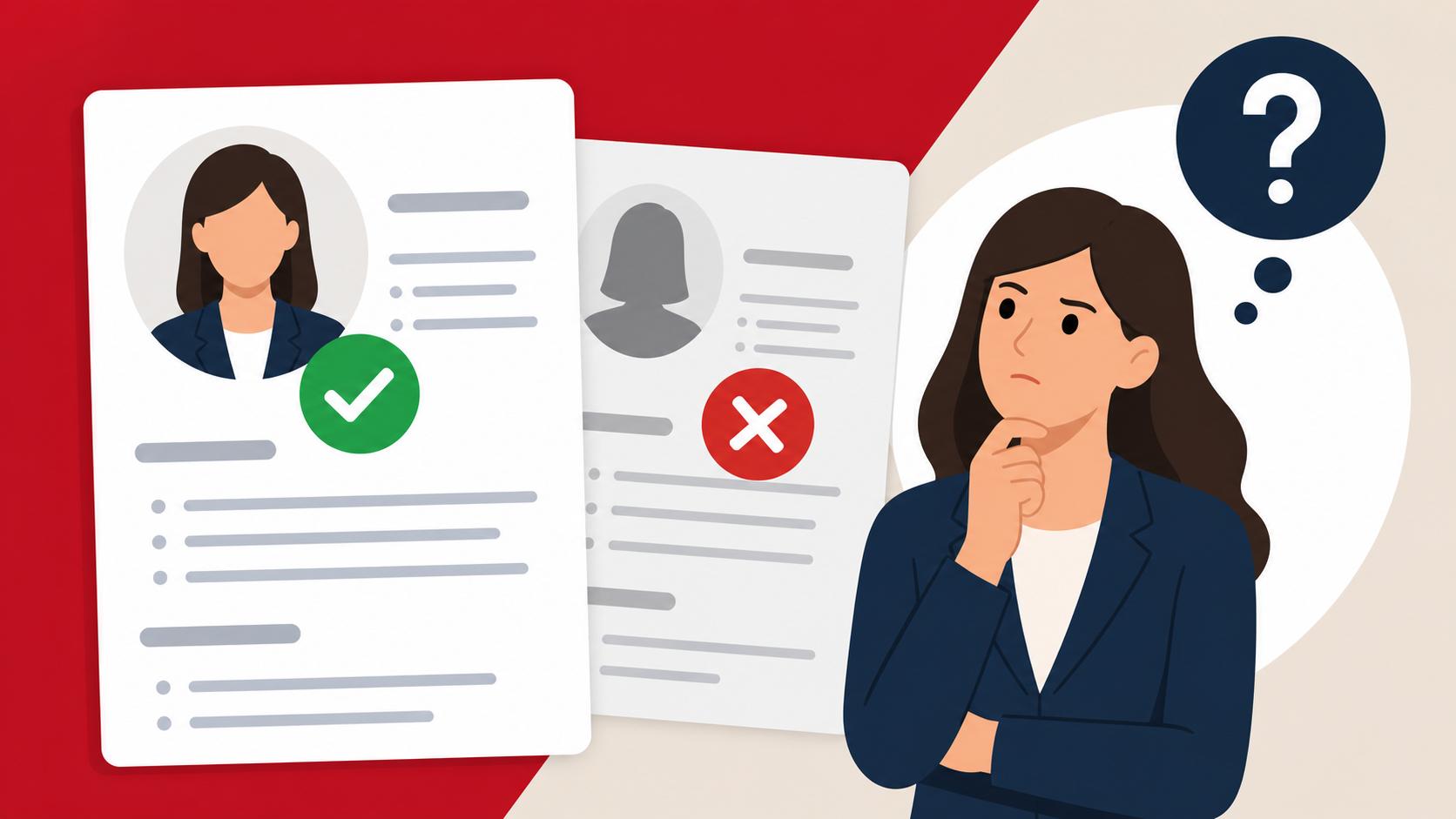
Do You Still Need a Photo on an Austrian Lebenslauf?
One of the biggest shocks for expats applying for jobs in Austria is realizing that their "blind" resume from the UK or US feels incomplete to local recruiters. I remember sitting in my first Vienna apartment, staring at my photo-less CV and wondering if I was breaking an unwritten rule. This guide solves the cultural mystery of the Lebenslauf photo requirements.
The Cultural Weight of the Lebenslauf Photo
In many Anglosphere countries, including a photo on a CV is often a "red flag" that might get your application tossed out immediately to avoid bias. However, when you step into the world of Working in Austria 2027: Jobs, Culture, and Expat Guide, you quickly realize that the local market operates on a different set of unwritten social contracts. In Austria, the "Lebenslauf" (CV) is seen as a personal document that represents the whole individual, not just a list of bulleted achievements.
Recruiters here often argue that a photo helps them form a "first impression" of your personality and professionalism. It is not necessarily about your physical appearance in a superficial sense, but rather about the effort you put into presenting yourself. When a hiring manager in Vienna or Linz opens a PDF, they are looking for a face to match the name. Without it, the application can feel sterile or even suspicious to those who have spent decades hiring within the traditional Austrian system.
Even when recruiters would never explicitly reject someone for lacking a photo, a high-quality "Bewerbungsfoto" (application photo) can act as a psychological anchor. It makes you more memorable during the shortlisting phase. If they are looking at 50 resumes, the ten with professional photos naturally stand out as more complete and "local-ready." This is a core part of Austrian Work Culture: 14 Salaries, Meetings, and Etiquette that many foreigners struggle to accept, but navigating it is key to your success.
Legal Protections vs Recruiting Realities
From a strictly legal standpoint, the answer to the question "Do I need a photo?" is a resounding no. Under the Equal Treatment Act (Gleichbehandlungsgesetz) and broader EU-wide GDPR regulations, employers are prohibited from discriminating based on age, gender, ethnicity, or appearance. Consequently, an employer cannot legally demand a photo in a job advertisement. If you feel pressured or treated unfairly, you can always seek advice on your Employment Rights: Arbeiterkammer, Contracts, and Leave.
However, there is a massive gap between what the law says and how the human brain functions in a busy HR department. Most Austrian companies still view the photo as a "voluntary" addition that they very much expect to see. If you choose to omit it, you are technically within your rights, but you may be inadvertently signaling that you are unfamiliar with local customs. For an expat already fighting the "language barrier" or "foreign degree" stigma, skipping the photo might be an unnecessary hurdle.
The only real exceptions to this cultural norm are found in very specific niches. If you are applying for a highly technical role in a global tech hub or a position at an international organization like the UN or IAEA in Vienna, you can likely stick to a standard international CV. For almost everything else—from banking to marketing to hospitality—the photo remains a staple of the Resume (Lebenslauf) and Interview Guide for Austrian Employers that most locals wouldn't dream of omitting.
Professional Standards for Your Bewerbungsfoto
If you decide to include a photo, you must understand that a "selfie" or a cropped photo from a wedding is worse than no photo at all. Austrians value "Seriosität" (seriousness/professionalism). A poor-quality image suggests a lack of attention to detail, which is a trait highly scrutinized during the Probation Period (Probezeit): Rights and Termination Risks.
The Backdrop and Lighting
A professional application photo should have a neutral, non-distracting background—usually light grey, off-white, or a very subtle blue. The lighting should be soft and even, avoiding harsh shadows that make you look tired or unapproachable. In my early days here, I tried to take a photo against my white apartment wall, and the result was amateurish. I eventually invested in a professional session, and the difference in my response rate was immediate.
Professional photographers in cities like Graz or Salzburg specifically offer "Bewerbungsshooting" packages. They know exactly how to pose you—usually a slight angle to the camera with a confident, approachable smile. This investment is part of a smart Job Hunting Strategy for English Speakers in Austria, as it shows you are serious about integrating into the local market.
Wardrobe Choices and Grooming
Your attire in the photo should match the industry you are targeting. For corporate roles in finance, law, or consulting, a suit or a conservative blouse and blazer is mandatory. For more creative or startup roles, "business casual" is acceptable, but you should still lean toward the "business" side. Avoid loud patterns or overly trendy accessories that might distract from your face.
Grooming is equally important. Austrians tend to prefer a clean, tidy appearance. This doesn't mean you have to change your personal style, but your hair should be neat, and if you have facial hair, it should be well-groomed. When you eventually head to the office, you’ll find that Interview Dress Code in Austria: Traditional vs Startup varies wildly, but for the CV photo, it is always safer to over-dress slightly.
When You Should and Should Not Include a Photo
While the photo is standard, there are specific scenarios where you might choose to deviate from the norm. Understanding these nuances will help you tailor your application to the right audience and avoid looking out of touch.
The Tech and Creative Scene
In the booming startup world of Vienna and Linz, things are becoming more "Westernized." Many tech companies, especially those founded by international teams, prefer a one-page "Modern CV" which often omits the photo to focus purely on stack skills and GitHub repositories. If you are looking at Startup vs Corporate Culture: What to Expect in Austria, check the company’s LinkedIn page. If their team photos are casual and their language is exclusively English, a photo-less CV is a safe bet.
However, even in tech, if the company is a traditional Austrian "Mittelstand" (medium-sized enterprise) that happens to have a software department, they will still expect the traditional format. When in doubt, look for clues in the job description. If the ad is written in formal German and uses titles like "Magister" or "Doktor," stick to the traditional rules.
Government and Conservative Sectors
If you are applying for roles in the public sector, traditional banking, or established insurance firms, the photo is non-negotiable. These sectors are the guardians of Austrian tradition. They value the "Gesamtbild" (total picture) of the candidate. Omitting a photo here could be interpreted as being "difficult" or hiding something. If you are Finding English-Only Jobs: Industries and Top Companies in these sectors, remember that your "international-ness" is already a variable; don't make the recruiter work harder by leaving out the face.
International NGOs and UN Roles
Austria, specifically Vienna, is a hub for international diplomacy. If you are applying to the UN, OSCE, or OPEC, follow their specific portals. These organizations usually have their own standardized forms that strictly forbid photos to comply with international diversity and inclusion standards. Including a photo in these specific cases might actually show that you haven't read their specific application guidelines.
| Feature | Traditional Austrian CV | International / Modern CV |
|---|---|---|
| Photo | Highly Recommended (Top Right) | Usually Omitted |
| Personal Details | Includes DOB, Nationality, Marital Status | Name and Contact Info Only |
| Length | 2-3 Pages common | 1 Page preferred |
| Order | Chronological (Newest first) | Skill-based or Chronological |
| Language | German (unless stated otherwise) | English |
| Signature | Hand-signed at the bottom | No signature |
Layout and Technical Specifications
Where exactly does the photo go? In the traditional Austrian layout, the photo is placed in the top right-hand corner of the first page. It should be approximately 4.5 cm wide and 6 cm high. Most modern PDF editors allow you to "embed" the image so that the text flows neatly around it. Ensure the resolution is high enough that it doesn't pixelate when printed, but not so high that the file size becomes too large to email.
Recruiters often print these documents, and a blurry photo looks terrible on paper. Also, pay attention to the file name of your CV. Instead of "CV_Final.pdf," use "Lebenslauf_FirstName_LastName.pdf." This small touch of localized professionalism goes a long way. If you are unsure about other requirements, such as how to list your degrees, refer to our guide on How to Read an Austrian Job Ad (Abbreviations Explained).
Another hyper-local tip: many Austrians still include their "Familienstand" (marital status) and "Staatsangehörigkeit" (nationality) right next to their photo. While this feels incredibly invasive to many expats, it is still very common. If you are an EU citizen, listing your nationality can actually be a benefit as it confirms you have immediate work authorization without the need for a complex visa process.
Final Steps Before Sending Your Application
Before you hit send on that application to one of the Top Job Boards in Austria (Karriere.at, LinkedIn, Stepstone), do a final "Austrian-style" check. Is the photo upright? Are you looking into the page (facing left) or off the page (facing right)? Pro tip: your gaze should always point "into" the document, which usually means your body should be slightly angled toward the text.
If you are still struggling with the language requirements of the role, consider how your photo and layout can compensate for a lack of "perfect" German. A perfectly formatted, photo-included Lebenslauf shows high cultural competence, which can sometimes outweigh the fact that you only have B1 German. Speaking of which, it’s always good to be honest about your German Levels for Work: Do You Need B2 for Success? directly on the CV to manage expectations.
Lastly, remember that the photo is just the "hook." Once you get the interview, the real work begins. You will need to be prepared for the specific questioning style and the "Sie" vs "Du" etiquette. If you’ve followed the local norms with your photo, you’ve already cleared the first hurdle and proven that you are willing to adapt to your new home.
Disclaimer
The information provided in this guide is for general informational purposes only and does not constitute legal or professional career advice. While every effort is made to ensure accuracy, recruitment trends and legal regulations in Austria can change. Always consult with a qualified career coach or legal professional for specific advice regarding your job search and employment rights.