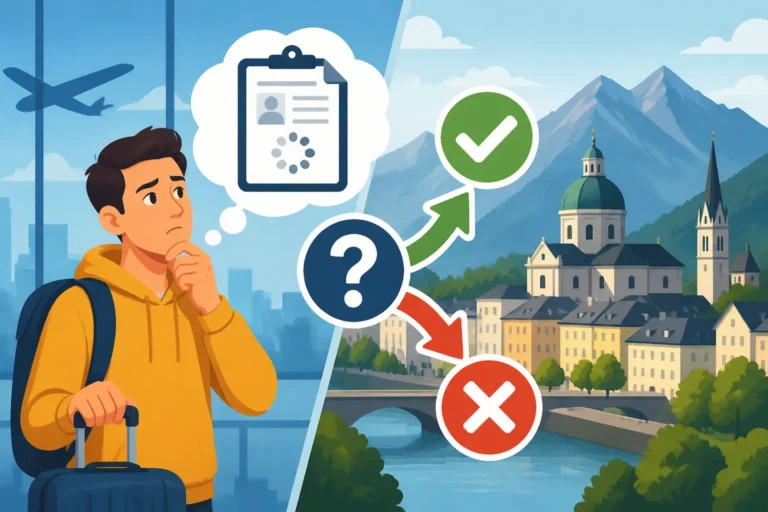
How to Prepare for the Austrian Citizenship Exam
Getting Austrian citizenship is a massive milestone for any expat, and let's be honest, the final hurdle — the citizenship exam — can feel pretty daunting. It’s not just about knowing dates or names; it’s about grasping the very fabric of Austrian society, history, and its political landscape, often in a language that might not be your mother tongue. This guide is here to demystify the process, offering practical advice and empathetic insights to help you prepare effectively and confidently tackle the Austrian citizenship exam.
Understanding the Austrian Citizenship Exam: What to Expect
When you decide to pursue Austrian citizenship, you're signing up for more than just paperwork; you're committing to an understanding of your adopted home. The citizenship exam, officially known as the "Integrationsprüfung," is a crucial part of this journey. It's designed to assess your knowledge of Austria's democratic order, its history, and the specific history of the federal state where you reside. But it's not just a dry academic exercise; it's a test of your integration and comprehension.
Components of the Exam: History, Democracy, and Provincial Knowledge
The exam generally consists of two main parts: the German language test and the knowledge test. While the language aspect is critical, which we'll delve into shortly, the knowledge test itself covers a broad spectrum of topics. You’ll be tested on Austria’s democratic system, its fundamental principles, human rights, and the structure of its government. This includes knowing about the federal president, the chancellor, the parliament (Nationalrat and Bundesrat), and how laws are made.
Beyond the federal level, there's a significant component focused on the history of Austria, from its origins to significant events that shaped the nation. This isn't just a list of dates, but an understanding of the context and impact of these events on modern Austria. You'll also face questions specific to the federal state (Bundesland) where you've chosen to live. For instance, if you reside in Vienna, you'll need to know about Viennese history, local politics, and key figures, which will differ from someone living in Salzburg or Tyrol. This localized knowledge is vital, as it demonstrates your engagement with your immediate community. The content for the exam is generally based on modules 1 and 2 of the Integration Agreement (Integrationsvereinbarung).
Language Requirements: Beyond B1 or B2
Let's talk about language, because it's often the biggest hurdle and, frankly, the key to unlocking everything else. The naturalization process itself requires a specific level of German proficiency. For the standard 10-year naturalization, a B1 level is usually sufficient. However, if you're aiming for accelerated naturalization (e.g., after 6 years due to exceptional integration), a B2 level is often required. The citizenship exam itself doesn't explicitly test language in the same way a Goethe or ÖSD certificate does, but it is conducted entirely in German. This means your comprehension and ability to formulate answers in German are paramount. If you struggle with the language, you’ll struggle with the knowledge test, regardless of how much history you’ve memorized. It's a real catch-22 for many of us, as juggling work, life, and German lessons can be exhausting. Many expats find great value in targeted courses focusing on Passing B2 German for the Naturalization Test.
The language requirement for naturalization is usually fulfilled by providing an official German language certificate (like ÖSD or Goethe) at the required level. However, for the integration exam, the language test might be a separate component, assessing your ability to understand and respond to questions related to the topics. This is not just about grammar but about practical communication.
The 'Integration Agreement' and its Role
The Integration Agreement (Integrationsvereinbarung, or IV) is a big deal in Austria, especially for non-EU citizens. It’s a legal obligation that requires you to acquire specific German language skills and an understanding of Austrian values, society, and legal system. The citizenship exam you're preparing for is directly linked to fulfilling aspects of this agreement. While the IV primarily focuses on German language acquisition up to a B1 level for long-term residency, the knowledge component of the citizenship test extends this to cover civic information. Essentially, passing the citizenship knowledge test demonstrates that you have fulfilled the "Integration Agreement" module 2 requirements regarding values and basic knowledge of the legal and social order. So, think of your exam preparation not just as studying for a test, but as actively engaging with the framework of your life in Austria. This also ties into The Austrian Values Course Requirement for Immigration, which often precedes or complements the exam.
Navigating Study Materials and Resources
Okay, so you know what's coming. Now, how do you actually get ready for this thing? The good news is, there are official resources designed to help, and a whole expat community that's been through it. Don't feel like you have to reinvent the wheel.
Official Sources: Handbooks and Websites
The most reliable place to start is always with official materials. The Austrian government, specifically the Österreichischer Integrationsfonds (ÖIF), provides resources. They often publish handbooks or learning materials that directly cover the topics assessed in the exam. These official guides typically break down Austrian history, political structures, and general civic knowledge in a structured way.
You can usually find these resources on the ÖIF website or sometimes even obtain physical copies at integration centers in larger cities like Vienna. These handbooks are invaluable because they provide the exact information framework the examiners will be working from. While they might not be the most exciting read, they are the most authoritative. Make sure you’re getting the latest editions, as laws, figures, and even certain historical interpretations can be updated.
For the provincial-specific questions, you'll need to look at resources from your specific Bundesland. Most provincial governments or city councils will have information on their websites regarding local history, cultural highlights, and political structures. For instance, if you live in Graz, you'd look for official Styrian government resources. This might require a bit of digging, but it's essential.
Here’s a snapshot of common knowledge areas covered:
| Topic Category | Key Focus Areas |
|---|---|
| Democratic Principles | How Austria is structured as a republic, the federal state system, the rule of law, separation of powers, freedom of speech, human rights. |
Disclaimer
This article is for general informational purposes only and does not constitute professional advice. Laws, prices and regulations vary by location and change over time. Consult a qualified professional for guidance on your specific situation.