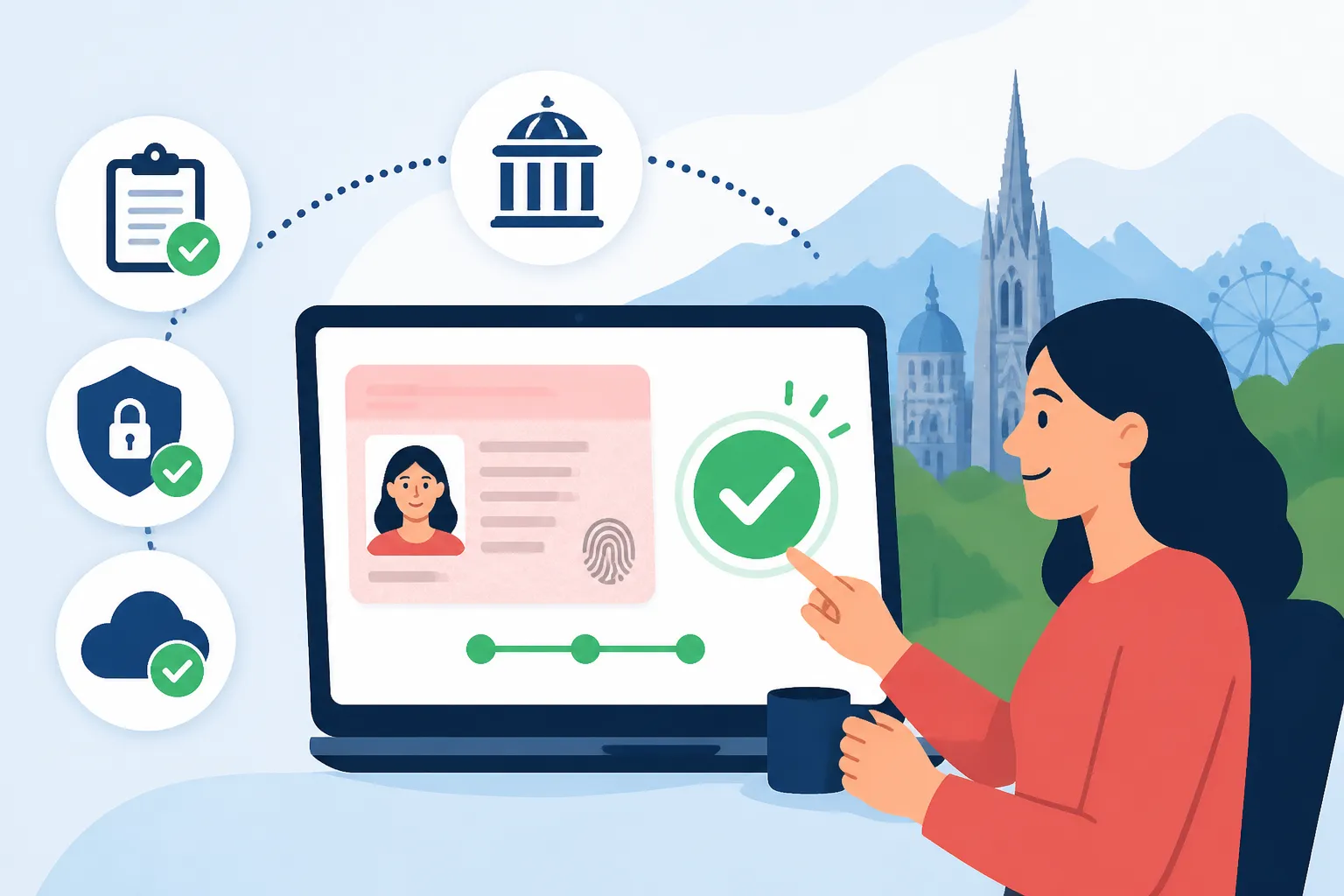
Renewing Your Residence Permit Entirely Online via E-Government
The thought of renewing your Austrian residence permit can send a shiver down even the most seasoned expat's spine. I've been there, staring at endless forms, wrestling with German bureaucracy, and wondering if I've missed a crucial stamp. The good news is, for many, the dream of handling this entirely online through Austria's e-government system is becoming a reality, potentially saving you those dreaded trips to MA 35 or your local Bezirkshauptmannschaft. This guide will walk you through the ins and outs, giving you the real-talk on what to expect.
The Digital Frontier: Can You Really Renew Your Austrian Residence Permit Online?
Let's be honest, the idea of avoiding a queue at MA 35 is almost as appealing as a freshly baked Apfelstrudel. While Austria's e-government system has made significant strides, especially with the introduction of ID Austria, it's not a magic wand that makes every visa renewal fully remote. It’s more like a highly efficient digital assistant that can streamline certain parts of the process.
Understanding the "Who" and "What" of Online Eligibility
First things first: online renewal isn't universally available for every type of residence permit or for every expat. This isn't a "one-size-fits-all" scenario, which, let's face it, is typical for Austrian bureaucracy. Generally, the online application portals are designed for those already holding a valid residence title in Austria and seeking an extension of the same title or, in some cases, a change of purpose that's clearly defined within the e-government system. For instance, some renewals for the Red-White-Red Card (RWR): Application and Requirements or the Daueraufenthalt-EU After 5 Years might offer online components.
However, if you're applying for a new type of permit, perhaps transitioning from a student visa to a work permit, or if your current permit has already expired, you'll almost certainly need to go through the traditional in-person route. The system is primarily geared towards extensions of existing, active permits. This is a critical distinction that often catches new applicants off guard, so always double-check the specific requirements for your permit type on the official governmental websites or consult the MA 35 directly – yes, sometimes a phone call is still unavoidable!
ID Austria: Your Indispensable Key to E-Government
You cannot even begin to think about online residence permit renewal without ID Austria and E-Government Tools for Foreign Residents set up and fully functional. Seriously, this is your golden ticket, your digital passport to the Austrian administrative world. ID Austria is the country's central digital identity system, replacing the older Handy-Signatur, and it's absolutely non-negotiable for accessing most online government services, including permit applications.
Getting ID Austria sorted can feel like a mini-quest in itself, especially if your German isn't yet fluent. It involves an initial in-person verification step, usually at a registration authority like a Gemeindeamt (municipal office) or Finanzamt (tax office), after you’ve pre-registered online. You’ll need your passport, your Meldezettel (registration form), and sometimes your physical residence permit card. I remember thinking it was just one more thing on the to-do list, but once activated, the convenience it offers for everything from checking your tax data on FinanzOnline to, yes, applying for permit renewals, is immense. Without it, the online permit renewal portal will simply be a locked door. So, prioritize this step – it’s the foundation of your entire digital administrative life in Austria.
Navigating the Online Application: A Step-by-Step Walkthrough for Expats
Once you've confirmed your eligibility and armed yourself with ID Austria, the real journey begins. Think of it as a meticulously planned hike through the digital Alps – challenging, but with the right preparation, incredibly rewarding.
Preparing Your Digital Dossier: Documents, Scans, and Translations
The biggest hurdle with online applications often isn't the technical interface, but having all your ducks in a row – digitally. Austrian bureaucracy loves its paper, but for online submission, it needs high-quality digital copies. Before you even log into a portal, create a dedicated folder on your computer for all required documents. This typically includes:
- Passport: A clear scan of your passport's main data page and any relevant visa stamps.
- Current Residence Permit: A scan of both sides of your existing permit card.
- Meldezettel: Your current registration form. Remember The 3-Day Rule for Meldezettel Registration After Arrival applies, so ensure yours is up to date!
- Proof of Accommodation: A copy of your rental agreement (Mietvertrag). This is crucial, so ensure you have Providing Proof of Accommodation for Your Residence Permit readily available.
- Proof of Funds: Bank statements showing sufficient income or savings for your stay. For non-working permits, this means meeting the Proof of Funds 2026 (1273 EUR) for Non-Working Permits threshold.
- Health Insurance: Confirmation of comprehensive health insurance coverage. Often, this is a confirmation from your public or private insurer. Don't forget that Getting Health Insurance Confirmation Before the e-card Arrives can sometimes be a stop-gap for initial applications, but for renewals, they usually expect proof of ongoing coverage.
- Employment Contract/Payslips: If applicable, your latest employment contract and recent payslips.
- Certified Translations: This is often overlooked. Any document not originally in German (or English, if explicitly stated as acceptable) must be accompanied by a Certified Translations of Documents: What the Rules Demand. These aren't just any translations; they need to be done by a publicly appointed and sworn translator in Austria. Neglecting this will cause delays!
Scan everything clearly, preferably as PDF files. Ensure the file sizes aren't too large, as portals often have upload limits, but not so small that the text becomes unreadable. Organize them logically, perhaps with filenames like "Passport_JaneDoe.pdf" or "Mietvertrag_Address.pdf".
The Journey Through FinanzOnline and Beyond: Which Portal to Use?
This is where it can get a little tricky, as Austria's e-government landscape is still evolving. While FinanzOnline (the tax authority's portal) is central for many things, residence permit renewals typically happen through portals managed by the Bundesministerium für Inneres (BMI – Federal Ministry of Interior) or specific municipal systems if you're in a larger city like Vienna (MA 35).
You'll typically start by logging in with your ID Austria. Once authenticated, you'll navigate to the relevant section for "Aufenthaltsbewilligung" or "Niederlassungsbewilligung" renewals. The system usually presents a series of forms where you input your personal data, details of your current permit, and the reason for renewal. It's often structured with clear steps, prompting you to upload the necessary documents at each stage. Be meticulous in filling out every field; an incomplete form is a guaranteed recipe for rejection or, at best, a lengthy delay and request for more information.
I found that the interface, while in German, often uses standard administrative language that becomes familiar after a few uses. Still, have a translation tool handy, or better yet, a German-speaking friend to glance over it if you're unsure. The portals are secure, but you'll need a stable internet connection.
Submitting Your Application and Paying the Fees
Once all fields are filled, and all documents are uploaded, you'll reach the submission stage. Before hitting that final "send" button, take a deep breath and review everything. Seriously, go through it line by line. Check for typos, ensure all documents are attached and legible, and confirm that you've answered every question truthfully and completely. This final check can save you weeks of headaches later.
After submission, the system will usually prompt you to pay the application fees. These fees vary depending on the type of permit and can include both the application fee and the cost of the permit card itself. Online payment is usually facilitated via secure portals, often using standard methods like credit card or EPS (Electronic Payment Standard), which links directly to your Austrian bank account. Keep a screenshot or PDF confirmation of your payment, as this is your proof. Remember, until the fee is paid, your application might not be officially considered submitted.
After the Click: The Processing, Biometrics, and What Comes Next
You’ve hit submit, paid the fees, and now… the waiting game. This phase, while entirely digital on your end, becomes a very human process on the administrative side.
Tracking Your Application and Managing the Wait Times
One of the most frustrating aspects of Austrian bureaucracy for expats is the perceived "black hole" after submission. Unlike some countries where you get constant updates, here, silence often reigns. While some portals might offer a rudimentary status checker, don't expect real-time notifications. It's not like tracking a parcel! You can sometimes check the status of your MA 35 application online, but detailed updates are rare. My personal experience, and that of many friends, suggests you should prepare for a significant wait, sometimes several weeks or even months, especially if you're dealing with MA 35 Application Timeline: From Submission to Approval.
If your permit is approaching its expiry date while your renewal is pending, don't panic. If you’ve submitted your application before the expiry, you are generally legally covered to stay in the country. However, having proof of submission is critical. In some cases, you might receive a "Fiktionsbescheinigung" – a temporary document proving your legal stay while your application is processed. It's worth understanding What Happens if Your Card Expires While Renewal is Pending? to ease your mind. Should you need to travel outside Austria during this period, carrying your old permit, proof of application, and any Fiktionsbescheinigung is essential, but it can still be risky.
The In-Person Component: Biometrics and Card Collection
While the application submission can be done online, it's crucial to understand that the entire process isn't digital. At some point, usually after your application has been pre-approved, you will be invited for an in-person appointment. This appointment is primarily for two reasons:
- Biometric Data Collection: Your fingerprints will be taken, and your photo will be captured for the new residence card. This is a mandatory step for securing your physical permit. Understanding the Fingerprinting and Biometric Data Collection Process is helpful beforehand.
- Card Issuance: Once everything is processed and your card is produced, you'll typically collect it in person. This ensures your identity is verified one final time before the official document is handed over.
So, while the online system dramatically cuts down on initial visits, it doesn't eliminate face-to-face interaction entirely. This is a common point of confusion for those expecting a purely digital experience. The online system is a fantastic efficiency booster, but it's part of a hybrid approach.
Troubleshooting Common Online Renewal Obstacles
Even with the best preparation, you might encounter bumps in the digital road. Here are some common issues and how to approach them:
- Technical Glitches: The e-government portals are generally robust, but browser compatibility issues, internet connection drops, or system maintenance can occur. Try using a different browser (Chrome or Firefox are usually reliable), clearing your cache, or trying again later. If issues persist, document them with screenshots.
- Missing Document Requests: It’s common to receive an email or a message via the portal requesting additional documents or clarifications. Don’t ignore these! Respond promptly and upload the requested information as quickly as possible. Sometimes, the initial online application might not allow for every specific document, and these follow-up requests fill the gaps.
- Language Barriers: The online portals are predominantly in German. While some browsers offer translation features, these aren't always accurate for legal and administrative terms. If you're unsure about a question or a requested document, seek help from a German-speaking friend, a language exchange partner, or consider investing in a consultation with an immigration lawyer or advisor. Their insights can be invaluable in avoiding misinterpretations.
- Contacting Authorities: If you're truly stuck or haven't heard back for an unusually long time, don't hesitate to reach out. The contact details for MA 35 or your local Bezirkshauptmannschaft are usually available online. When contacting them, always refer to your application number and be prepared with your personal details. Politeness and persistence are your best friends here.
Understanding that the online renewal system is an aid, not an entirely hands-off process, will save you a lot of stress. Embrace the digital tools, but be prepared for the occasional analogue step and the inevitable waiting period.
| Feature | Online Renewal (via E-Government) | In-Person Renewal (Traditional) |
|---|---|---|
| Convenience | Submit from anywhere, anytime (24/7 access to portal) | Requires travel to office, adherence to opening hours |
| Initial Interaction | Completely digital, no direct human interaction | Face-to-face with case worker |
| Document Submission | Upload scanned PDF/image files | Present original documents and physical copies |
| Payment | Online via credit card, EPS, etc. | Cash, card, or prior bank transfer (proof required) |
| Time Savings | Reduces travel time and waiting in queues for initial submission | Can be faster if all documents are perfect and worker is efficient |
| Biometrics | Still requires an in-person appointment after initial submission | Done during the initial application appointment |
| Card Collection | Typically in-person pickup at the office | Collected in-person at the office |
| Eligibility | Limited to specific permit types and renewal scenarios | Broadly available for most applications and renewals |
| Language Barrier | German interface, requires translation tools or fluency | Direct interaction can allow for questions and clarification |
Disclaimer
The information provided in this guide is for general informational purposes only and does not constitute legal advice. While we strive to keep the content up-to-date and accurate, Austrian immigration laws and procedures are complex and subject to change. It is highly recommended to consult official government websites, seek advice from qualified immigration lawyers, or directly contact the relevant Austrian authorities (e.g., MA 35 in Vienna, or your local Bezirkshauptmannschaft) for personalized guidance regarding your specific situation. We cannot be held responsible for any errors or omissions, or for any actions taken based on the information provided herein.